G20 Crypto News: Why Did China Break Away From 19 Members G20 crypto news dominated headlines this week after finance ministers and central bank governors from nineteen of the group's twenty
G20 Crypto News: Why Did China Break Away From 19 Members
G20 crypto news dominated headlines this week after finance ministers and central bank governors from nineteen of the group's twenty members signed onto a major joint economic statement following their meeting in Asheville, North Carolina, on August 31 and September 1.
China was the lone holdout on several key sections, making this one of the more notable splits within the group in recent memory.
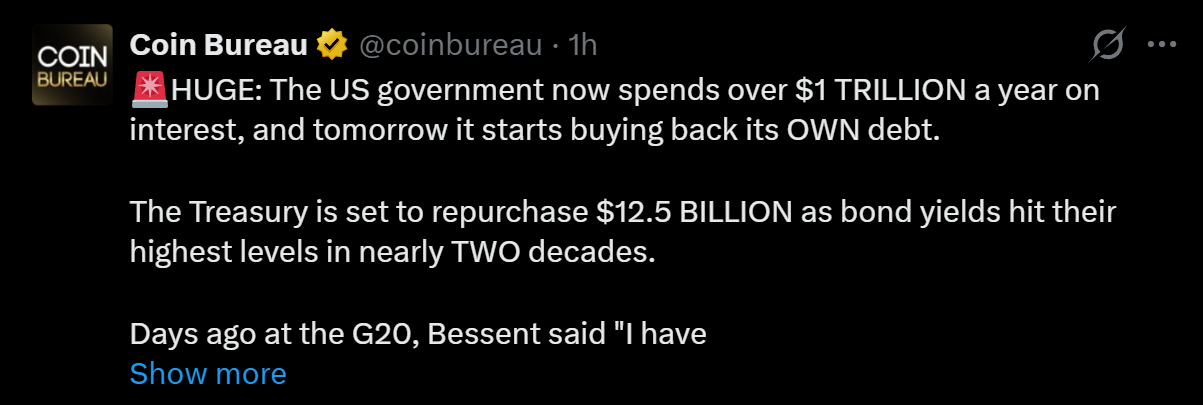
Source: Coin Bureau
Why China Broke From The Rest Of The Group
According to theG20's own published chair statement, the document was agreed upon by every member present except China, which specifically objected to sections covering global trade imbalances.
The broader group backed language calling on countries with large, persistent trade surpluses to rely less on exports and boost domestic consumption instead—a position China evidently could not accept.
The statement frames addressing these imbalances as a shared interest between surplus and deficit economies rather than singling out any one nation directly, though the disagreement itself became one of the meeting's most talked-about outcomes.
Digital Assets Get A Bigger Seat At The Table
This round of G20 crypto news is significant because it marks a clear escalation in how seriously the group is treating blockchain-based finance.
The official statement recognizes what it calls the transformative role of blockchain-based financial innovation, including digital assets, in supporting broad-based economic growth, while stressing the need to preserve financial stability alongside that innovation.
Members committed to advancing regulatory frameworks that establish clear pathways for this kind of innovation and separately called on the Financial Action Task Force to prioritize enforcement of virtual asset standards in countries where such activity is significant.
Stablecoins Are Now Getting Dedicated Attention
Beyond the general digital asset language, this update also included a specific focus on stablecoins.
The Financial Stability Board is preparing a summary of findings covering the cross-border implications of global stablecoin arrangements, along with a look at gaps in stablecoin-related data availability.
This signals regulators are moving past broad statements about crypto and toward more targeted work on the specific risks tied to stablecoins moving across borders.
Key Outcomes From The Asheville Meeting
The finance track meeting covered far more than crypto alone, touching on several major global economic themes.
Key points from the joint statement include:
Nineteen of twenty members backed action against trade imbalances, with China as the sole objector
Clearer regulatory pathways for digital asset innovation while preserving financial stability
FATF asked to prioritize enforcement of virtual asset standards where usage is significant
The Financial Stability Board preparing findings on stablecoin cross-border risks and data gaps
Members warned that disruptions to energy trade, including through the Strait of Hormuz, threaten global growth
Calls for faster and more predictable sovereign debt restructuring processes
Investment in AI, computing, and digital infrastructure flagged as a productivity driver alongside new cyber risks
G20 Meeting Snapshot
Detail
Information
Meeting dates
August 31 to September 1, 2026
Location
Asheville, North Carolina
Members backing the statement
19 of 20
Sole objecting member
China
Key digital asset focus
Clear pathways for innovation, plus FATF enforcement priority
Stablecoin-specific work
Financial Stability Board cross-border findings underway
Why This Matters Beyond A Single Meeting
The group's growing focus on blockchain is not a sudden shift. Independent crypto analysts have pointed out that the G20, which collectively represents roughly 85% of global GDP, has spent years publishing annual reports on cross-border payments, tokenization, and distributed ledger technology, perRealAllinCrypto's on X.

In one notable example, a G20 TechSprint hosted alongside the Bank for International Settlements previously shortlisted solutions from both Ripple and the Stellar Development Foundation for exploring the future of digital money.
That kind of groundwork helps explain why this latest wave of G20 crypto news did not come out of nowhere but instead built directly on infrastructure conversations the group has been having for years.
Conclusion
This week's G20 Crypto News shows a group increasingly comfortable folding digital assets into its core economic agenda, even as deeper disagreements over trade imbalances kept China from signing onto the full statement.
With clearer innovation pathways, stablecoin-specific research, and renewed FATF enforcement priorities all now on record, the direction of travel for global crypto policy looks firmly set heading into the rest of the year.
Disclaimer
This content covers financial markets and is for general information only. It is not financial, investment, trading, or legal advice. Crypto assets are volatile and can lose value fast. Always do your own research. Speak with a licensed financial advisor before making investment decisions.