How Do Intent-Based Bridges Work? Moving crypto between blockchains is still slow for many users. A new wave of research asks whether intent-based bridges can fix that. One 2026 benchmark rep
How Do Intent-Based Bridges Work?
Moving crypto between blockchains is still slow for many users. A new wave of research asks whether intent-based bridges can fix that. One 2026 benchmark reports a large speed gap. A separate 2026 study warns about what that speed depends on. Both matter, because the solvers who fill orders work a lot likecrypto trading bots, competing for small margins with their own money.
In one 2026 benchmark, intent-based bridges delivered funds far faster and at a lower median cost than the other bridge types tested. The speed comes from solvers who front their own liquidity.
That moves the risk onto solver funds, which a second 2026 study tested with simulated attacks. The faster delivery shows up in the data. It is not risk-free.
Why Do Cross-Chain Transfers Usually Take So Long?
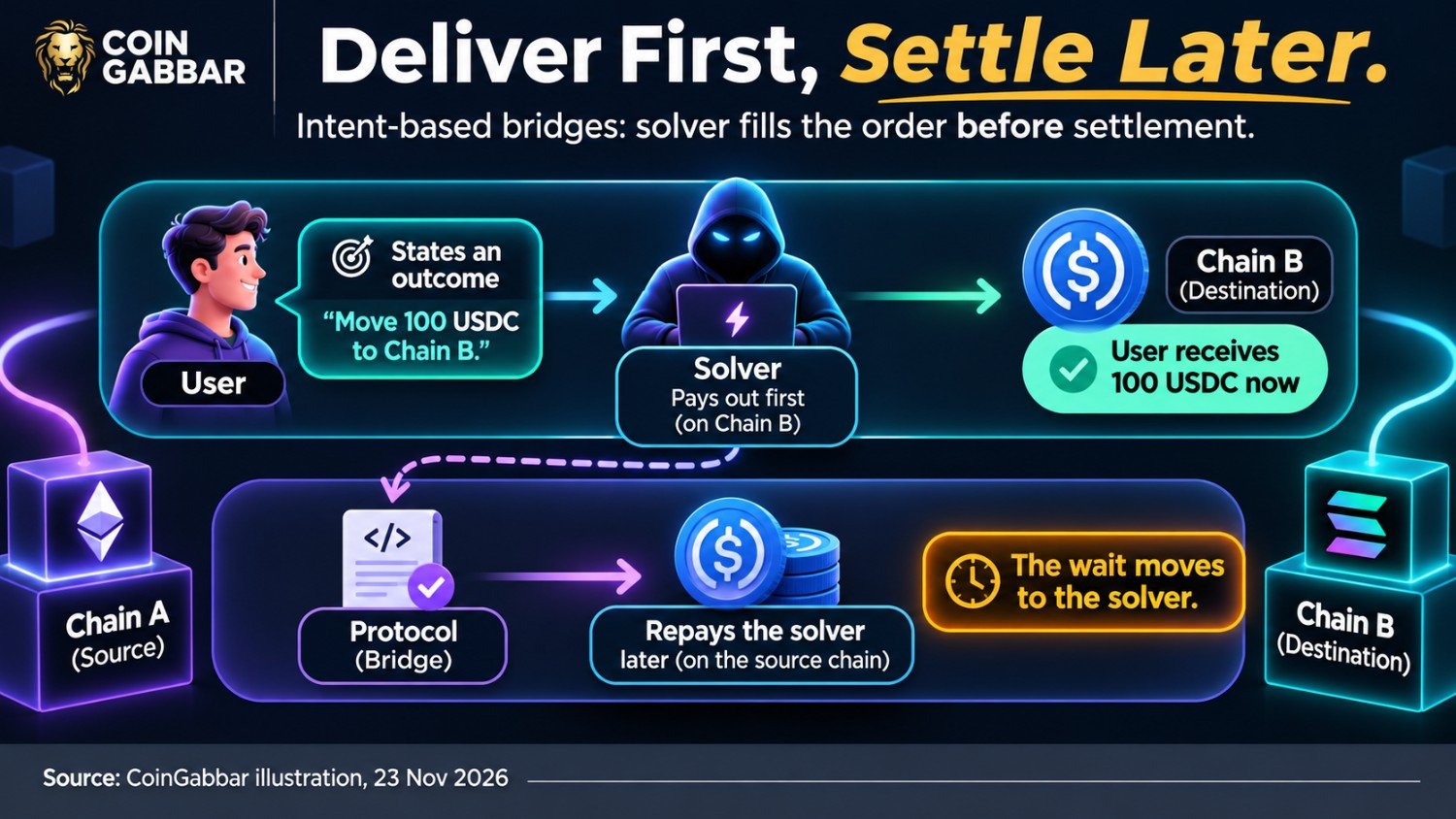
A classic bridge moves the funds first. One’s tokens are locked or burned on the source chain. The bridge then waits until that transaction is final, checks it, and releases or mints tokens on the destination chain. Each step adds waiting time.
The checking step can lean on validator sets or outside data feeds. Bad data can break such a system. The guide tocrypto oracle risk shows how.
Researchers at the University of Lisbon describe the key ordering this way: traditional bridges release assets on the destination chain only after finality. Intent-based designs reverse that order.
How Do Intent-Based Bridges Deliver Funds So Quickly?
An intent is a request for an outcome. You state what you want, such as USDC on Base in exchange for USDC on Arbitrum. You do not pick each step.
A solver, also called a filler, takes the order. The solver sends you the tokens on the destination chain from its own liquidity. Later, the protocol settles and repays the solver from the individual's deposit.
So the user gets paid first, and the settlement follows. The waiting still happens. The solver carries it instead of you.
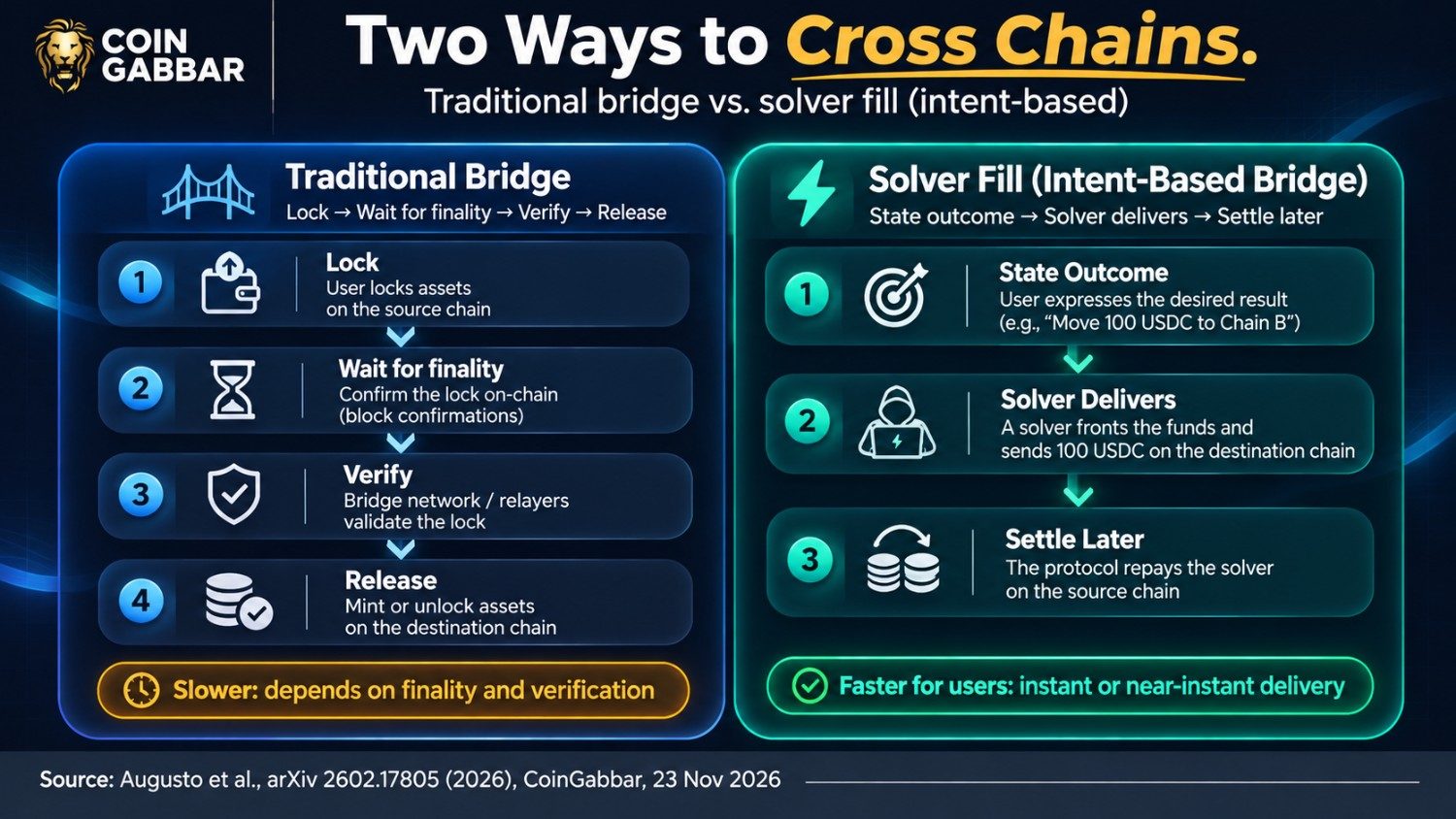
Picture a 1,000 USDC transfer. A solver sends 999 USDC to you on the destination chain within seconds. It keeps the 1 USDC gap as pay for fronting funds and taking on the delay. This example is illustrative, not from the papers.
The same Lisbon paper names Across, Mayan Swift, and deBridge as protocols that use this design. Details differ by protocol, including how orders are auctioned, how delivery is verified, and how failures are handled.
What Did the 2,520-Transaction Benchmark Actually Find?
A 2026 paper at the IEEE International Conference on Blockchain and Cryptocurrency compared bridges with real mainnet transfers. According to itsIEEE benchmark paper, the authors ran 2,520 controlled transactions across Arbitrum, Base, and Optimism. They tested seven bridge protocols and tracked median latency, cost, and spread.
The authors report two headline results. Intent-based bridges showed about 80 times lower median latency. They also showed about 5 to 6 times lower median transaction costs.
There is a second finding on cost and speed. The non-intent bridges showed a clear inverse link: paying less meant waiting longer. Intent-based bridges showed no such link in the observed data.
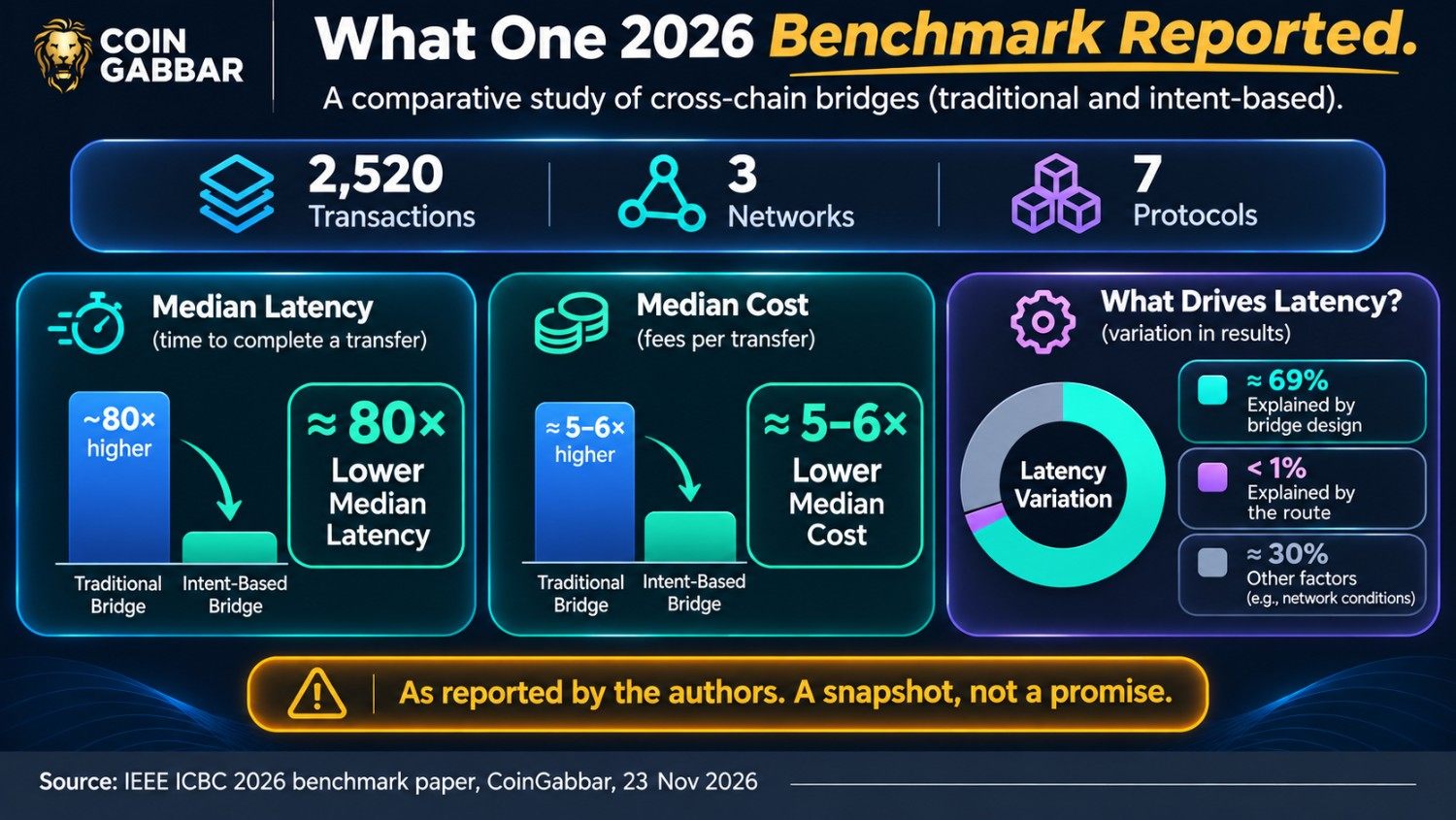
A benchmark is a snapshot. Tokens, routes, network congestion, solver competition, and fees can all change the numbers. Treat the 80 times figure as one dataset's result, not a speed promise.
Does Bridge Design Matter More Than the Route Taken?
The authors also split the variation in latency by cause. They report that architecture explains about 69% of it. The route accounts for less than 1%.
In plain words, how a bridge is built mattered far more than which of the three networks you used. Think of two delivery firms on the same road. The firm with the better method wins, not the road. This is a result from one dataset. It does not cover every chain or every bridge.
What Liquidity Risk Comes With Faster Intent-Based Bridges?
Fronting funds creates a new dependency. A solver can fill an order only if it holds enough tokens on the destination chain.
A February 2026 paper by Augusto and colleagues,liquidity exhaustion attacks, names a new kind of attack. An attacker sends carefully timed, large intents that drain solver liquidity. Solvers then cannot bid on later orders. The goal can be profit or a denial of service.
The team studied 3.5 million intents worth $9.24 billion. The data ran from June to November 2025 across Mayan Swift, Across, and deBridge on nine blockchains.
They then replayed history in a simulation. Protocols with higher solver profit, such as deBridge, were exposed under current settings. The paper reports 210 historical attack instances, and 80.5% of them were profitable for a rational attacker. An optimized strategy cut attack costs by up to 90.5%.
The paper also outlines defenses. These include rate limits tied to available liquidity, faster refunds, and automatic rebalancing of solver funds.
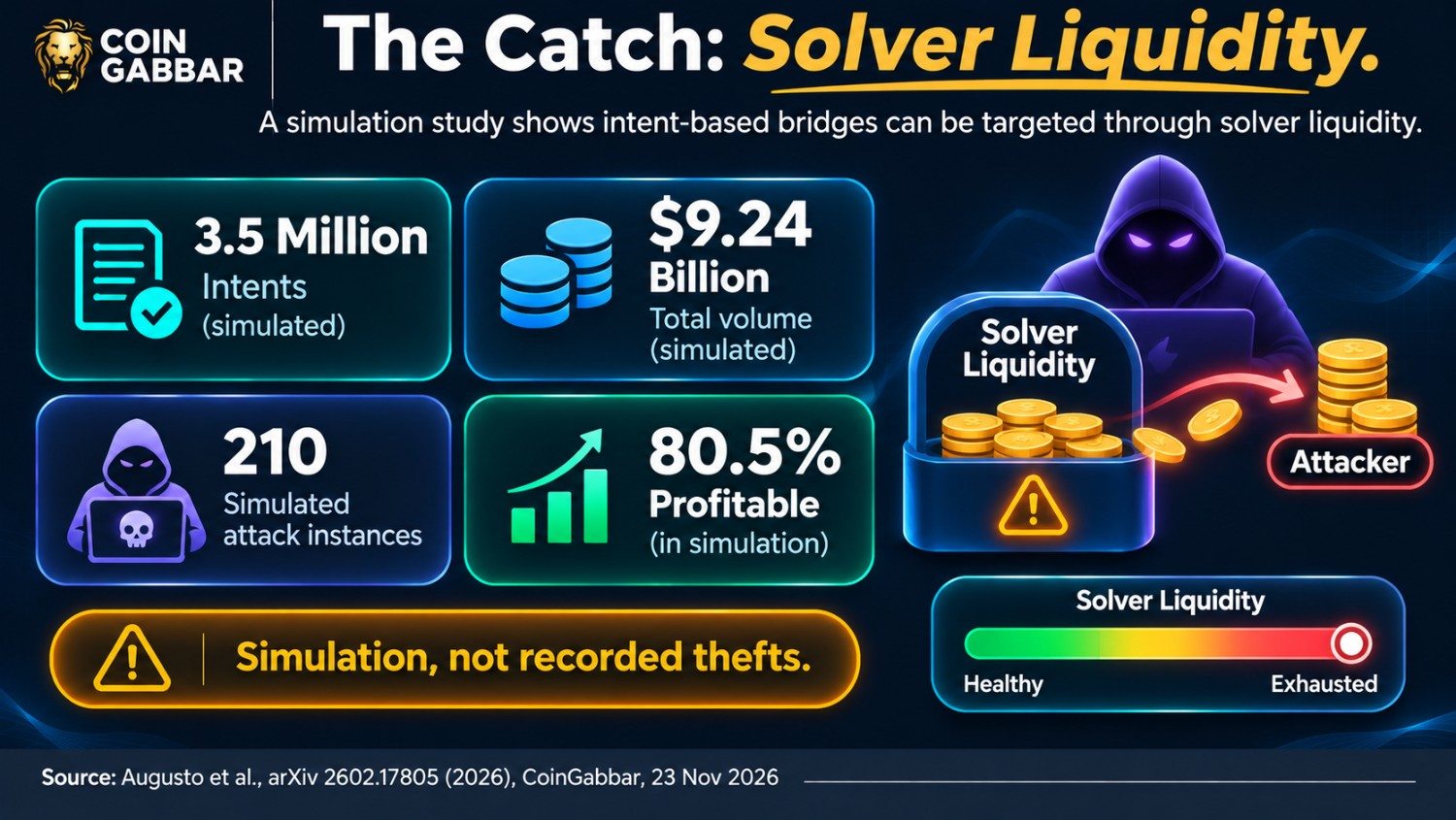
Read this with care. It is a simulation under modeled conditions, not a record of real thefts. It is also a separate study from the speed benchmark. It does not show that the benchmarked bridges are unsafe.
What Does Wider Bridge Use Mean for the Whole Market?
A third 2026 paper looks at the whole system. Cao and colleagues studied 20 blockchains and 16 bridge protocols from 2022 to 2025. The cross-chain network grew from a hub-and-spoke shape into a dense core with many hubs. EVM-compatible chains dominated that core. Money flows chased returns and reacted to cost.
The authors describe an efficiency-fragility trade-off. More connections lowered average gas fees. They also made economic cycles move together. They say bridges turn independent networks into a tightly coupled system.
This study covers bridges in general, not only intent-based bridges. For a look at where digital dollars actually move, read the explainer onstablecoin flows.
How Do Intent-Based Bridges Differ From Traditional Bridges?
The table sums up the main differences between intent-based bridges and the older design.
Feature
Traditional bridge
Intent-based bridge
Who moves funds first?
The user's funds
The solver's funds
Main wait
Source finality and verification
Settlement, after delivery
Main dependency
Verification and relay system
Solver liquidity
Median latency in the 2026 benchmark
Higher
About 80 times lower, as reported
Main risk in the research cited here
Locked-fund and verification flaws
Liquidity exhaustion and delayed settlement
What Should Users Check Before Using a Bridge?
These points are general education, not advice.
Read the bridge's own documents on what happens when settlement is late or fails.
Compare the full quoted cost, not only the headline fee.
Start with a small amount on any new route.
Expert View: What Do Intent-Based Bridges Change?
CoinGabbar analysis suggests intent-based bridges improve the waiting time users feel. They do it mainly by moving that wait onto solvers. The research here supports faster median delivery and a different risk profile. It does not support lower risk overall.
This view rests on the cited studies, not on new measurements by CoinGabbar.
Key Terms Used in This Bridge Guide
Intent: a request that states the outcome you want, not the steps.
Solver (filler): a party that delivers your tokens first and is repaid later.
Fronting liquidity: paying out from its own funds before settlement.
Finality: the point where a transaction can no longer be reversed.
Median latency: the middle waiting time across many transfers.
Liquidity exhaustion attack: draining solver funds so later orders go unfilled.
Disclaimer: This guide explains research. It is not financial, legal, tax, or investment advice. No outcome or return can be promised or assured. Crypto prices and bridge conditions are volatile, and a risk of loss applies, including loss of funds in transit. Check each bridge's own documents before moving money.