Most crypto traders know Jupiter as the place you go on Solana to swap one coin for another without getting ripped off. It works, and it works well. But running a glorified digital exchange c
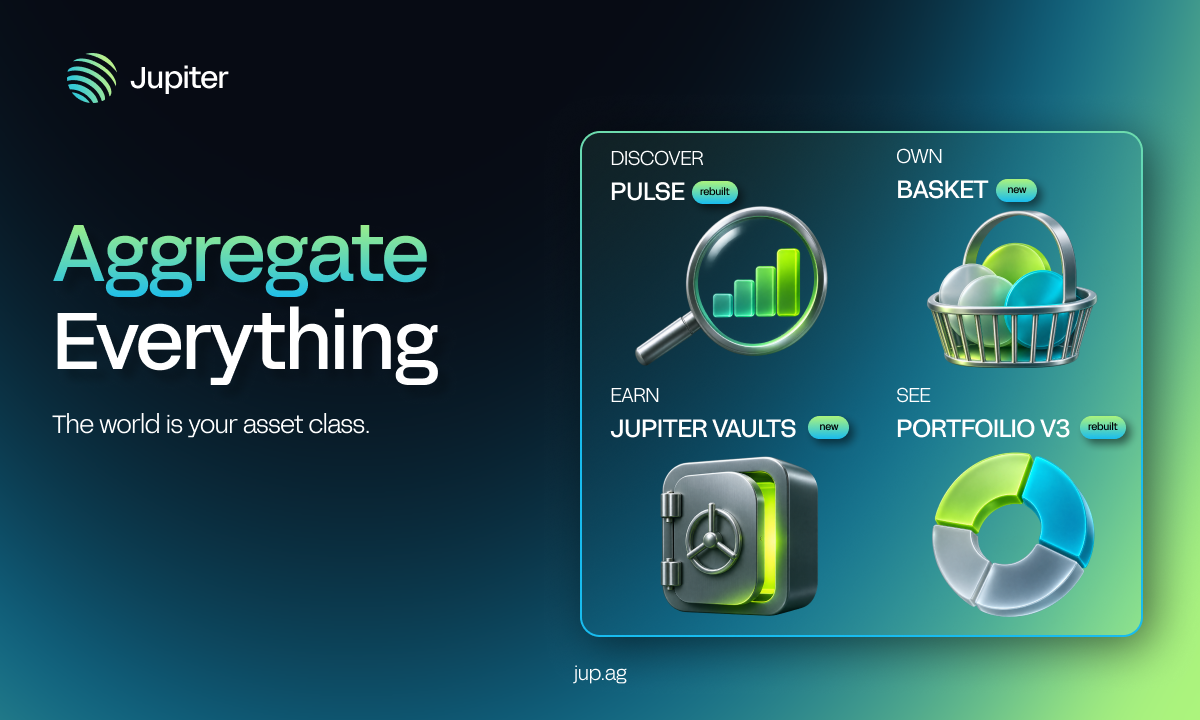
Most crypto traders know Jupiter as the place you go on Solana to swap one coin for another without getting ripped off. It works, and it works well. But running a glorified digital exchange counter is no longer enough for the team behind it. Right before the Solana Breakpoint conference kicks off in mid-November 2026, Jupiter revealed a sharp turn in direction. It is rolling out four new products aimed at turning its interface into a complete financial operating system, spanning stock research, custom index baskets, curated yield vaults, and hands-on portfolio tracking.
A New Playground for Asset Hunting
Finding good information onchain has always been messy. Traders bounce between chart sites, block explorers, and social media feeds just to figure out what a token actually does. Jupiter’s new tool, dubbed Pulse, alongside a total overhaul of its token profile pages, tries to clean up that clutter. The updated hub organizes data according to what you are actually looking at. Tokenized equities and exchange-traded funds get dedicated market feeds, while decentralized finance tokens display breakdown stats on emissions and tokenomics. It also packs a side-by-side comparison tool, so you can weigh two assets against each other on a single screen before committing capital.
One-Click Baskets Replace Endless Swaps
Building a balanced crypto portfolio usually takes patience. You swap into five different coins, pay network fees on each transaction, and manually calculate your target percentages on a spreadsheet. Jupiter’s new Baskets feature scraps that chore entirely. Users can deposit SOL or USDC once and automatically buy an entire bundle of tokens. The allocations can follow overall market-cap weightings or stick to custom fixed percentages, rebalancing on their own in the background. You can drop in more cash or pull your money out whenever you want, with Jupiter routing the orders through its usual back-end liquidity network to secure tight pricing.
Outsourcing Yield to the Pros
Yield chasing carries a bad reputation in crypto, mostly because everyday users end up holding the bag when complex setups unravel. Jupiter Vaults takes a different approach by handing strategy management over to vetted third-party curators. These managers run setups focused on stablecoin lending optimization and real-world assets. Before locking up a single dollar, depositors can inspect historical returns, asset spreads, and explicit risk profiles. The rollout starts November 11 with a private beta for eligible stakers and roughly 19,000 waitlisted accounts. Jupiter made a point of noting that it does not design these strategies itself, reminding users that real risk—and potential loss of capital—remains on the table.
Turning the Dashboard into a Command Center
Checking your holdings used to mean glancing at a static balance and clicking away. Portfolio V3 changes that dynamic by transforming the wallet view into an active control room. The page loads in under 200 milliseconds, serving up gainers, losers, relevant news headlines, and urgent liquidation warnings if an open loan runs into trouble. Better yet, users can borrow, trade perpetual futures, jump into prediction markets, or launch cross-chain bridge transfers without ever leaving that overview tab.
Why the Shift Matters for Solana
Decentralized finance has a fragmentation problem. Investors routinely use half a dozen disconnected web apps to borrow, trade, monitor, and stake their coins. That friction drives people away. By tying those loose threads together, Jupiter is betting that convenience will win the next cycle. The platform already commands substantial clout: over $2 trillion in lifetime trading volume, roughly $1.7 billion in locked capital, and an active lending book clearing $1 billion. Extending that footprint into tokenized traditional assets like stocks gives it a pipeline into markets far larger than spot crypto trading.
The Road Ahead
Execution will determine whether this pivot succeeds. The rollout timetable is tight: Portfolio V3 is already live, the Vaults private beta opens November 11, and the remaining updates will land right before Breakpoint begins on November 15. Handing yield management to third parties introduces operational dependencies, and competing across so many product categories invites plenty of technical scrutiny. Still, if Jupiter pulls it off, the days of juggling five browser tabs just to manage a Solana portfolio may soon be over.