Kalshi News Today: CFTC Orders Perez to Pay $172k Over Insider Trading The CFTC settled charges against Gabriel Perez, a former White House teleprompter operator, for trading Kalshi "mention
Kalshi News Today: CFTC Orders Perez to Pay $172k Over Insider Trading
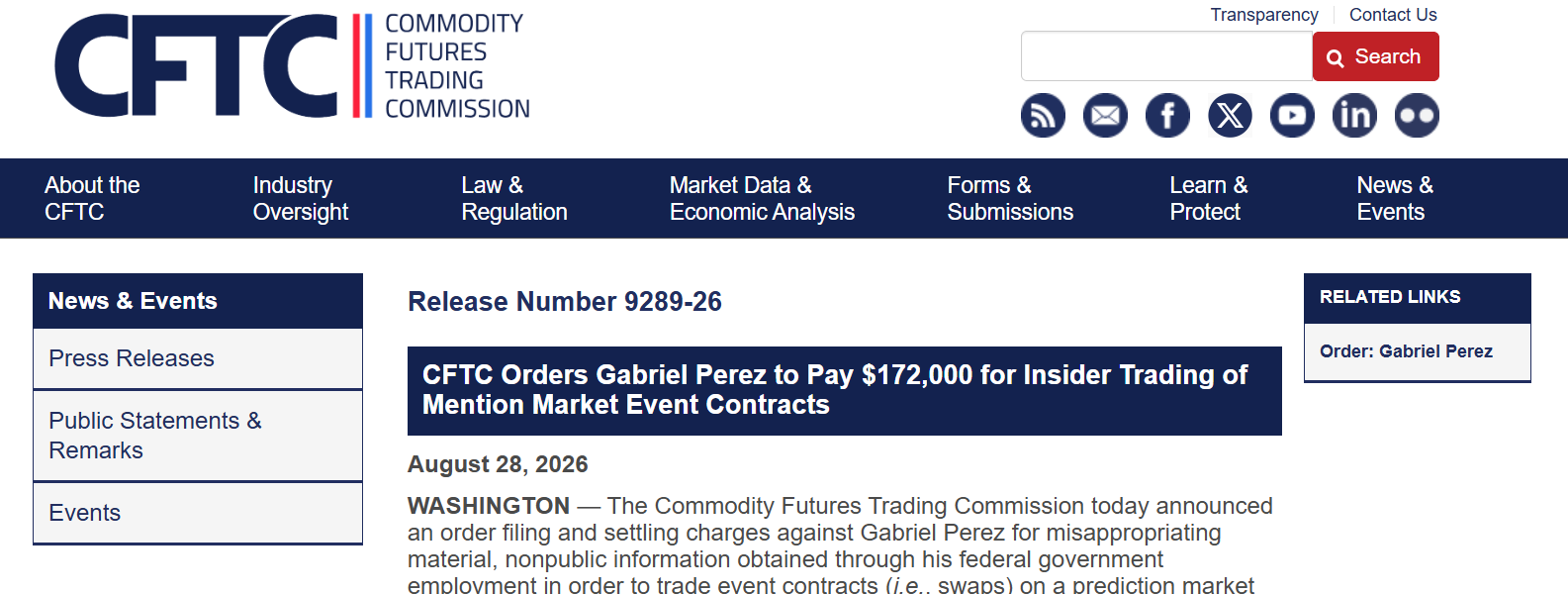
The CFTC settled charges against Gabriel Perez, a former White House teleprompter operator, for trading Kalshi "mention market" contracts using advance knowledge of presidential speeches. Perez must return $107,539.02 in profits and pay a $65,000 penalty, for a total of $172,539.02, plus a three-year trading ban.
The U.S. Commodity Futures Trading Commission (CFTC) announced a settlement on August 28, 2026, that has quickly become one of the biggest Kalshi updates Today stories of the year.
The regulator found that Gabriel Perez misused nonpublic information tied to his federal job to profit on prediction market contracts, an insider trading case that raises fresh questions about oversight on platforms.
CFTC Charges Former White House Teleprompter Operator Over Kalshi Trading
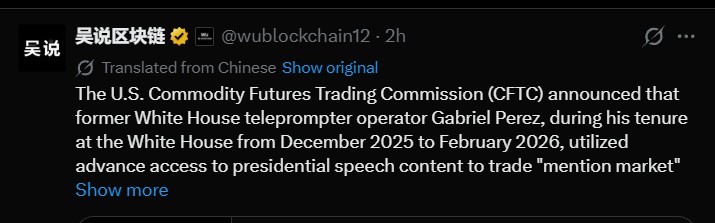
Perez had operated the White House teleprompter since 2016 and served as a technical assistant to the president. Between December 2025 and February 2026, he used his access to upcoming presidential remarks to place bets on Kalshi, the CFTC-regulated exchange where he traded. His conduct was flagged internally before reaching the commission, and he was placed on unpaid leave over the summer once the allegations became public.
Source: CFTC Press Release
How Perez Used Presidential Speech Information to Trade Mention Markets
According to the former White House Operator order, Perez had access to speech drafts before they were delivered publicly. That gave him material, nonpublic information he was not authorized to trade on. He is accused of misappropriating this information, in breach of his duty of trust to his employer, to wager on "mention market" contracts tied to specific words or phrases the president was expected to use during more than a dozen speeches.
Perez Made More Than $107,500 From the Trades
The order requires Perez to disgorge $107,539.02, representing the unlawful profits generated from his trades. Regulators characterized this as a clear personal benefit obtained through an improper informational edge unavailable to ordinary traders on the platform.
CFTC Imposes $65,000 Penalty and Three-Year Trading Ban
On top of the disgorgement, Perez agreed to pay a $65,000 civil monetary penalty and accept a cease-and-desist order barring further violations of the Commodity Exchange Act. He also received a three-year ban from trading on prediction markets. Combined, the disgorgement and penalty bring his total financial obligation to $172,539.02, the figure driving this Kalshi News Today update.
CFTC Credits Perez's Cooperation and Thanks KalshiEX
Notably, the Perez's penalty reflected a substantial discount under its newer cooperation advisory, citing what it called his exemplary cooperation during the probe. The commission also acknowledged the assistance of KalshiEX, whose internal surveillance system first detected the suspicious trading pattern before regulators got involved.
Source: Wu Blockchain
What Are Mention Market Contracts and Why Does This Case Matter?
Mention market contracts let traders bet on whether a public figure will say a specific word or phrase during a scheduled appearance. They sit within the broader category of event contracts, or swaps, that make up prediction markets like Kalshi. Because outcomes hinge on real-world speech and behavior, anyone with early access to scripts or agendas holds a built-in edge, making these markets especially vulnerable to insider information risks.
What This Means for Kalshi and Prediction Markets Next
This case adds to a string of recent CFTC and Kalshi enforcement actions targeting improper trading, underscoring growing regulatory scrutiny of the fast-expanding prediction market sector. It is not a finding against Kalshi itself; rather, it shows the exchange's compliance tools working as intended.
Still, traders should expect continued monitoring, tighter internal controls around government and corporate insiders, and more public enforcement actions as prediction markets attract wider attention and larger sums of money.
Conclusion
This case shows Kalshi's surveillance tools catching insider trading before regulators stepped in, not a strike against the exchange itself. As prediction markets grow, expect tighter scrutiny of government and corporate insiders with early access to material information. For traders, the takeaway is clear: mention markets and similar contracts carry real insider-information risk, and the regulators are watching closely.
Disclaimer: This article is for informational purposes only and does not constitute financial, legal, or investment advice. Cryptocurrency and prediction market trading carry significant risk. Readers should conduct independent research and consult a licensed professional before making financial decisions.
