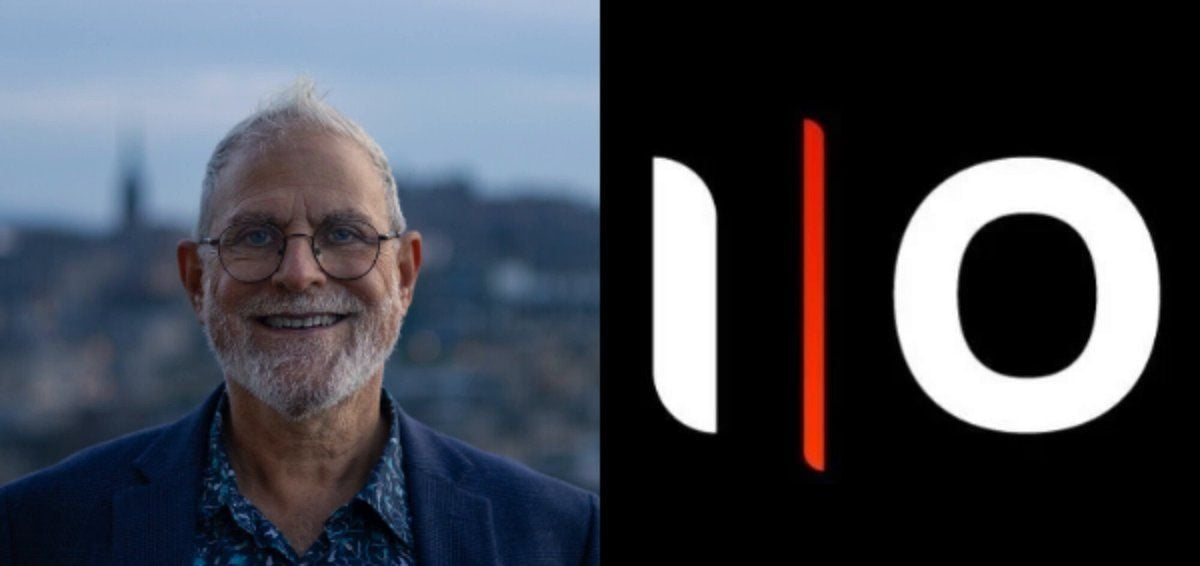
One of Haskell’s designers has spent nine years building Cardano
Philip Wadler, one of the principal designers of the Haskell programming language, is a central figure in the research behind @Cardano ($ADA). Haskell underpins the core of the blockchain, an
A
AnonymousCryptoCompass newsroom
October 15, 2026
2 min read
NEWS
CryptoCompass editorial visual for altcoins coverage.
Philip Wadler, one of the principal designers of the Haskell programming language, is a central figure in the research behind @Cardano ($ADA). Haskell underpins the core of the blockchain, and Wadler has worked on its smart contract tooling through @IOGroup.
At Input Output Global (IOG), Wadler is a co-creator of Plutus alongside Manuel Chakravarty. IOG describes Plutus as the blockchain's smart programming language. Wadler's current title at the company is Principal Research Fellow, according to his University of Edinburgh biography.
Wadler has also contributed to IOG research on the extended UTXO model, the ledger model used by Cardano, according to the same IOG article.
Royal Society recognition
In 2023, Wadler was elected a Fellow of the Royal Society. The University of Edinburgh's School of Informatics noted that he joined a list of past fellows that includes Isaac Newton, Charles Darwin, Albert Einstein and Stephen Hawking. The Royal Society's citation credits him with introducing type classes and monads, and with helping to bring generics to Java.
Recent work on Plinth
Wadler's recent research includes Plinth, the language used to write Cardano smart contracts. A 2025 paper presented at the ACM SIGPLAN Haskell Symposium, co-authored by Wadler and Chakravarty, says Plinth (formerly Plutus Tx) reuses a subset of Haskell syntax and has been in commercial use since 2021. The paper adds that Plutus programs run on a machine with a formal specification in Agda, a proof assistant, which supports work on verifying that contracts behave as intended.
For developers, the appeal is that Plinth programs use standard Haskell syntax and types, according to the paper's authors. The same paper notes that more than half a dozen smart contract languages now exist within Cardano alone.
Choosing the 3 top crypto to buy now is harder than usual this week, with red candles everywhere. Still, three names stand apart: Solana, Ethereum, and Pepeto. Solana is days away from the bi
You can also read this news on BH NEWS: Bitcoin Retreats to $80,000 as Selling Pressure Intensifies Bitcoin has encountered renewed pressure in the cryptocurrency market, testing the $80,000
Bitcoin is once again testing the $80,000 mark after slipping nearly 1.8% in daily trading, with the price dipping to a low of exactly $80,000 before a modest rebound. The world’s largest cry