Key Takeaways Q2 2026 vehicle deliveries reached 12,194 units, surpassing Wall Street’s ~11,000 estimate Revenue of $1.3 billion fell below analyst expectations of approximately $1.5 billion
Key Takeaways
- Q2 2026 vehicle deliveries reached 12,194 units, surpassing Wall Street’s ~11,000 estimate
- Revenue of $1.3 billion fell below analyst expectations of approximately $1.5 billion
- Cash reserves stood at ~$4.8 billion at quarter end; analysts project ~$8 billion needed through late 2028 to achieve positive free cash flow
- Recent equity offering during stock rally created downward pressure on share price
- Barclays maintains Hold rating with $14 target; Morgan Stanley upgraded target to $13 while keeping Underweight stance
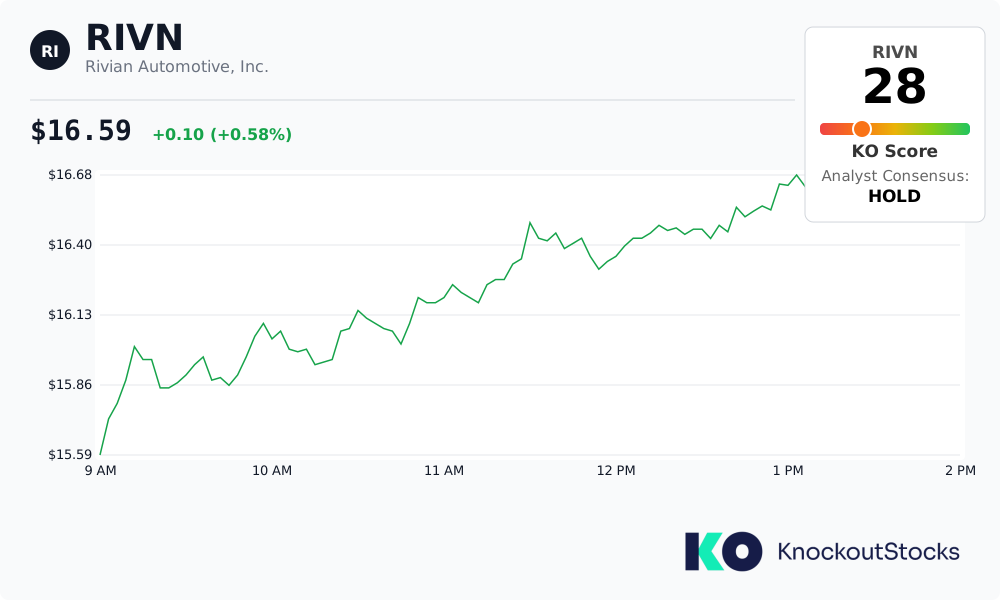
Shares of Rivian (RIVN) are changing hands at $17.45 Tuesday morning, reflecting a modest 0.8% gain. As the electric vehicle maker prepares to report Q2 results on July 30, volatility remains the name of the game.
 Rivian Automotive, Inc., RIVN
The stock’s recent trajectory illustrates the uncertainty surrounding the company—oscillating between highs above $20 and lows under $15 within just the last 30 days. This price action captures the conflicted sentiment among market participants.
On the bright side, Rivian posted impressive delivery figures for Q2. Vehicle sales totaled 12,194 units, marking an increase from the 10,661 delivered in the same period last year and comfortably exceeding the Street’s roughly 11,000-unit forecast.
Investors also welcomed the commencement of R2 deliveries. This new vehicle line represents Rivian’s push into more affordable EV territory, targeting mainstream consumers rather than the premium segment where R1 models command prices exceeding $80,000.
However, the top-line figure painted a less rosy picture. Quarterly revenue registered at $1.3 billion, falling approximately $200 million short of the ~$1.5 billion consensus estimate. The shortfall stemmed partly from reduced average transaction prices, attributed to a greater proportion of commercial delivery vans in the sales mix.
Adding complexity to the situation, management capitalized on the post-delivery report stock surge by issuing new equity. Predictably, this dilutive capital raise weighed on the share price.
The Liquidity Challenge
Rivian closed Q2 with approximately $4.8 billion in liquid assets. According to Wall Street projections, the automaker faces capital requirements of roughly $8 billion across the next 11 quarters before achieving positive free cash flow—a milestone not anticipated until 2029.
This arithmetic creates a conspicuous funding shortfall that market observers are monitoring intently.
Barclays analyst Dan Levy highlighted rising input costs as an additional headwind. Key materials including lithium, memory semiconductors, and copper have all experienced price inflation. Meanwhile, R2 production ramp-up introduces typical new-model launch expenses.
Nevertheless, Levy characterizes Q2 as a “noisy quarter” for Rivian, implying that investors might look past near-term cost challenges.
Key Topics for the Earnings Discussion
Levy anticipates that management’s July 30 earnings presentation will emphasize R2 market demand and margin progression, autonomous driving technology initiatives, and potential technology licensing arrangements.
Particularly important will be any disclosure regarding R2 reservation numbers. Robust order book data could help offset concerns about compressed profitability when the company unveils full quarterly results.
External factors also influenced Q2 dynamics. Oil prices remained elevated throughout much of the quarter, a dynamic that generally enhances EV appeal versus traditional internal combustion vehicles. However, crude subsequently retreated toward pre-Iran-conflict levels before geopolitical tensions reignited over the recent weekend.
Barclays currently assigns RIVN a Hold rating alongside a $14 price objective. Morgan Stanley’s Andrew Percoco adjusted his target upward to $13 from $12 on Tuesday while maintaining an Underweight recommendation, noting the firm holds a “more positive” near-term view following the delivery beat, though it continues favoring traditional automakers with internal combustion exposure over pure-play EV manufacturers.
The post Rivian (RIVN) Stock Faces Critical Q2 Earnings Test on July 30 appeared first on Blockonomi.