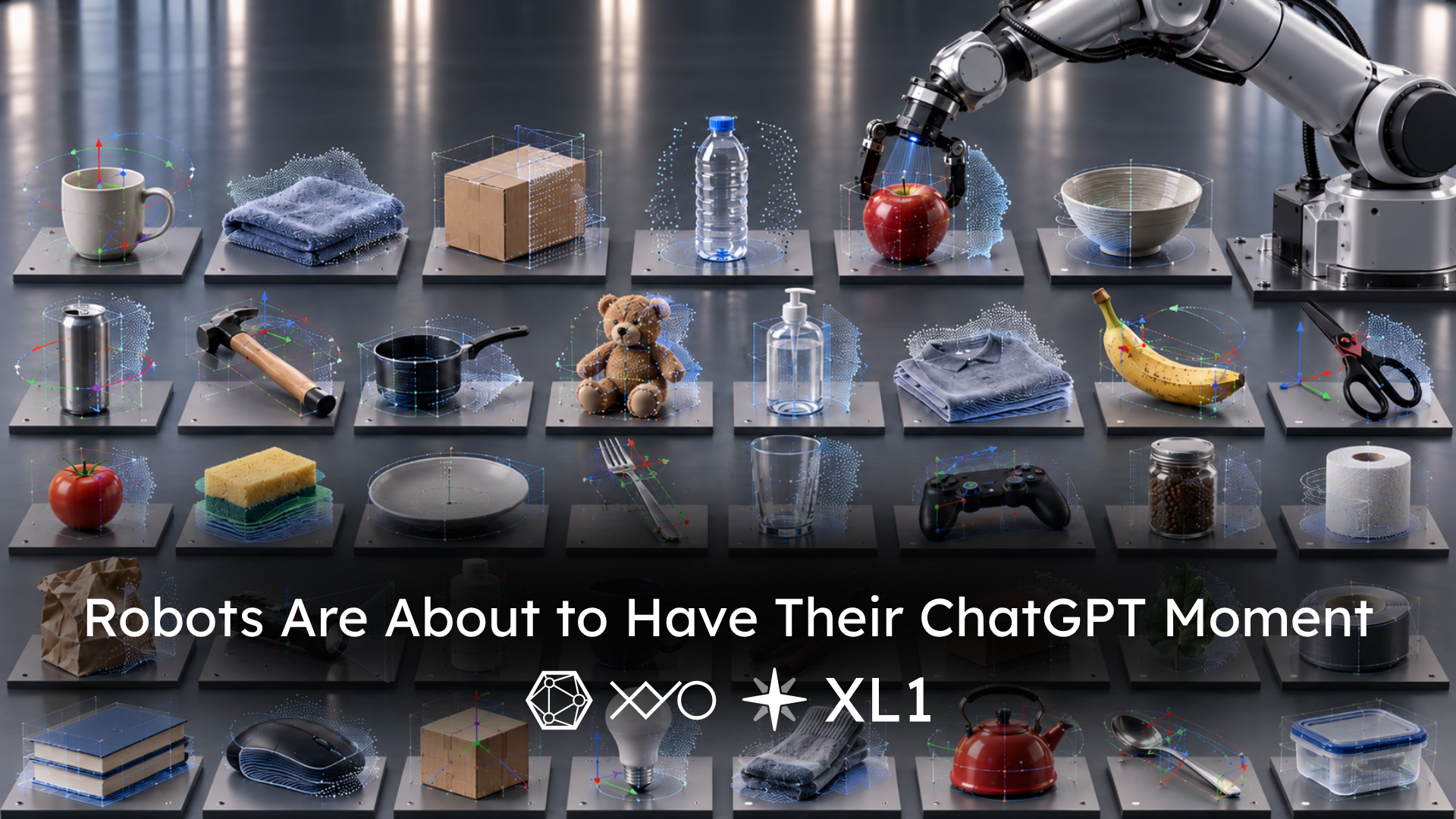
Robots have gotten remarkably good at looking impressive. They can sprint, dance, climb stairs, recover from falls and perform carefully rehearsed demonstrations that would have looked like s
Robots have gotten remarkably good at looking impressive. They can sprint, dance, climb stairs, recover from falls and perform carefully rehearsed demonstrations that would have looked like science fiction a decade ago. What they still struggle with is something much more ordinary: understanding what to do when the world stops cooperating with the script.
That may be about to change. Gao Yang, co-founder and chief scientist of Chinese robotics startup Spirit AI, recently told Reuters that robot intelligence could reach a ChatGPT-style breakthrough as soon as 2027. His definition is not a robot that can perform one spectacular trick, but one that can take a verbal instruction and carry out a general-purpose task it was not specifically programmed to perform.
That comparison is worth taking seriously because ChatGPT's breakthrough was not simply that an AI could produce text. Earlier systems could already do that. The leap was that one model could suddenly handle a huge range of tasks through ordinary language, making the underlying technology useful to people who had never touched an AI research tool before.
Robotics may be approaching a similar threshold. The hardware is improving quickly, but the harder problem is giving machines enough intelligence to understand unfamiliar situations, adapt when something changes and connect a human instruction to the messy physical world in front of them.
Spirit AI's approach helps explain why this next stage could look very different from the robotics breakthroughs that came before it. The company employs about 1,000 contractors to collect real-world movement data for training its robots, rather than depending entirely on simulated environments. Spirit AI says its systems have reached roughly a 90 percent success rate on simple tasks in controlled settings, although fine motor skills and unpredictable situations remain significant challenges.
That is the part of the robotics boom that gets less attention than the robots themselves. General-purpose machines need an enormous amount of information about how the physical world behaves, including how people move, how objects respond to pressure, how environments change and what a successful action actually looks like.
OpenAI is building around the same problem. Its robotics team is hiring engineers to create distributed infrastructure for robotics training data at exabyte scale, along with specialists focused specifically on real-world data acquisition. The company describes an operational environment with deployed robotic workcells continuously producing data, while its infrastructure teams are building systems for automated labeling, selection and large-scale training pipelines.
The scale is striking because it suggests that the race to build useful robots is becoming a race to collect, organize and learn from physical-world data. Language models had the internet waiting for them. Robots do not have an equivalent ready-made archive of every drawer opened, every object grasped, every floor crossed and every unexpected thing that can happen in a room.
They have to build it.
A language model can encounter the same sentence millions of times and still learn something useful from the pattern. A robot has to understand that two situations that look nearly identical can require completely different actions.
A cup may be empty or full. A door may be unlocked or stuck. A package may weigh half a pound or fifty pounds. A person may move into the robot's path halfway through a task, or somebody may put an object where it was not a few seconds earlier. The physical world produces a nearly endless supply of edge cases.
That is why robot training increasingly involves more than images or movement demonstrations. Cameras, depth sensors, location information, machine telemetry, human input and the robot's own actions can all become part of the learning process. Every attempt can create new data about what worked, what failed and what the machine encountered along the way.
The better robots become at operating independently, the more valuable that history becomes. Developers need to know where training data originated, which machine produced it, when an event occurred and whether the information used to train or evaluate a system is still intact.
A huge dataset is useful. A huge dataset whose history can be verified is considerably more useful.
XYO Layer One was built for systems that depend on data from the physical world. It can create compact verification records tied to larger datasets, giving developers a way to establish origin and history without trying to squeeze every frame of video or every sensor reading directly into XYO Layer One.
That becomes particularly relevant for robotics because a single physical task can generate a substantial amount of information. Video, sensor readings, movement data, location and system logs can all describe different pieces of the same event, while the verification record can provide a persistent reference for where that information came from and how it relates to the machine that produced it.
Through XYO's collaboration with Autonomys, larger datasets can also be stored permanently through Auto Drive on the Autonomys Network while a linked verification record is finalized on XYO Layer One. The XYO AI SDK gives developers a way to bring verified data into AI systems that need information tied to physical devices, places and events.
This does not make a robot smarter on its own. It gives the systems training that robot a stronger way to establish what happened in the world, where the information came from and whether the record can still be trusted later.
There is still a large gap between today's humanoid demonstrations and robots that can reliably handle whatever people ask them to do. Around 7,000 humanoid robots were sold worldwide for industrial and professional service applications in 2025, and many of those machines went to research institutions and AI developers rather than ordinary workplaces.
But that relatively small number also shows how early this market still is. The defining breakthrough may not be a faster sprint, a smoother dance or another carefully staged demonstration. It may be the moment a robot can receive an ordinary instruction, understand an unfamiliar environment and figure out the rest.
If Spirit AI is right, that moment could arrive surprisingly soon. Getting there will require better models and better machines, but it will also require an enormous new body of data about how the physical world works and a reliable way to know where that data came from.
ChatGPT learned from a world people had already documented online. Robots have to learn from the world happening around them.