Senate Democratic Leader Chuck Schumer is pushing to create the nation's first independent anti-corruption bureau, a proposal whose messaging leans heavily on Trump's crypto ventures as an ex
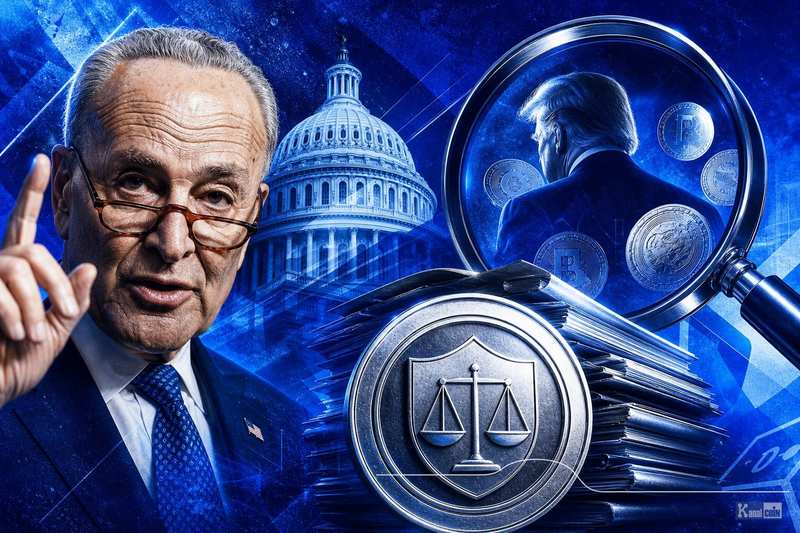
Senate Democratic Leader Chuck Schumer is pushing to create the nation's first independent anti-corruption bureau, a proposal whose messaging leans heavily on Trump's crypto ventures as an example of a president cashing in on public office.
What Schumer's Anti-Corruption Agency Proposal Is Aiming to Do
Schumer unveiled legislation to establish an independent anti-corruption bureau designed to stop presidents from profiting off the presidency, according to the Senate Democrats' announcement. For related coverage, see Nvidia to Export AI Chips to China, Trump Approves.
The measure is framed as a watchdog focused on presidential self-dealing rather than a broad market or securities reform. Its stated purpose is oversight and enforcement against officials using public office for private gain, per the proposal's rollout. For related coverage, see Russian Oil Sales Surge as Trump Admin Extends Waivers.
For crypto readers, the significance is that digital-asset activity is being cited directly within a governance and ethics debate, not treated as a separate financial-regulation question. That places the proposal alongside other recent flashpoints between the two leaders, including their talks over resolving a government shutdown.
Why Trump's Crypto Ventures Became Part of the Argument
The proposal's framing invokes Trump's crypto ventures as part of the anti-corruption case, tying the president's digital-asset dealings to concerns about profiteering from office. This is the element that makes the story directly relevant to digital-asset audiences.
Senators Padilla and Schumer separately launched an initiative aimed at exposing what they describe as Trump's self-dealing and presidential profiteering, according to Senator Padilla's office. The crypto reference functions as a political argument for the new bureau, not as a legal finding.
It is worth separating the proposal from any assertion of wrongdoing. The legislation reflects the sponsors' characterization of the president's conduct; it does not establish that any specific crypto venture broke the law. Reporting on Trump's financial disclosures has documented crypto-related holdings, as detailed by the Associated Press.
What This Means for the Crypto Policy Debate
Because crypto sits inside the headline framing rather than at the margins, the proposal signals that digital-asset conduct is increasingly being folded into political-ethics fights. Other Democratic senators have moved in a similar direction, with Blumenthal and Van Hollen scheduling a public forum on what they term Trump's crypto corruption, according to Senator Blumenthal's office.
For the policy debate, this convergence suggests future oversight messaging around digital assets may be routed through ethics and conflict-of-interest arguments as much as through financial regulation. The dynamic mirrors the broader partisan back-and-forth seen in recent fiscal standoffs, including a deal with Democrats to avoid a shutdown and threats to target Democratic programs.
How far the bureau proposal advances remains tied to the Senate calendar and the legislation's sponsors, whose stated aim is a standing, independent enforcement body rather than a one-time inquiry.
Disclaimer: This article is for informational purposes only and does not constitute financial or investment advice. Cryptocurrency and digital asset markets carry significant risk. Always do your own research before making decisions.
Read original article on kanalcoin.com