The SEC’s Rule 206(4)-5, known as the “pay-to-play” rule, prohibits an investment adviser from getting paid by any governmental client for two years if the adviser or anyone covered by the ru
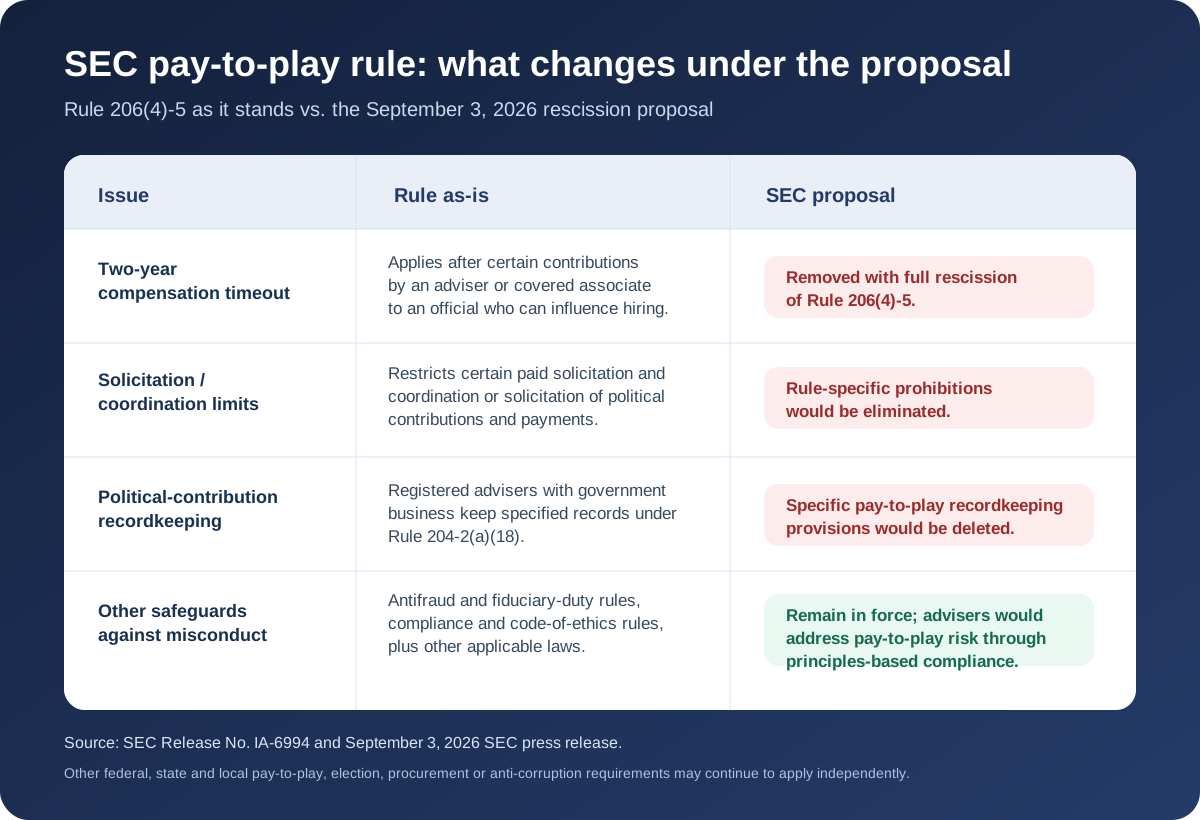
The SEC’s Rule 206(4)-5, known as the “pay-to-play” rule, prohibits an investment adviser from getting paid by any governmental client for two years if the adviser or anyone covered by the rule has made a political contribution to any such official or candidate having the ability to influence the selection of the adviser. On September 3, the SEC suggested repealing the mentioned rule and related recordkeeping requirements.
If the proposal is successful, investment advisers and their staff members would benefit the most. Their firms could carry on with the management of government money for compensation without having to follow the rule of abstaining from engaging in any covered political donation for two years.
Who stands to gain if the rule disappears
According to the SEC, there are 16,434 investment advisers registered with the agency and approximately 1.11 million of their employees across those firms. As per the provisions of the existing regulation, the company with covered contribution may not be able to take the fees from a government agency for two years.
Among those likely to benefit most from the regulations are managers competing for the public sector business. Public pension funds, state retirement systems and public university endowments have large investment mandates and the purpose of the rule is to ensure that political contributions do not affect who wins that business.
The proposal would do away with the political-contribution-specific recordkeeping provisions that are included in the rule. But other provisions for protection will still be applied, such as anti-fraud provisions, fiduciary obligations, compliance requirements, and ethical codes. Also, anti-corruption and procurement laws at the federal, state, and local levels will still be applicable.
Employees may be subjected to fewer restrictions internally. The Commission states that some companies responded to the complexity of the regulation by prohibiting any political contribution instead of risking a possible violation.
The 15-year-old rule the SEC calls a “trap for the unwary”
The term “pay-to-play” applies to political donations which have an impact on public investment contracts. The proposal is also in line with a wider deregulatory trend that Cryptopolitan reported on in April when SEC Chairman Paul Atkins said that there were attempts to scrap unnecessary regulations.
In a statement, the SEC calls the rule a complex, unclear and burdensome one saying it can be viewed as a “de facto strict liability standard.” WilmerHale indicated in a client alert dated May 19 that the two-year timeout might apply “even where the contribution is relatively small,” which do not demonstrate any improper intent.
Lookback provisions of the rule may pick up contributions made before an employee is recognized as a covered associate. Even donations made to a federal campaign may expose a contributor if the candidate is currently in a covered position in the state or local government.
“People should not have to choose between their political speech rights and a job in a particular industry,” said Atkins in his statement dated September 3.
What the rule was built to stop
The regulators are not acting without any background information. Research about 22,000 SEC-registered advisory firms from 2001 to 2016 shows that donations to state authorities and political action committees have corresponded to an increase in business for public pensions. The researchers also noted a significant decline in political donations from managers with a lot of government business after the regulations came into effect.
The Investment Adviser Association has pushed for reform without demanding complete repeal. It favors limiting campaign contributions in ways that do not create business deals, while over time proposing a “more tailored approach” that minimizes compliance requirements.
Timing lands in a record political-spending year
The proposal arrives as corporate political spending is on the rise. According to the report from Public Citizen published on August 27, corporations have already spent $646 million in 2026 midterms as shown by second quarter disclosures, which is 40% more than the amount spent in the entire 2024 election cycle ($461 million). Crypto companies have contributed $206 million to the total for 2026.
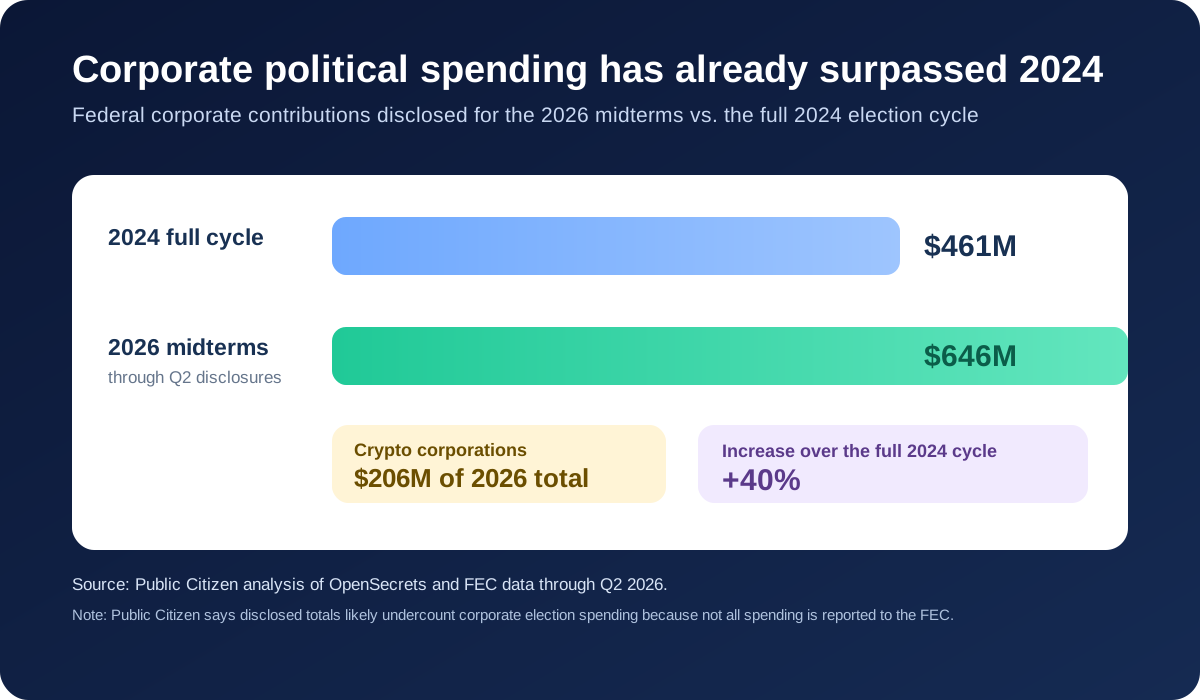
This creates a politically charged moment since the SEC seeks to eliminate the penalty related to financial adviser political contributions, a move that coincides with unprecedented levels of spending by corporations on elections.
There is nothing that has been finalized. The comment period will finish 60 days from the publication of the proposal in the Federal Register. Again, the question is whether any public comment will have any effect on the Commission’s decision to adopt the rescission measures.
Don’t just read crypto news. Understand it. Subscribe to our newsletter. It's free.