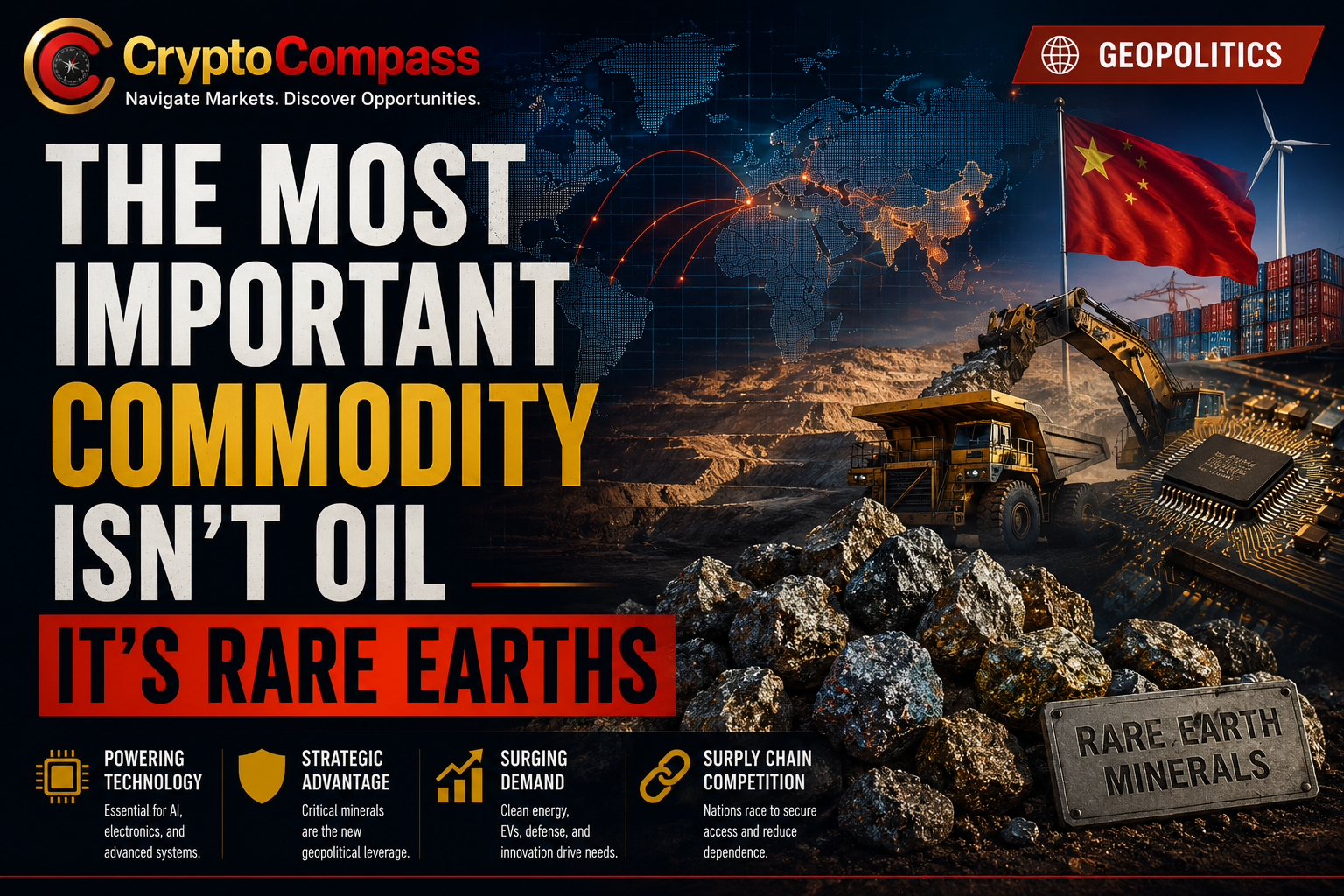
The Most Important Commodity Isn't Oil. It's Rare Earths.
Oil powered the industrial age. Rare earth minerals may power the technological age. As global competition intensifies, investors are paying closer attention to one of the world's most strategic resources.
A
AnonymousCryptoCompass newsroom
June 5, 2026
6 min read
ANALYSIS
CryptoCompass editorial visual for policy coverage.
The Most Important Commodity Isn't Oil. It's Rare Earths.
The Resource Behind Modern Technology
When investors think about commodities, they usually think about oil.
Sometimes gold.
Occasionally copper.
Rare earth minerals rarely receive the same attention.
Yet these materials sit at the center of some of the world's most important industries.
Electric vehicles.
Artificial intelligence.
Advanced semiconductors.
Defense systems.
Renewable energy infrastructure.
Without rare earths, much of the modern technological economy would struggle to function.
Why Rare Earths Matter
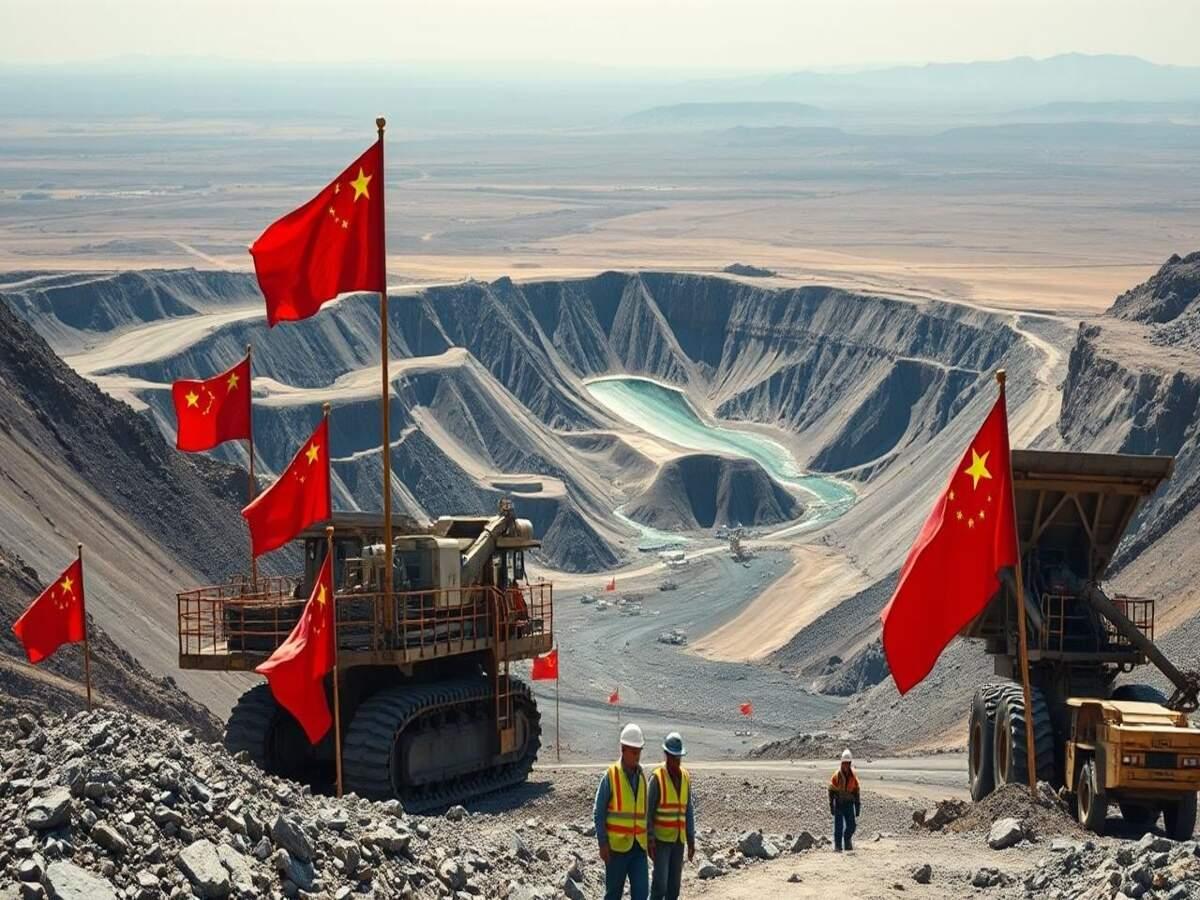
Rare earth minerals are essential inputs for advanced technologies including electric vehicles, semiconductors, renewable energy systems, and defense equipment.Source: Reuters
Rare earth elements are used in powerful magnets, batteries, electronics, and advanced manufacturing.
They are essential components in products ranging from smartphones to fighter jets.
As global demand for technology grows, demand for these minerals continues to rise.
The challenge is that supply remains highly concentrated.
The Geopolitical Dimension
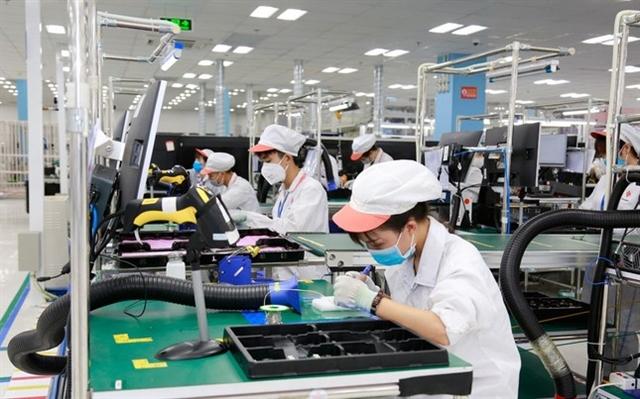
Access to critical minerals has become increasingly important for semiconductor manufacturing, AI infrastructure, and advanced industrial production.Source: Reuters
Rare earths are no longer simply an industrial story.
They are increasingly a geopolitical story.
Governments view access to critical minerals as a matter of economic and national security.
Supply chain resilience has become a strategic priority.
As a result, countries are investing heavily in domestic production, processing capacity, and alternative supply networks.
Why Markets Are Paying Attention
Institutional investors are increasingly monitoring critical minerals because they influence multiple long-term themes.
Artificial intelligence.
Electric vehicles.
Energy transition.
Defense spending.
Advanced manufacturing.
Rare earths sit at the intersection of all these trends.
This makes them one of the most strategically important commodity markets in the world.
The Investment Implications
Investors often focus on the companies building new technologies.
However, the materials required to build those technologies can be just as important.
History shows that infrastructure and supply chains often create opportunities alongside innovation itself.
The next decade may not only be defined by who develops the best technology.
It may also be defined by who controls the resources needed to build it.
Looking Ahead
The global economy is becoming increasingly dependent on advanced technologies.
That dependence creates new strategic priorities.
Rare earth minerals may not generate the same headlines as oil or gold.
But their importance is becoming increasingly difficult to ignore.
CryptoCompass View
Technology may shape the future.
Resources make technology possible.
Investors who understand the connection between geopolitics, supply chains, and critical minerals may be better positioned to identify long-term opportunities.
Navigate Markets. Discover Opportunities.
Frequently Asked Questions
What are rare earth elements?
A group of minerals used in electronics, batteries, magnets, renewable energy systems, and defense technologies.
Why are rare earths important?
They are essential components in many advanced technologies and industrial applications.
Why are governments concerned about rare earth supplies?
Concentrated supply chains create economic and strategic risks.
How do rare earths relate to AI?
Advanced computing infrastructure, data centers, and electronic systems depend on technologies that utilize critical minerals.
What should investors watch?
Supply chain developments, government policies, mining investments, and technological demand trends.
White House crypto adviser Patrick Witt is defending the CLARITY Act as lawmakers try to move the U.S. crypto market-structure bill through Congress before the 2026 midterm elections tighten
JP Morgan, Bank of America, Citi and Wells Fargo are planning to launch a joint tokenized deposit network next year, in what would mark one of the largest coordinated moves by traditional U.S
TLDR: Polymarket CMO Matthew Modabber sent $2.5M via personal PayPal to 800+ recipients in 14 months. At least $350K went to influencers who posted about Polymarket 490+ times without disclos