Most games don’t actually teach you how to get better… they just keep you busy, improvement comes from fast failure, not long sessions, and @Elympics is one of the few building around that tr
Most games don’t actually teach you how to get better… they just keep you busy, improvement comes from fast failure, not long sessions, and @Elympics is one of the few building around that truth.
At the heart of it all is the short feedback loop, you take an action, you immediately see the result, you adjust, and you go again. That tight cycle is what makes games like Rocket League or TFT so addictive and skill driven, you’re constantly learning in real time.
Now imagine that same loop, but instead of your progress being hidden inside a game server, it’s actually verifiable, trackable, and tied to something bigger.
That’s where @Elympics comes in.
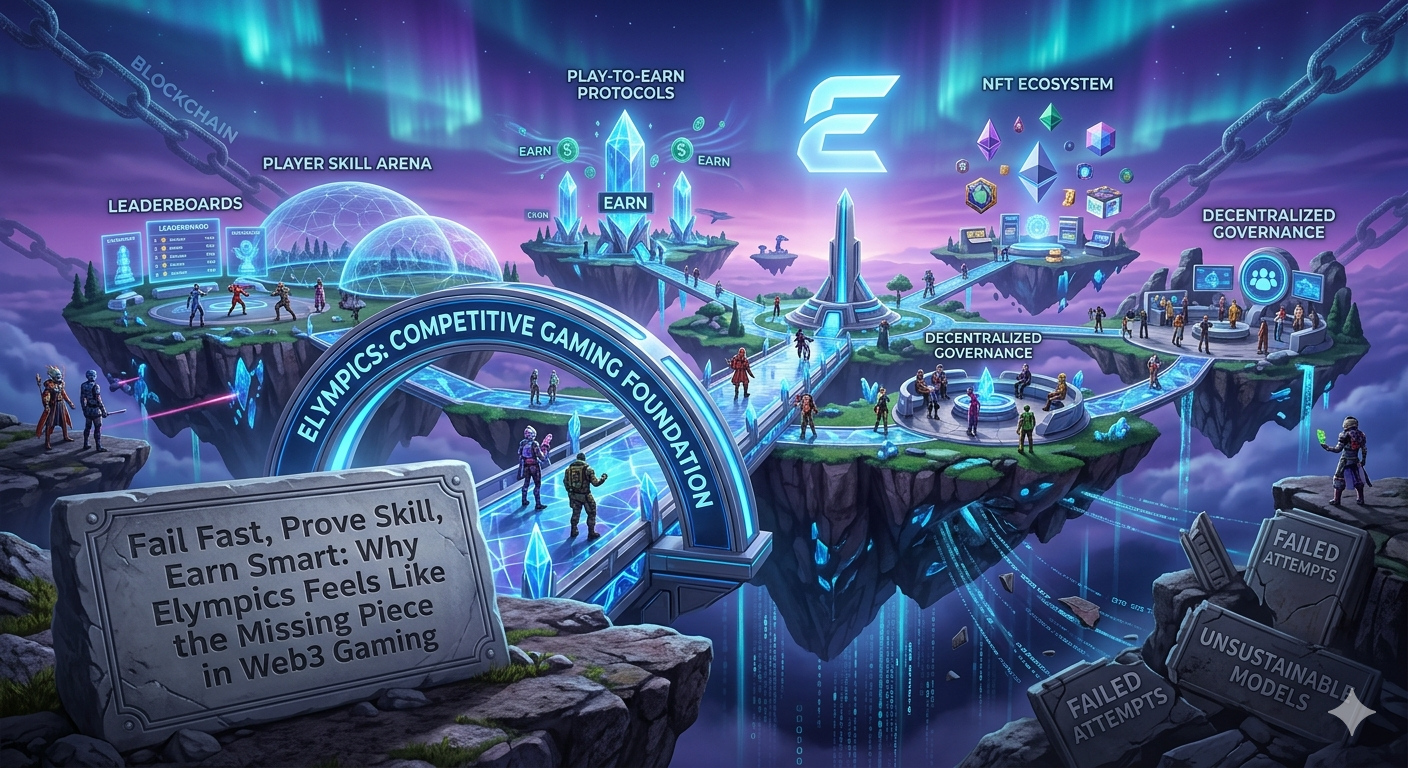
They’re not just making fast games, they’re building the infrastructure that makes fast, competitive, skill based gameplay trustworthy, their system runs on server authoritative logic, meaning results aren’t decided on your device where they can be manipulated. Every match is validated, deterministic, and secured before anything gets recorded, so when you lose, it’s clear why, when you win, it’s real, no funny business.
That matters more than people think, because short feedback loops only work if players trust the outcome, if the system feels unfair, the whole learning cycle collapses, Elympics fixes that by making every result something you can rely on.

Then comes the Web3 layer, and this is where things quietly get powerful.
Instead of your skill being locked inside one game, your performance becomes part of a broader, verifiable identity, match results can be anchored on chain, meaning your improvement isn’t just something you feel, it’s something that can be proven over time, that opens the door to a different kind of ecosystem where rewards aren’t based on how long you farm, but how well you actually play.
And naturally, this has a direct effect on the ecosystem token.
When a system is built around real performance, the token stops being just a reward mechanism and starts becoming a reflection of competitive activity, players engage more because they’re improving faster, more matches happen because the loop is tight and frictionless, that drives demand for tournaments, ranked play, and entry based competitions, all of which feed into the token economy in a much healthier way than inflation heavy play-to-earn models we’ve seen before.
In simple terms, if the gameplay loop is strong, the token has something real backing it, consistent usage, competitive demand, and skill driven incentives.
There’s actual data backing this direction too, research in learning science shows that immediate feedback significantly improves skill acquisition, and the gaming industry has already proven that shorter match cycles increase engagement and retention. Elympics is basically taking a model that already works and reinforcing it with verifiability and fair execution.
Of course, it’s not automatic success, everything depends on smooth performance, low latency, and keeping the user experience clean, if gameplay ever feels slow or complicated, the whole advantage disappears, and as with any competitive system, balance matters, too intense, and casual players might feel pushed out.
But if they get it right...
This is one of the few models in Web3 that actually makes sense long term.Because at the end of the day, people don’t stay where they’re just earning… they stay where they’re improving.
And Elympics is turning every few minutes of gameplay into real skill growth and tying that into a solid, activity driven token economy.