Across the continent, more and more communities are empowering women, mentoring them, and backing their ideas because Africa’s women in tech no longer wait for an invitation. For years, the c
Across the continent, more and more communities are empowering women, mentoring them, and backing their ideas because Africa’s women in tech no longer wait for an invitation. For years, the continent’s tech boom has been told as a story of fintech unicorns and young male founders. Women have been part of it all along, but often without the training, mentors, networks or funding to match.
Some, like She Code Africa, have grown into pan-African movements with more than 50,000 members across over 20 countries. Others, like Wetech, fill a conference hall with over 1,000 women and put a ₦8.5 million prize pool behind women founders. Others reach the women the tech industry rarely sees, from rural communities to mothers returning to work to professionals building remote careers.
For a woman trying to break in, switch careers or start a company, knowing where to begin can be the hardest part. The 10 communities below offer training, mentorship, funding and opportunities, and each one meets women at a different stage.
1. She Code Africa
She Code Africa (SCA) began in September 2016, when Ada Nduka Oyom noticed how few African women appeared among the developers celebrated on World Programmers Day. A 2016 graduate of microbiology from the University of Nigeria, Nsukka, she started telling those women’s stories, and the project grew into a community where women could meet and learn from one another. It is now a pan-African non-profit. The organisation says it has more than 50,000 members across over 20 African countries and has reached more than 65,000 women through its programmes and scholarships.
Its work spans technical training, mentorship, scholarships, digital literacy and career development. It runs university chapters and an HP laptop scholarship, and its stated goal is to equip 100,000 African women with tech skills by 2030.
In 2026, SCA marked its 10th anniversary with a summit in Lagos on 19 September, themed “A Decade of Impact: African Women Architecting the Digital Future.”
2. Heels & Tech
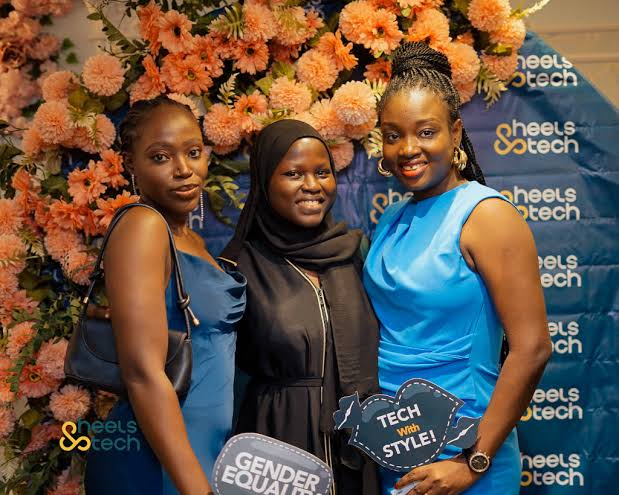
Heels & Tech was founded in 2020 in Lagos by Bisola Alabi, a graduate of Obafemi Awolowo University who previously worked as a customer experience consultant and explored startups and fashion before returning to tech.
It started as a platform to help mothers upskill and return to the workforce, and has since expanded to include any woman pursuing a career change or advancement. Participants join training cohorts that offer practical instruction in no-code technology skills.
A 2023 report on the platform said it had a community of more than 30,000 members across 22 countries, that more than 100 women had moved into the tech industry, and that mentees had found work at companies including Amazon, Accenture and UBA. Alabi told the same report that mentees had increased their earnings by $8.07 million.
3. Wetech
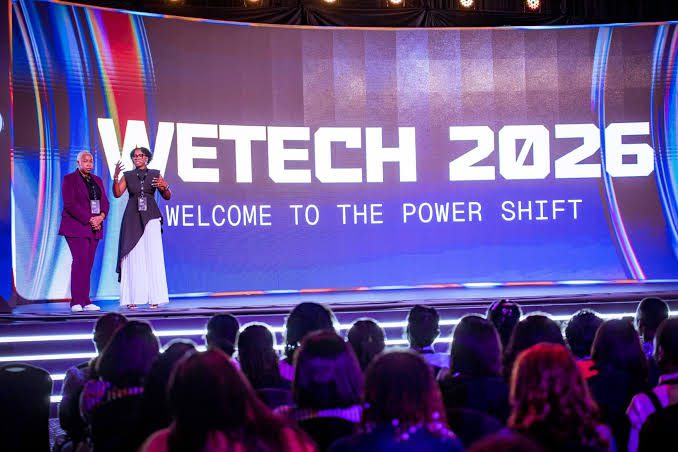
Gabriella Uwadiegwu, its President, and Flora Uwadiegwu, its Vice President, founded Wetech in 2019 in Lagos. It began with a women-in-tech panel in August 2019, moved online in 2020, and has since grown into an annual conference. The 2022 edition, themed “We Are Here, A Thousand of Us,” drew about 1,000 attendees, and its fifth-anniversary conference in 2024 drew more than 1,000 women. It runs mentorship cohorts, an Ambassadors programme launched in 2021, workshops and demo days.
Its best-known programme is PitchHER, an annual competition for women founders that ends with a pitch on the main stage. Winners in three consecutive years joined global accelerators that invested hundreds of thousands of dollars in their ventures.
At the 2026 conference on 26 September at the Landmark Centre, Lagos, 25 women founders completed the eight-week programme and six pitched for a ₦8.5 million prize pool, where Wakamedics won ₦5 million, Dynalimb Technologies ₦2.5 million and TFB Studios AI ₦1 million.
4. Women Techmakers
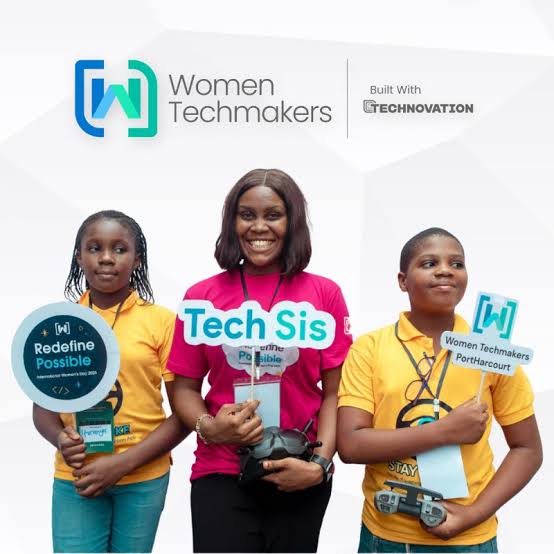
Women Techmakers is a Google programme that gives women in technology visibility, community and resources. It runs events and leadership programmes and keeps membership Slack communities so members stay connected between events. Learning materials for girls and women sit alongside them, and local chapters carry the programme into individual cities.
When a woman in a smaller city wants to feel part of a global tech community, she often lands here. Women Techmakers is a Google programme that has been running since 2014, built to give women in tech visibility, community and resources. It offers leadership programmes and learning materials for girls and women. It works through local partner groups, so members can plug into the network without leaving home.
5. Women Techsters Fellowship (Tech4Dev)
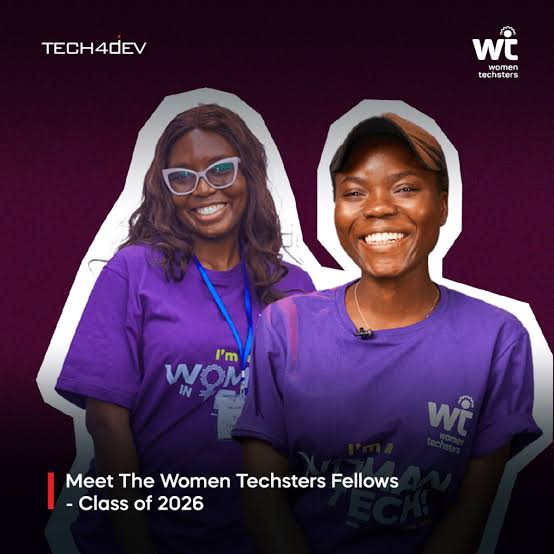
Women Techsters is a digital skills and employability programme run by Tech4Dev, a non-profit co-founded in 2016 by Oladiwura Oladepo and Joel Ogunsola. It began as a pilot, the Nigerian Women Techsters, which reached 2,400 women, and has since expanded across Africa. The fellowship is free, runs for one year and is open to women and girls aged 16 to 40. It combines six months of intensive training, a six-month internship and mentorship.
Its 2023 class admitted 1,466 women from 14,509 completed applications, and 847 graduated from 15 African countries. Fellows train in tracks including software development, mobile development, cybersecurity, product design, product management, data science and AI engineering, blockchain, and mixed reality.
Tech4Dev says Women Techsters reached 89,153 women in 2023 across its fellowships, bootcamps, masterclasses and open days.
6. Women in Tech Nigeria

Women in Tech Nigeria is the Nigerian chapter of Women in Tech® Global, a movement headquartered in Paris. The global organisation was founded in 2018 by Ayumi Moore Aoki. It has chapters in 57 countries and more than 200,000 members. The Nigerian chapter is led by Solape Akinpelu, who is listed as Chapter Director. The Nigerian chapter officially launched on November 24, 2021.
Members get mentorship programmes, skill-building initiatives, networking events and a job board. In March 2026, the chapter recognised 50 women as “Women Tech Titans”. The wider movement’s work in Nigeria includes MAKEATHON, which the global organisation says graduated 2,500 girls and women in soft, digital and tech skills. Women interested in joining can access the organisation’s free membership tier, while paid plans offer additional networking, mentorship and learning opportunities.
7. TechHer

Digital safety is one of the topics women get the least training in, but TechHer puts it at the centre. Based in Abuja but reaching women nationwide, it runs digital literacy and digital security workshops designed to make technology approachable and safe. TechHer was founded in Abuja by Chioma Agwuegbo and held its first event on 28 August 2015. Its focus goes beyond skills. It runs digital literacy classes in secondary and tertiary institutions and works on digital rights and online safety for women.
It started the GBV Emergency Response Fund in 2021 to give urgent financial support to survivors of gender-based violence. It runs KURAM, a platform that collects data on and responds to online gender-based violence, and as a trusted partner of Meta, it has had abusive content removed from social platforms. It developed Nigeria’s first prosecutorial manual for technology-facilitated gender-based violence and set up the country’s first online gender-based violence law clinic at Nile University. It also partners on the Microsoft Nigeria TechHer Digital Skills Programme.
8. Tech Herfrica

Not every woman lives within reach of a tech hub, and Tech Herfrica was created especially for those who do not have access. Tech Herfrica was founded in February 2023 in Abuja by Imade Bibowei-Osuobeni, a public policy advisor and advocate for an inclusive digital economy, who serves as its CEO. Its mission is digital and financial inclusion for women and girls in rural and marginalised African communities. Its flagship programme, EquipHer4Growth, offers hands-on digital and financial literacy training, often in local languages such as Hausa, Igbo, Yoruba and Pidgin English. HerLocal Market is an e-commerce platform that connects rural women farmers and traders with buyers beyond their communities.
Its organisation profile says it operates in six countries (Nigeria, Ghana, Kenya, Uganda, Rwanda and Tanzania), has more than 500 staff and volunteers, and has raised beneficiaries’ incomes by an average of 50%. It won the ITU’s SDG Digital Game Changers Award (People category) in 2023, presented at UN Headquarters, and was named Best Digital Inclusion Initiative 2025 (Africa) at the MEA Business Awards. In 2023, it also received the Visionary African Women Award from the Lilian Ike Foundation.
9. Remote WorkHer
Remote WorkHer helps African women develop the skills and professional profiles needed to compete for remote jobs.
Founded by content creator and entrepreneur Adeife Adeoye, the platform provides career guidance, mentorship, job opportunities and tools for preparing applications.
Its current offering includes a job board, application tracker, CV support, LinkedIn optimisation and learning resources. Users can access some services for free, while additional career tools and support are available through paid plans.
10. Developers in Vogue
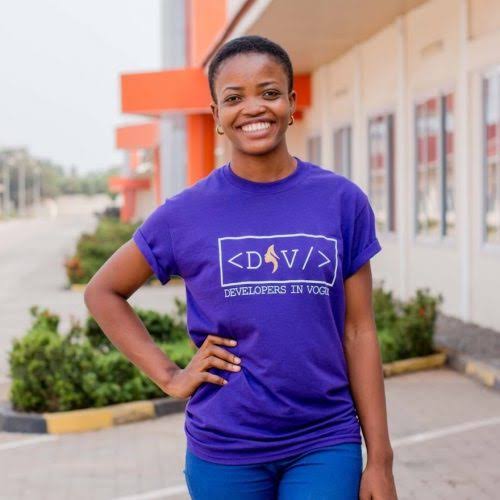
Developers in Vogue helps women, including those without coding experience, build technology careers. Founded by Ivy Barley in 2017, its aim is to train women and girls for careers in technology, especially those without a STEM background. It is based in Ghana, and its Tech Accelerator Program is a one-year programme with a three-month internship for intermediate developers. It also runs a soft skills and mentorship programme, a six-month online full-stack web development fellowship that requires no prior coding knowledge, and workshops for high school girls.
A 2024 profile by F5, which supports the group through its STEM Education Grant, said Developers in Vogue had trained more than 500 women as software engineers and introduced thousands more to STEM. It said 85% of those trained had gone on to full-time work, about 70% of beneficiaries came from non-STEM backgrounds, and alumni work at companies including Microsoft (Norway) and JP Morgan.
The group plans to establish Tech Accelerator hubs in three more Ghanaian cities by 2026.
Read also: Meet 10 entrepreneurs building the tech and businesses behind Africa’s digital music economy