Buy now, pay later has become one of the most popular ways to shop, letting buyers split purchases into smaller installments, often with no interest. Max Schwartz, CEO of Anvil Research Labs,
Buy now, pay later has become one of the most popular ways to shop, letting buyers split purchases into smaller installments, often with no interest.
Max Schwartz, CEO of Anvil Research Labs, thinks the industry is on track to become a trillion-dollar business by 2030. He also thinks it’s building on shaky ground.
Anvil Research Labs builds software, tools and integrations for Anvil, a decentralized finance, or DeFi, protocol. DeFi refers to financial services that run on blockchains instead of through banks.
Related: Anvil CEO says on-chain letters of credit make lending ‘virtually default proof’
A product shoppers actually want
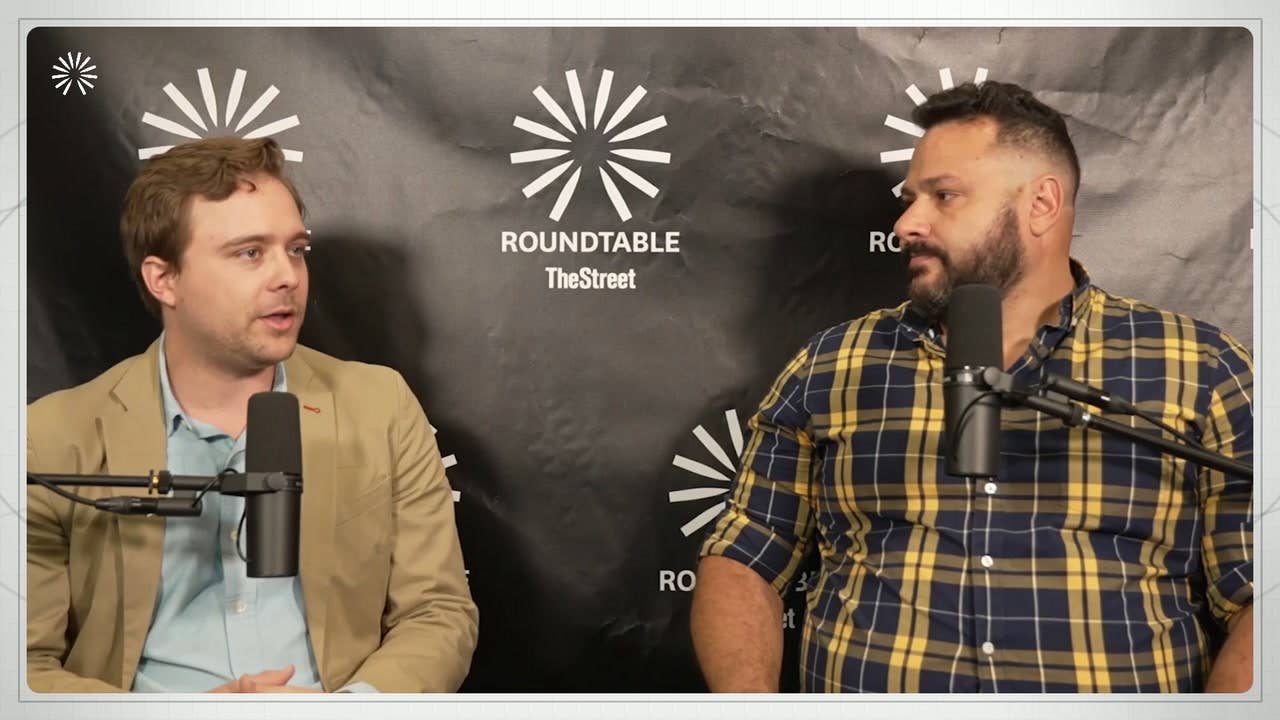
In an exclusive interview with TheStreet Roundtable, Schwartz gave BNPL providers credit for “meeting a market need.”
“Regardless of what you think about the industry and its practices, people prefer to pay over time,” he said.
For some, it’s a necessity. “I don’t have the money to pay for this large purchase now, but I will be able to over time,” he said, describing the typical shopper.
For others, it’s simply smart money management, especially when providers offer promotional 0% rates.
“Why would I pay before I have to if I can continue to have my money working for me?” Schwartz said.
He pointed out that banks are now offering the same option.
“Even my Chase card says all the time, 'do you want to pay for this over time?'”
Incentives pointing the wrong way
The trouble, Schwartz said, is that much of the lending “is not really based on anything.”
He said providers do very little checking on customers. Many skip hard credit checks, bank statements and full credit histories.
At best, they run a soft credit check, which he called “a very watered down thing to do.”
“The incentive seems to be to pump out as many of these loans as possible,” he said.
Providers are racing to sign up users and stand to earn significant fees from merchants. “So the incentives are all misaligned.”
The result, he said, is lenders “taking on a ton of default risk,” with some even targeting people who have little or no credit.
Popular on TheStreet Roundtable:
Gen Z skips the credit score playbook
Schwartz said younger generations are making the gap wider.
“They’re not playing this game of how do I build a credit score the way that my parents drilled it in my head,” he said.
Gen Z and Gen Alpha aren’t buying houses the way earlier generations did. Instead, he said, they’re investing in crypto.
He cited 741 million people using crypto last year and a total crypto market value of $2.8 trillion.
“This is their investment of choice,” he said.
Without a traditional credit history, those borrowers create what Schwartz called “a massive blind spot in the market.”
Academic research points to a similar pull among young people. A 2025 study of 657 people aged 18 to 25, published in Springer’s ICICT 2025 conference proceedings, found that awareness of Bitcoin and other cryptocurrencies was very high.
It also found that how much value young people see in crypto shapes whether they use it.
Anvil’s $700 billion "phantom debt" warning
Schwartz said the blind spot grows because most BNPL providers don’t report loans to credit bureaus, the agencies that track borrowers’ credit histories.
Anvil calls the result a $700 billion “phantom debt” problem.
He described a careful lender reviewing his own credit file and seeing very little debt. “I could be massively over-leveraged in BNPLs and you’d never know,” he said.
The industry is already big. U.S. shoppers spent about $107.4 billion through BNPL in 2025, according to Statista, and the share of U.S. adults using it rose from 10% in 2021 to 15% in 2024.
Schwartz expects the phantom debt to keep “ballooning as the industry grows.”
Related: American Gen Z takes radical path to wealth creation