Digital asset treasury companies (DATs) were one of crypto’s hottest trades until the bear market hit. Their equity valuations took deep drawdowns, and most now trade below the value of the c
Digital asset treasury companies (DATs) were one of crypto’s hottest trades until the bear market hit. Their equity valuations took deep drawdowns, and most now trade below the value of the crypto they hold. Only four of the 20 largest DATs by assets traded above an mNAV of 1 in September, according to a DWF Ventures report. An mNAV below 1 means the market values the company at less than its tokens.
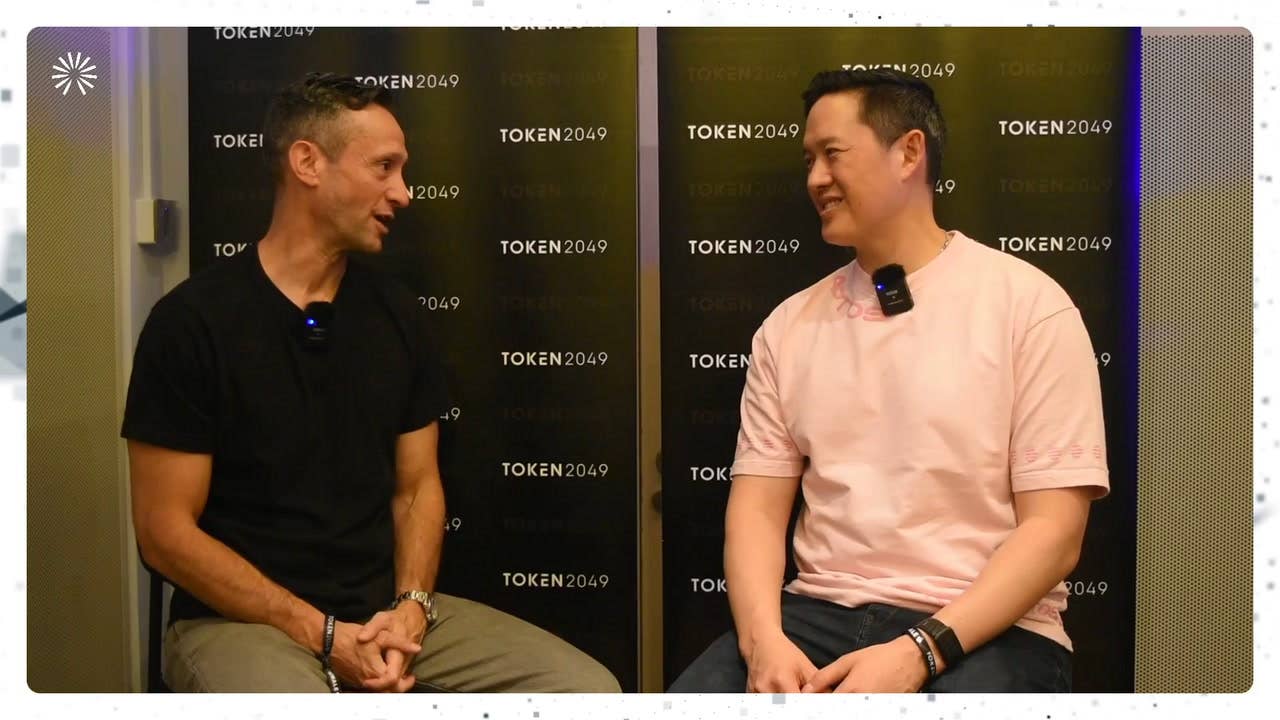
Solomon Tesfaye, chief business officer at Aptos Labs, said in an interview with TheStreet Roundtable that the vehicles aren’t going anywhere.
“Different investors have different limitations around how they can deploy their capital,” Tesfaye said. “Some asset managers can’t invest directly in crypto. And so they need an indirect way to get exposure.”
Some can buy a fund, he said, while others are limited to an operating company like Strategy.
Michael Saylor’s firm pioneered the model in 2020, which pitches leveraged Bitcoin exposure without holding the coin.
It has been harder to sustain this year. Bitcoin fell from a record above $126,000 in October 2025 to below $60,000, Cointelegraph reported. Strategy has sold about $218 million in bitcoin this year to fund dividends and refill its dollar reserve, and has authorized up to $1.25 billion in bitcoin sales, Reuters reported in July.
Related: Mace Ai founders on what OpenAI's Hugging Face breach means for businesses
Decibel takes trading fully on-chain
Aptos is also building direct access through Decibel, a perpetual DEX incubated by Aptos Labs.
“It’s now surpassed over seven and a half billion in cumulative volume,” Tesfaye said.
Decibel crossed $7 billion in total trading volume in September.
Decibel launched Feb. 26 with five perp markets. Its latest update, on Oct. 6, put it at $7.7 billion in cumulative volume and 31 million trades across 77 markets. More than $1.19 billion of that volume has come through third-party apps using Builder Codes, which let wallets, bots and interfaces send orders into Decibel’s order book in exchange for a share of the fees.
The exchange runs fully on-chain: every order, match and fill happens on Aptos, so traders can see how it operates. Tesfaye also said it lists perpetual futures (perps) tied to crypto, equities, and commodities. Spot trading was added in August.
More news:
Regulated futures for US traders
For investors who want a regulated venue, Aptos has APT futures on Bitnomial.
“We’ve had them for over six months,” Tesfaye said.
The contracts launched Jan. 14 as the first US-regulated APT futures, first for institutional clients, with retail access through Bitnomial’s Botanical platform to follow. They have monthly expirations and settle in dollars or APT depending on position direction.
Bitnomial President Michael Dunn said at launch that a regulated futures market is “a prerequisite for spot crypto ETF approval under the SEC’s generic listing standards.” The SEC approved those standards on Sept. 17, 2025, for exchange-traded products that hold spot commodities, including digital assets. Bitwise filed to launch an Aptos ETF in March 2025.
Tesfaye said more providers are building APT-linked products as traditional firms show up at crypto events.
“It’s just really exciting to see that institutions truly leaning in at this point,” he said. “And Aptos will continue to be leaning in full force.”
Why it matters
Tesfaye’s argument is about access. Investors who cannot hold tokens directly need a listed company, a fund or a regulated future to get exposure. Treasury stocks trading below net asset value make the first route less appealing, which is why Aptos is also pushing the other two, with regulated futures in the US and an on-chain exchange that anyone can inspect.