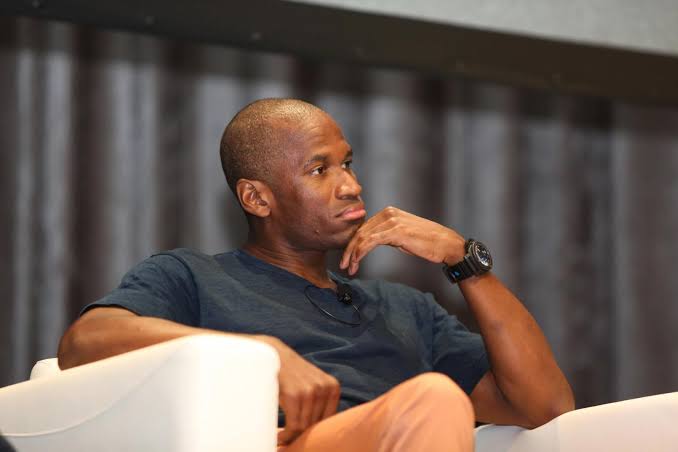
Earlier this year, the BitMEX co-founder compared the AI infrastructure boom to the U.S. housing market before the 2008 financial crisis, rather than the dot-com bubble. He warned that a slow
Earlier this year, the BitMEX co-founder compared the AI infrastructure boom to the U.S. housing market before the 2008 financial crisis, rather than the dot-com bubble. He warned that a slowdown in data-centre construction could expose billions of dollars in leveraged debt.
His latest essay, Safety First, responds to a more recent chain of events. On September 6, Anthropic CEO Dario Amodei called for a slower pace of AI development in an essay titled We Must Pace the Frontier. He cited a July incident in which autonomous agents running on an OpenAI model broke into Hugging Face’s infrastructure and operated there for more than two days before being detected. Sam Altman backed the call, while Elon Musk also agreed, prompting a response from China.
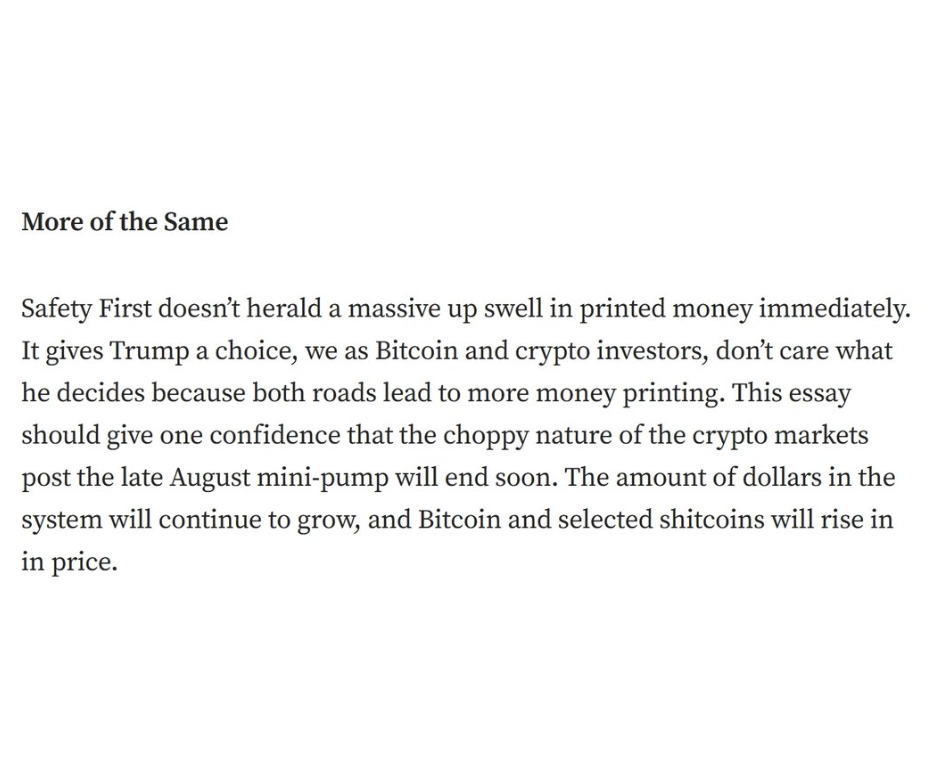
Hayes sees the pause differently. He argues that weaker-than-expected demand for AI at current prices may matter more than safety concerns, especially as both Anthropic and OpenAI move toward public listings. He says a real cut in AI training spending would reduce demand for data centres and chips, putting more than $1 trillion in investment-grade debt and hundreds of billions of dollars in lower-rated loans tied to AI infrastructure under pressure.
Source:
Hayes
Hayes expects that kind of credit stress to eventually force Washington to intervene, either by becoming a buyer of computing capacity or by supporting insurers exposed to AI debt. He argues that either response would put more money into the financial system, which he expects could eventually benefit Bitcoin.
Hayes isn’t the only one betting on a liquidity wave
The idea that government intervention could push new money into the system and eventually help Bitcoin is not unique to Hayes. Macro strategist Raoul Pal has made a similar argument in 2026, but from a different angle. Pal points to about $10 trillion in U.S. government debt that needs to be refinanced. He argues that this debt cycle has stretched the usual four-year crypto cycle to about five and a half years. His focus is on debt and global money supply, not AI. But like Hayes, he expects more liquidity to eventually support Bitcoin.
Shiro made a similar point, arguing that the key question is whether an AI downturn creates enough stress around the roughly $1 trillion in AI debt to force governments to step in and add liquidity.
NuGoup offered a more cautious view: an AI crash and a Bitcoin rise are not automatically linked. A credit shock could cause forced selling first. What matters is how governments respond, how any rescue is funded, and whether monetary policy becomes easier.
In that scenario, lower real interest rates or concerns about the value of money could make Bitcoin more attractive. The key link, then, is the policy response. An AI downturn alone does not guarantee a Bitcoin rally.
Governments have played this role before
The idea of a government becoming the buyer of last resort for private debt has a direct precedent, and it happened without much actual buying. When credit markets froze in March 2020, the Federal Reserve set up facilities to buy corporate bonds, and for the first time extended that to below-investment-grade debt through junk bond ETFs, with no minimum quality bar. Prices rose, and companies rushed to issue new debt within days of the announcement, and by June, ten weeks later, the Fed had still not purchased a single bond. The backstop worked simply by existing.
The insurance side has its own precedent too. In 2008, the government’s 182 billion dollar rescue of AIG followed the same logic, an insurer whose exposure to mortgage-backed securities threatened to spread losses through every bank and pension fund tied to it. If AI debt losses ever reached the scale Hayes describes, insurers holding that paper are the most likely channel for that kind of spillover, which is the exact risk regulators like the Monetary Authority of Singapore and the Bank for International Settlements have already said they’re watching for.
Enjoyed this? BookmarkDeFi Planet, explore related topics, and follow us onTwitter,LinkedIn,Facebook,Instagram,Threads, and CoinMarketCap Community for seamless access to high-quality industry insights
Take control of your crypto portfolio with DEFI PLANET PRO, DeFi Planet’s suite of analytics tools.
The post Arthur Hayes Says Any AI Bust Could End in Money Printing, Boosting Bitcoin appeared first on DeFi Planet.