If you want to launch an NFT collection in 2026, the best minting tool is not always the one with the most features. The best choice depends on whether you need a no-code drop, a branded chec
If you want to launch an NFT collection in 2026, the best minting tool is not always the one with the most features. The best choice depends on whether you need a no-code drop, a branded checkout, deep developer control, or a stack that can scale into wallet, storage, and analytics workflows later.
The shortlist that makes the most sense in 2026 is Thirdweb, Crossmint, Manifold, Zora, Sequence, Alchemy-backed workflows, and Rarible's creator tooling. They do not solve the same problem, which is why most "best NFT minting tools" articles confuse readers by ranking everything as if it were interchangeable.
Reviewed by NFTEnex Editorial TeamLast reviewed: 2026-07-13Review type: No-budget editorial comparisonEditorial policy: NFTEnex Editorial Policy
Why you can trust this guide
This guide is based on live public product surfaces and official references reviewed on 2026-07-13. We directly checked the public positioning, visible workflow framing, and documentation shown in this article. We do not present unverified logged-in behavior, live checkout results, or completed onchain actions as first-hand use unless they were actually completed and documented.
Methodology
We compared each option using live public product surfaces, official documentation, and visible workflow cues captured at review time. In this version, the ranking prioritizes clarity, workflow posture, and fit for different user types over private dashboard claims we could not verify directly.
Limitations
This is a no-budget editorial review, not a fully funded end-to-end product test. Where a conclusion would require a live transaction, paid plan, logged-in dashboard, or wallet-funded workflow, we treat that as a limitation and avoid overstating direct experience.
For most teams, the best overall mix of speed and flexibility comes from Thirdweb. Crossmint is stronger if payment flow and mainstream onboarding matter more than crypto-native customization. Manifold still works well for creators who want control over smart contracts and storefront logic without turning the project into a full engineering build. Zora is the better fit for creator-native distribution and onchain publishing culture than for a conventional collection dashboard. Sequence is strongest when minting is part of a game or embedded wallet experience. Alchemy is less of a direct creator dashboard and more of an infrastructure layer, but it belongs in the conversation because many teams will build their minting flow on top of it. Rarible remains relevant for simpler creator workflows and marketplace-adjacent launches.
Quick picks:
- Best for most teams: Thirdweb
- Best for mainstream checkout and payments: Crossmint
- Best for creator-controlled contracts: Manifold
- Best for open-edition culture and onchain creator distribution: Zora
- Best for game and embedded wallet environments: Sequence
- Best for infrastructure-heavy teams: Alchemy-backed workflows
- Best for simpler marketplace-linked launches: Rarible
For this article, we did not want to rely only on roundups and vendor copy, so we reviewed the live public product surfaces of Thirdweb, Crossmint, and Zora and rechecked the official references on 2026-07-13.
That direct review does not replace a full logged-in mint test, and I do not want to blur that line. What it does give us is a real look at how each platform currently presents its launch flow, what kind of user it is speaking to, and how much complexity is visible before a team even creates a test collection.
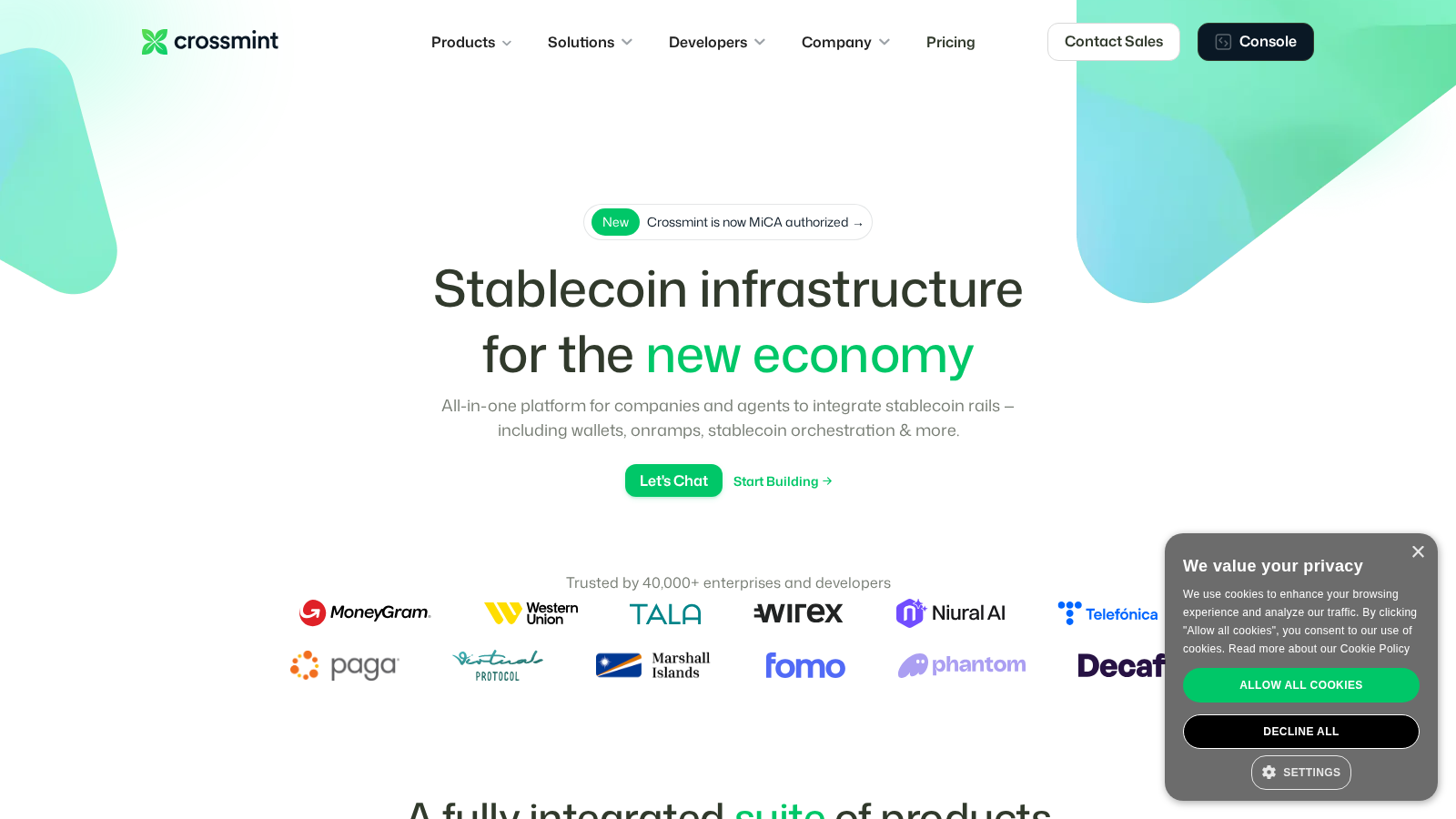
Crossmint homepage captured during our July 2026 review of NFT minting and checkout tools.
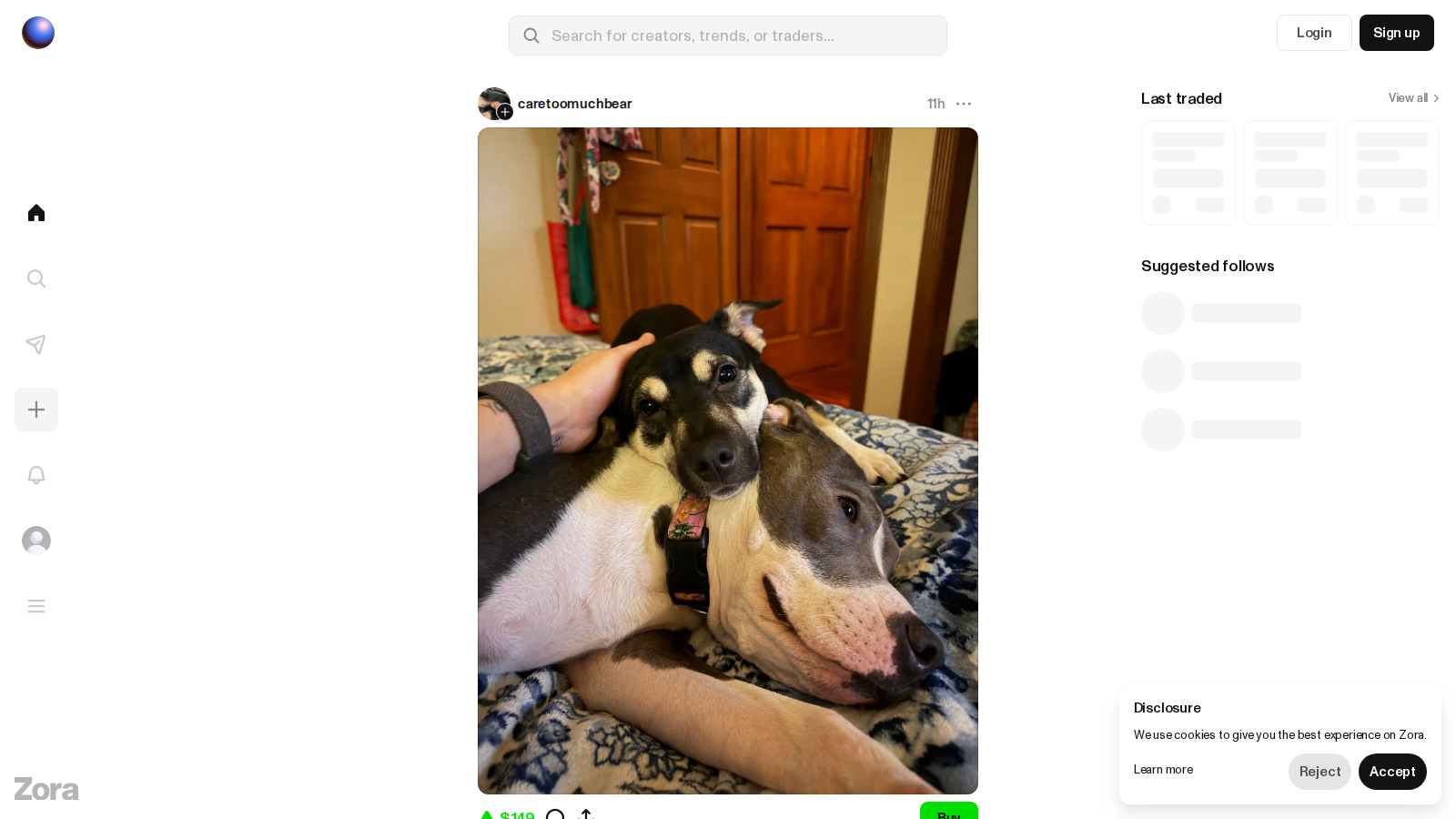
Zora homepage captured during our July 2026 review of creator-first NFT publishing tools.
The biggest difference we saw immediately was not feature count. It was posture. Thirdweb presented itself like infrastructure for teams that may grow into a broader stack. Crossmint looked more like a payments and onboarding bridge for mainstream users. Zora felt the most like a creator-publishing environment rather than a generic NFT vending machine. That difference matters because teams often choose a minting tool before they decide whether they are really launching a creator drop, a branded campaign, or a product layer.
The screenshots above show why this matters. Even before a logged-in test, the public product surface already tells you whether the platform is optimized for creator control, payment flow, or creator-first publishing identity.
The wrong way to judge a minting tool is to ask whether it can "mint NFTs." Nearly all serious tools can do that. The useful questions are:
- How much contract control do you get?
- How much developer work is required?
- Can non-crypto users pay with cards or familiar checkout methods?
- Does the stack support multiple chains?
- How cleanly does it connect to metadata, storage, wallet, and analytics workflows?
- Can a launch start small and still scale if the project grows?
That is why this list treats minting as part of a broader digital ownership pipeline rather than a one-click publishing step.
Beginners usually need guardrails, templates, and less contract anxiety. That points them toward Thirdweb, Crossmint, or Rarible.
Brands and campaign teams usually care more about onboarding, checkout, and branded UX than they care about raw protocol purity. That pushes Crossmint, Sequence, and some Thirdweb setups higher.
Developer teams care about contract ownership, wallet integration, metadata handling, webhooks, and long-term flexibility. That is where Manifold, Alchemy-backed stacks, Thirdweb, and Zora become much more attractive.
The practical takeaway is simple: if you do not know whether you need a minting "tool" or minting "infrastructure," you are not ready to choose yet.
Our direct editorial read after reviewing the live product flows
After opening these public launch surfaces ourselves, the clearest takeaway was that the best minting stack depends on what kind of friction you are trying to remove.
Thirdweb looked like the strongest option for teams that expect the mint to become part of a larger product later. Crossmint looked easier to explain to a non-crypto brand team because the value proposition is closer to onboarding and checkout. Zora looked more opinionated, but also more coherent, for creators who care about release culture and distribution identity rather than just spinning up a drop page as fast as possible.
That is the kind of balanced read I want this page to keep. A tool can be strong for one audience and still be the wrong answer for another. That is exactly what makes this a useful comparison instead of a vendor parade.
Thirdweb
Thirdweb is the most balanced option in this list because it can serve both non-technical operators and technical teams. Its main strength is not that it does one thing better than every competitor. Its strength is that it reduces the gap between a fast launch and a more custom stack later.
In the public flow we reviewed ourselves, Thirdweb immediately felt like the platform most comfortable with complexity. The current site frames it as a broader onchain product stack across contracts, wallets, payments, and data, not just a lightweight NFT wizard. That is a strength if your team expects the mint to grow into memberships, game assets, or a fuller product stack. It is a weakness if you only want the shortest path between a concept and a lightweight drop.
Best for:
- teams that want speed without locking themselves into a toy workflow
- founders who need contracts, dashboards, and developer expansion in one place
- projects that may later expand into memberships, gaming assets, or tokenized access
Tradeoffs:
- if your main priority is mainstream checkout, Crossmint can be cleaner
- if your main priority is creator-first cultural distribution, Zora may feel more native
- if your team is new to NFT tooling, the extra range of options can feel like overhead before the real launch work begins
Crossmint
Crossmint is strongest when minting needs to feel easy for users who do not already live in crypto wallets every day. That matters for brands, ticketing, loyalty, and onboarding flows where the ownership layer matters but wallet friction is still a conversion killer.
From the public product surface and docs we reviewed, Crossmint now reads more like a combined wallets, checkout, and tokenization platform than a pure creator dashboard. That is exactly why it ranks high here. If your biggest problem is reducing checkout friction with card payments, Apple Pay, Google Pay, and embedded wallet flow, that framing is a feature. If your biggest problem is wanting contract-level experimentation, the same enterprise checkout posture can become a limit.
Best for:
- consumer brands
- campaigns with card payments or simpler user onboarding
- teams trying to abstract away wallet complexity
Tradeoffs:
- it is not the first choice for teams that want maximum contract-level experimentation
- advanced crypto-native builders may outgrow it faster than they outgrow a more open stack
- if your launch needs to feel highly custom to crypto-native collectors, the smoother enterprise posture may not be enough on its own
Manifold
Manifold remains a strong creator and contract-control choice because it starts from ownership and publishing logic rather than from a broad SaaS feature set. Its current positioning is still centered on publishing creativity onchain, creator control, and custom experiences. That is useful for artists, creator-led drops, and teams that care about provenance and direct contract relationships.
Best for:
- creator-led releases
- teams that want more direct contract ownership logic
- launches where artistic control matters more than mass onboarding convenience
Tradeoffs:
- it is not the smoothest path for mainstream payments-first launches
- some teams will still need adjacent tooling for broader campaign infrastructure
Zora
Zora is best understood as part minting environment, part creator-distribution layer. It is especially useful when the launch is not only about selling a fixed collection, but also about building culture, open editions, or onchain media distribution.
After reviewing Zora's live public surface and support material directly, our strongest impression was that it behaves less like a generic launch utility and more like a creator-publishing system where posts and profiles themselves are tradable objects. That makes it more opinionated than some alternatives, and less useful if you want a standard collection-control dashboard. It also makes it more coherent if the goal is cultural distribution rather than pure operational convenience.
Best for:
- open editions
- creator communities
- projects where cultural distribution matters as much as monetization
Tradeoffs:
- teams that want enterprise-like control panels may prefer more operationally structured tooling
- if you need the cleanest traditional onboarding, Zora is not always the easiest answer
- teams running a tightly controlled brand campaign may prefer a more neutral infrastructure layer
Sequence
Sequence stands out when minting is only one part of a broader product. The current site frames Sequence around smart wallets, one-click payments, and real-time web3 data for games and onchain apps. If the end state is a game, embedded wallet flow, or digital asset system inside an app, Sequence becomes more compelling than a creator-only minting dashboard.
Best for:
- gaming NFTs
- embedded wallet products
- projects where users should not feel like they are navigating a crypto-native flow
Tradeoffs:
- overkill for a simple artist drop
- less relevant if you only need a fast collection launch and nothing else
Alchemy-backed workflows
Alchemy belongs in this article because many teams will not use a single minting tool at all. They will build a minting experience from infrastructure components. Alchemy's current Dapp Store still maps a broad minting-tool ecosystem, and its core platform remains relevant for teams that want NFT APIs, webhooks, and developer infrastructure around the minting flow.
Best for:
- teams with in-house engineering
- projects that want to own more of the stack
- products that will need analytics, APIs, and multistage infrastructure later
Tradeoffs:
- not the shortest path for a solo creator
- requires more technical judgment than turnkey creator tools
Rarible
Rarible stays relevant because some creators still want a path that sits closer to marketplace distribution and familiar creator tooling without building a custom launch stack. The current product surface still keeps minting close to a multichain marketplace environment rather than a pure infrastructure product.
Best for:
- lighter-weight creator launches
- teams that want simpler publishing flow
- operators who value ecosystem familiarity over deep architecture decisions
Tradeoffs:
- less attractive for highly customized launches
- less future-proof than a stack built around dedicated infra plus owned distribution
What most teams get wrong when choosing a minting stack
The biggest mistake is treating launch day as the whole project. A minting tool choice also affects:
- how metadata is stored and retrieved across apps
- how creator royalties are set or enforced
- how wallets onboard
- how assets appear on marketplaces
- how easy it is to build reporting and support workflows later
The second mistake is choosing the most crypto-native stack for a non-crypto audience. If the project depends on mainstream users, lowering friction often matters more than maximizing protocol purity.
The third mistake is choosing the easiest tool without checking whether the team actually owns the contract logic, metadata path, and post-mint operating model.
Choose Thirdweb if you need the best overall middle ground.
Choose Crossmint if onboarding and payments are the hardest problem in your launch.
Choose Manifold if creator control and contract ownership matter most.
Choose Zora if your launch is really a creator-distribution play.
Choose Sequence if minting is part of a game or app product.
Choose an Alchemy-backed stack if you are building infrastructure, not just a drop page, especially if the product will later depend on NFT APIs, retrieval logic, or internal analytics layers.
Choose Rarible if you want a simpler creator workflow and can live with less architectural control.
If you are building a full topic cluster, this page should also feed readers into broader minting coverage, your guide to NFT storage tools, and your comparison of creator-royalty marketplaces.
Disclaimer: This article is for research and editorial comparison purposes only. It does not constitute financial, investment, legal, or tax advice. NFT tools, marketplaces, fees, chain support, and live availability can change quickly, so verify current conditions on the official platform before making any decision involving funds, assets, or private keys.
Read original article on nftenex.com