It is Sunday evening in New York, and I am in the back of an Uber with a phone that is about to die. I need this phone tonight. My work is on it. My messages are on it. And I catch myself thi
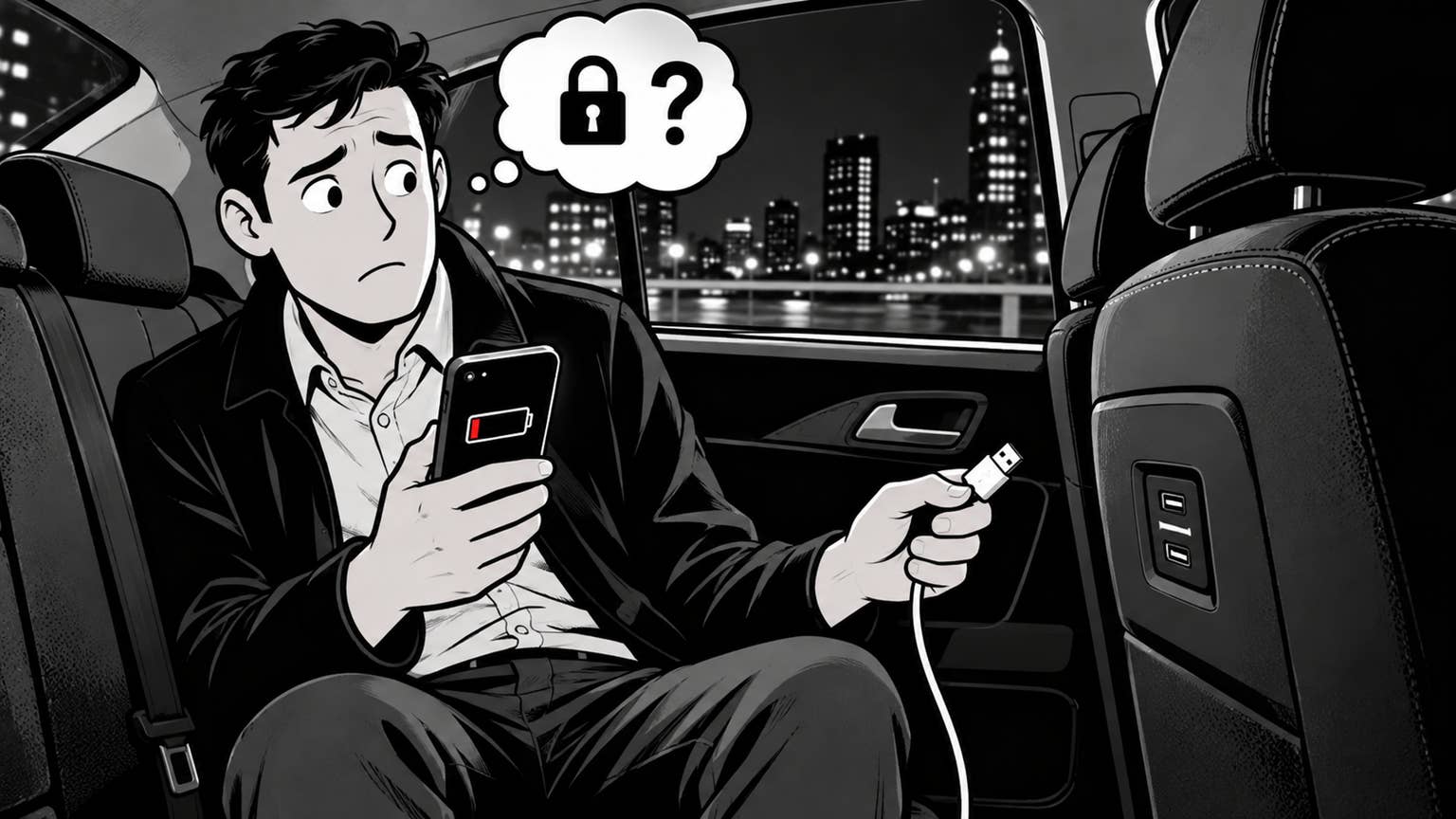
It is Sunday evening in New York, and I am in the back of an Uber with a phone that is about to die.
I need this phone tonight. My work is on it. My messages are on it.
And I catch myself thinking something I would have laughed at a month ago.
Could charging my phone in this car steal my crypto wallet?
The point is that I had to think about it.
The week that put the thought in my head
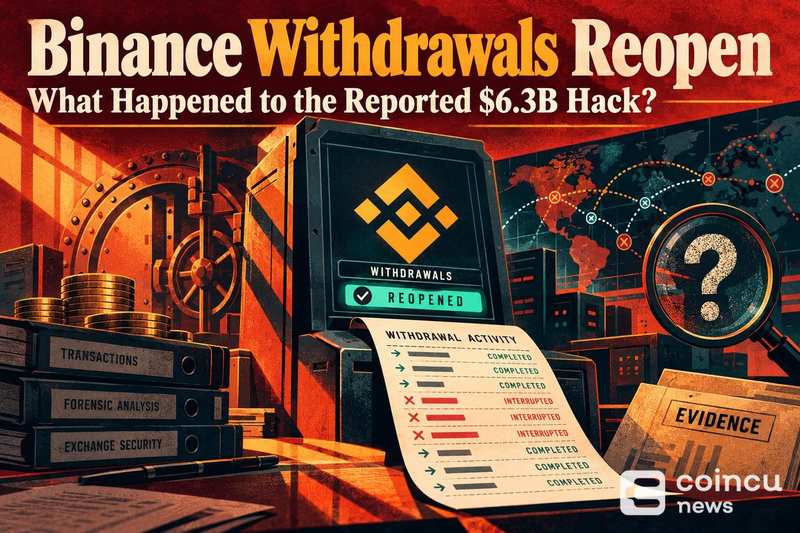
I have spent the past week covering what the FBI says is a more than $6 billion theft from Binance, the largest hack crypto has ever seen. The bureau blames North Korea, the same state it linked to the $1.5 billion Bybit hack last year. Binance now says it has covered about 95 percent of the impact and that withdrawals are resuming in phases. When the outflows started, I wrote that I was with Elon Musk. Every day, this industry runs on code somebody has not broken yet.
And it is not only Binance. The hacks keep coming, and the numbers keep getting harder to wave away.
When the biggest exchange on earth can lose billions in an evening, you start asking a question you cannot un-ask.
Is anything at all safe?
This is what a hack does to a city
I cover crypto for a living, and the story still followed me into the back seat of a car. That is what a theft this size does, at least to me. It does not stay on the exchange. It follows you into the ordinary parts of a week, the coffee shop outlet, the airport kiosk, the Uber.
I do not think I am the only person in New York having thoughts like these right now.
The fear has a name
It is called juice jacking, a term coined after a demonstration at the Defcon security conference back in 2011. The idea is simple. A tampered charger does not just send power. It opens a data connection and, depending on the attack and the device, can reach files, photos or passwords.
The FCC warns travelers about public USB charging stations. So has the FBI. The advice exists because the attack is real enough to build in a lab.
The part that should calm you down
The FCC's consumer page says the agency is not aware of any confirmed instance of juice jacking. The Electronic Frontier Foundation calls the recurring warnings recycled scaremongering. And Ars Technica, reporting on the newest research in April 2025, noted there were still no documented cases of such attacks in the wild.
Your phone is not defenseless either. Since 2012, iPhones and Androids have asked before sharing data over a USB connection. Google went further with Android 15 in late 2024, and Apple with iOS 18.4 in March 2025. On those versions, approving a data connection takes your PIN, password or fingerprint, not just a tap. When those defenses were reported in April 2025, the researchers said the new requirement worked on fully updated iPhones, iPads and Pixels, while many other Android phones, including Samsung models, did not yet enforce it.
The demonstration did not establish that a charger could drain a crypto wallet. The consequences would depend on what an attacker could access, including any exposed recovery phrase.
The part that should not
But it absolutely can happen, and this is where my week catches up with the theory.
Last year, researchers at Graz University of Technology presented ChoiceJacking at the USENIX Security Symposium in August. Their malicious charger tricked phones into approving its own data connection in under a minute, on devices from eight vendors, including the biggest ones. Apple and Google shipped fixes in 2025 for updated iPhones and Pixels, while the researchers warned that many other Android phones remained exposed at the time.
To be precise about what that research showed. ChoiceJacking gave the researchers access to files on the phone. It did not steal a crypto wallet, and the researchers never claimed it did.
Still, file access is bad enough. Ask yourself what is in your files. If your wallet's recovery phrase is sitting in your photos or your notes app, a bad charger does not need to break anything. You have already left the key in the open.
Maybe there really are no confirmed cases in the wild. After the week I have had, that does not comfort me.
So what do you do about it
The boring stuff, done every time.
- Carry your own cable and your own adapter, and use the car's power socket or a wall outlet. A pure power connection carries no data.
- Carry a small power bank. It is the cheapest way to never have this thought again.
- If you must use a strange USB port, use a charge-only cable or a USB data blocker, knowing they can slow your charge.
- Keep the phone locked while it charges. If a "trust" or "share data" prompt appears, unplug.
- Update your phone. The fixes exist, and they only work if you install them.
- Never keep your wallet's recovery phrase on the phone. Not in photos, not in notes, not in a cloud backup. Paper and a hardware wallet are boring, and boring is the point.
Is anything at all safe
Honestly, no. It never was. Every system runs on code, and this fall has shown what happens when that code breaks.
But the answer is not to fear the wrong thing. Keeping coins on an exchange is a custody decision, and this week showed what that decision can cost. Keeping your phone safe from a bad charger is a different problem, and it has a cheap fix. Your own cable, a locked phone, an updated system and a recovery phrase on paper.
The frustration is real. I felt it in the back of that Uber, and I am not going to pretend otherwise. The trick is making it useful.
Popular on TheStreet Roundtable
Read More: Binance cites $1B SpaceX stake after Elon Musk mocks hack
This is an opinion piece by Mehab Qureshi, senior editor at The Street. The views expressed are his own and do not reflect the views of The Street.