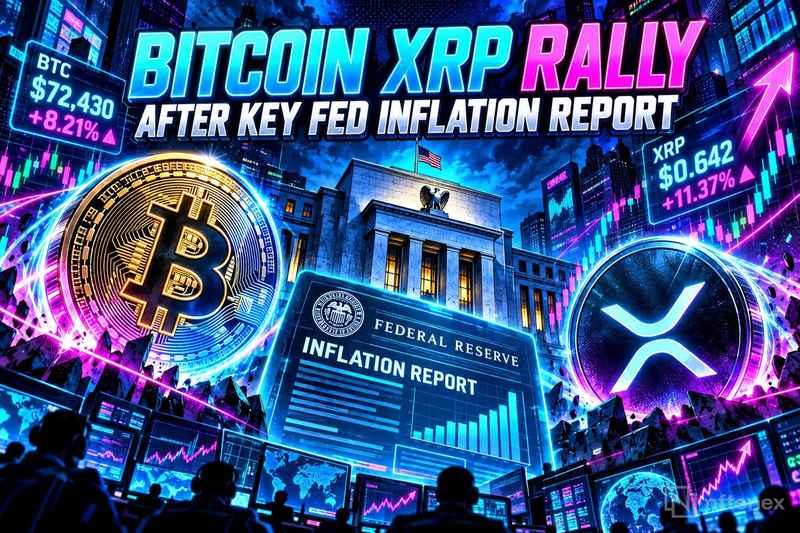
Bitcoin and XRP moved higher after the Bureau of Economic Analysis released its August 2026 Personal Income and Outlays report, the Federal Reserve's preferred gauge of consumer inflation. Th
Bitcoin and XRP moved higher after the Bureau of Economic Analysis released its August 2026 Personal Income and Outlays report, the Federal Reserve's preferred gauge of consumer inflation. The report, which tracks the Personal Consumption Expenditures price index, drew immediate attention from crypto traders watching for any signal that could shift the Fed's rate outlook heading into the final months of 2026.
Bitcoin and XRP React to the August PCE Release
The BEA's August Personal Income and Outlays report is the primary macro catalyst the market responded to. The PCE index is the inflation measure the Federal Reserve explicitly targets, making each monthly release a direct input into trader expectations around future rate decisions. For related coverage, see Charles Schwab Says Bitcoin Short Squeeze Is Over as BTC Leverage Resets.
Bitcoin and XRP were among the assets that reacted as the data crossed, consistent with a pattern where risk-sensitive assets reprice quickly when inflation figures deviate from consensus. No specific price levels or percentage moves can be confirmed at this time, as verified market data was not available at the time of writing.
This dynamic is not new. Bitcoin slid sharply after a blowout jobs report revived Fed hike odds earlier this year, showing how quickly macro surprises can overwhelm near-term crypto momentum in either direction.
Why Inflation Readings Move Crypto Markets
The transmission mechanism runs through rate expectations. When PCE inflation comes in below forecasts, markets often price in a more accommodative Fed stance, which tends to lift risk appetite across equities, commodities, and digital assets. A softer reading reduces the probability of additional rate hikes and can weaken the dollar, both conditions historically associated with upward pressure on Bitcoin.
XRP carries its own trading dynamics on top of the macro signal. Institutional demand for XRP has been building independently of broader crypto sentiment, as XRP's rally has at times accelerated ahead of Fed decisions as institutional crypto demand grows, suggesting the asset can amplify macro-driven moves when its own fundamentals are also constructive.
Bitcoin's sensitivity to Fed policy has also been shaped by the growing presence of institutional vehicles. With spot Bitcoin ETFs now a regular feature of the market, macro-driven inflows and outflows can be larger and faster than in prior cycles. ETF flow data across the digital asset space has become one of the clearest real-time indicators of whether institutional capital is moving toward or away from risk.
What Traders Will Watch Next
A single inflation print rarely settles the Fed's direction on its own. Traders will look to upcoming Federal Open Market Committee communications, additional labor market data, and whether the September PCE reading confirms or contradicts the August signal before drawing firm conclusions about the rate path into year-end.
For Bitcoin and XRP specifically, the question is whether the post-report move attracts follow-through volume or fades. Short-term reactions to macro data releases are often unwound within days if subsequent data or Fed commentary cuts against the initial interpretation. Prior instances where dovish Fed signals lifted Bitcoin alongside XRP and other major assets show that durable rallies typically require sustained policy clarity, not a single data point.
Broader digital asset sentiment, ETF flow trends, and any shift in leverage positioning will each matter as the market assesses whether this move has structural backing or reflects a reflexive macro response that could reverse as quickly as it arrived.
Additional source references: source document 1.
Disclaimer: This article is for informational purposes only and does not constitute financial or investment advice. Cryptocurrency and digital asset markets carry significant risk. Always do your own research before making decisions.
Read original article on nftenex.com