The Cardano wallet hack did not break a smart contract or drain a bridge. It struck at something far more fundamental: the process that creates private keys. That distinction makes this incid
The Cardano wallet hack did not break a smart contract or drain a bridge. It struck at something far more fundamental: the process that creates private keys. That distinction makes this incident one of the most alarming security events to hit the Cardano ecosystem. While millions of dollars in crypto have been stolen through hacks over the years, few attacks have targeted the very mechanism responsible for generating the keys that protect user assets.
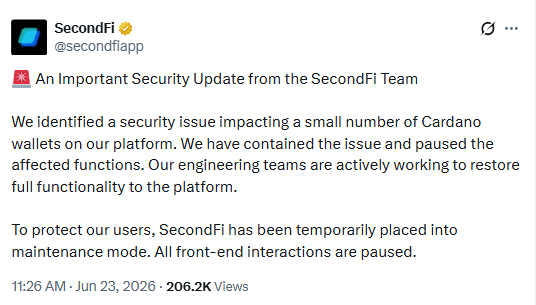
According to the source, SecondFi, the self-custody platform formerly known as Yoroi Wallet, disclosed on June 23 that attackers exploited a vulnerability in its Cardano wallet-generation software. The flaw allowed hackers to steal ADA, native tokens, and NFTs from affected users. What began as a security alert affecting a limited number of wallets has evolved into a wider investigation, with estimated losses ranging from $2.4 million to more than $20 million. The growing scale of the SecondFi hack has raised serious questions about wallet security and trust across the Cardano network.
A Targeted Breach That May Reach Beyond Known Victims
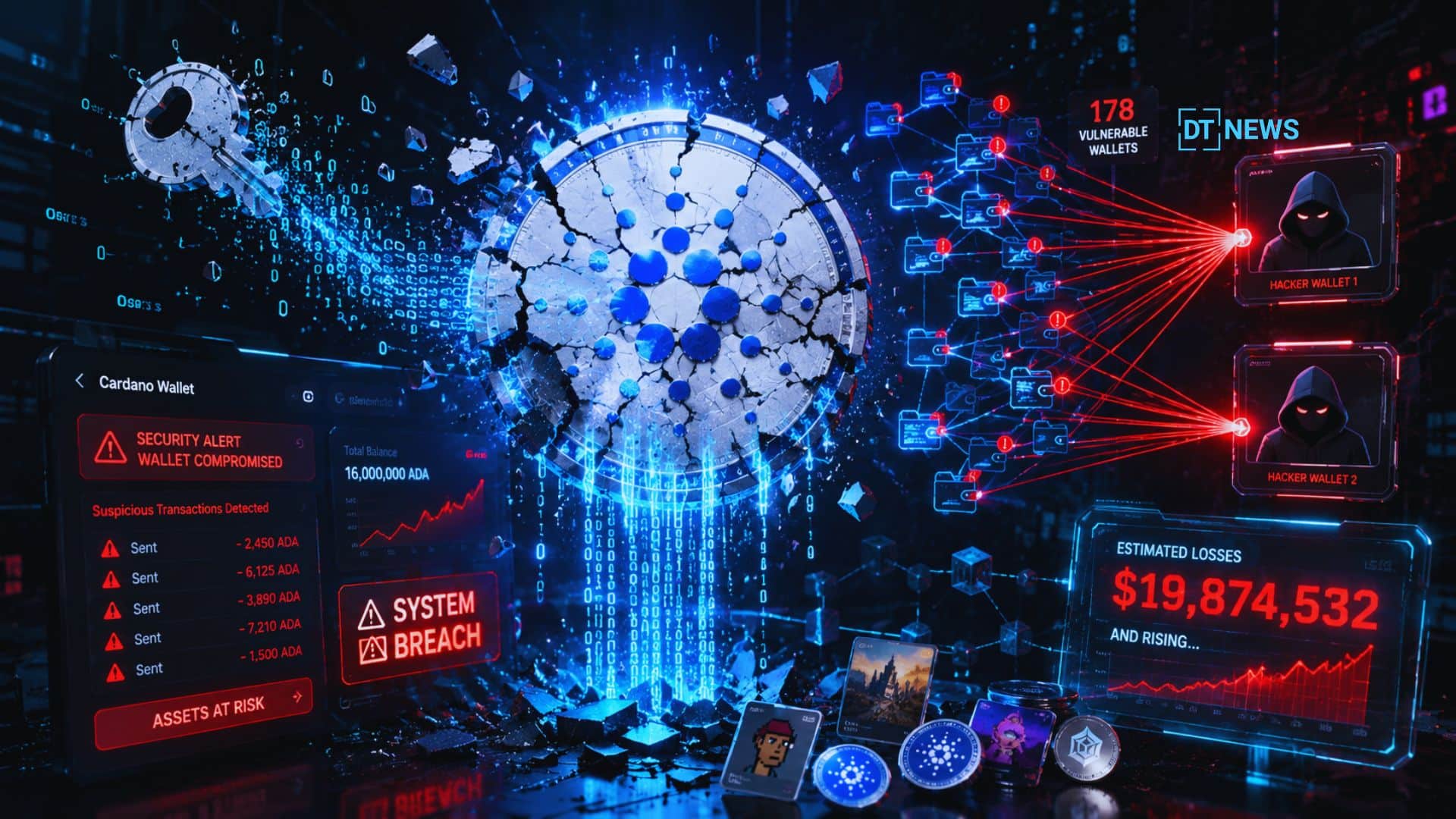
The Cardano wallet hack reportedly compromised around 178 wallets and involved nearly 200 suspicious transactions recorded between June 21 and June 22. Investigators believe the exploit affected wallets created through a specific software iteration, suggesting the attack targeted a vulnerable batch rather than random users.
SecondFi quickly suspended services, paused front-end interactions, and entered maintenance mode while investigators examined the breach. The company also captured a snapshot of user balances when the issue was discovered. That record could become a critical tool in any future reimbursement effort.
The existence of the balance snapshot gives SecondFi a starting point for compensation, but no funding plan or timeline has been announced. For affected users, whether losses will ultimately be recovered remains one of the biggest unanswered questions.
Source:
XWhy the Cardano Wallet Hack Is More Dangerous Than a Typical Exploit
Most major crypto attacks target smart contracts, exchanges, or cross-chain bridges. The Cardano wallet hack is different because it allegedly compromised wallet creation itself.
Investigators believe the vulnerable software generated private keys using predictable randomness. Once key generation becomes predictable, every wallet created through that process inherits the same weakness. Instead of attacking the wallet directly, hackers may be able to reconstruct credentials and gain access to funds.
This is why developers have issued unusually strong warnings. Blink Labs cautioned that the generated wallets “are all unsafe” and advised users to move assets to wallets created by alternative providers. The warning extends beyond wallets already drained because every wallet generated through the affected software version may remain vulnerable.
The incident also exposed a painful irony. Users embraced self-custody to avoid third-party risks, yet the weakness emerged from the software that created their private keys. That reality sits at the heart of the SecondFi hack and explains why the breach has attracted so much attention.
A Multi-Million Dollar Mystery Continues to Grow
The financial impact of the Cardano wallet hack remains disputed. SecondFi’s initial estimate places losses at roughly 16 million ADA, valued near $2.4 million at the time of the breach.
However, blockchain investigator Cos, also known as Yu Xian, reached a far larger estimate after tracking activity connected to two suspected hacker addresses. His analysis suggests affected users may have lost more than 129 million ADA alongside additional tokens, pushing total losses above $20 million.
The nearly eightfold difference between the two estimates remains unresolved. While an independent security review is underway, many market observers now view the official figure as a minimum confirmed loss rather than a final total.
Pressure Builds Across the Cardano Ecosystem
The Cardano wallet hack has become more than a security incident because of SecondFi’s history. The platform evolved from Yoroi, one of Cardano’s most trusted wallets, used by more than one million ADA holders.
Earlier this month, EMURGO transformed Yoroi into SecondFi through Version 10.0.3, expanding the platform into a broader neofinance ecosystem offering spending, trading, saving, earning products, and Visa integrations. The timing of the breach has intensified scrutiny on Cardano’s broader ecosystem.
SecondFi has confirmed that it is coordinating with EMURGO, the Cardano Foundation, Input Output (IOHK), Intersect, and SundaeSwap. As one of Cardano’s founding entities, EMURGO faces growing pressure alongside ecosystem leaders to support affected users if reimbursement efforts move forward.
Meanwhile, scammers have launched fake support accounts on X and Telegram, attempting to exploit worried users through fraudulent recovery offers. At the same time, market participants are closely watching whether stolen ADA reaches centralized exchanges. Analysts often view large exchange deposits from hacker-linked wallets as an early sign that stolen assets may be sold, potentially increasing selling pressure on ADA.
Conclusion
The Cardano wallet hack is not simply another case of stolen cryptocurrency. It is a reminder that security risks can emerge long before funds enter a wallet. A flaw in key generation can undermine every layer of protection that follows.
As investigators continue examining the full impact of the SecondFi hack, one lesson stands out above all others: securing key generation matters just as much as securing key custody. Protecting crypto does not begin when a key is stored. It begins when that key is created.
Glossary of Key Terms
Private Key: A secret code that grants access to cryptocurrency assets.
Self-Custody: Holding digital assets without relying on a third-party service.
ADA: The native cryptocurrency of the Cardano blockchain.
Wallet Generation: The process of creating a crypto wallet and its private keys.
Security Audit: An independent review of software systems and security controls.
FAQs About Cardano Wallet Hack
What caused the Cardano wallet hack?
The breach was linked to a flaw in wallet-generation software that allegedly created predictable private keys.
How many wallets were affected?
Reports indicate approximately 178 wallets were compromised.
Why is the SecondFi hack considered different?
The attack targeted the creation of wallet keys rather than smart contracts, exchanges, or bridges.
Could additional wallets still be at risk?
Developers have warned that wallets generated through the affected software version may remain vulnerable.
Sources/References
SecondFi
Cardano
CoinNess
Cryptotimes