When Robinhood launched its Layer-2 blockchain in July 2026, the company's primary vision centered around tokenized real-world assets (RWAs), tokenized equities, and bringing traditional fina
When Robinhood launched its Layer-2 blockchain in July 2026, the company's primary vision centered around tokenized real-world assets (RWAs), tokenized equities, and bringing traditional finance onto the blockchain.
Few expected that only weeks later, a memecoin would become one of the ecosystem's biggest success stories.
Yet that's exactly what happened.
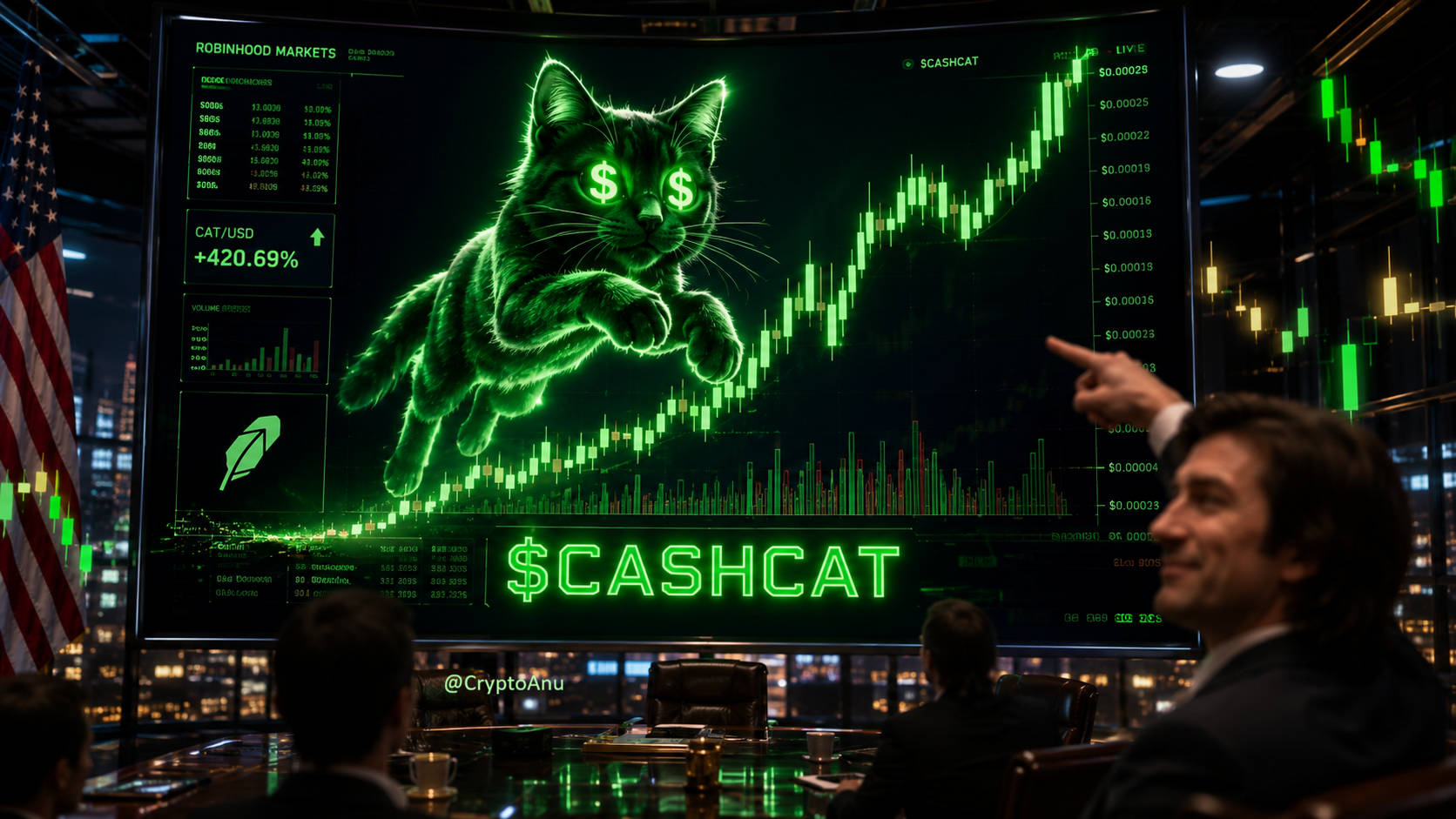
During Robinhood's latest quarterly earnings discussion, CASHCAT was referenced in relation to the explosive memecoin activity taking place on Robinhood Chain. According to reports surrounding the earnings release, analysts described CASHCAT as one of the most watched tokens on the network—a remarkable milestone for a project that did not exist just weeks earlier.
While the mention itself may appear small, it signals something much larger.
From Financial Infrastructure to Meme Economy
Robinhood Chain was designed to become an infrastructure layer for tokenized assets.
The long-term vision includes:
- Tokenized stocks
- Real-world assets
- Stablecoin settlement
- On-chain financial applications
Instead, the first viral success came from an entirely different direction.
Retail traders embraced memecoins.
Rather than waiting for institutional adoption, users immediately began launching thousands of speculative tokens, generating enormous trading activity almost overnight.
This mirrors what happened on several other major blockchain ecosystems.
Every Ecosystem Eventually Finds Its Flagship Meme
History has shown that successful blockchain ecosystems often develop a cultural asset alongside their technical infrastructure.
Ethereum saw the rise of SHIB.
Solana experienced BONK.
Tron developed its own wave of community-driven meme assets.
Robinhood Chain now appears to have found its own flagship token in CASHCAT.
Whether CASHCAT ultimately survives multiple market cycles remains unknown.
However, its role in attracting users to Robinhood Chain is already difficult to ignore.
Robinhood's Financial Strength
The timing is also significant.
Robinhood reported $1.31 billion in quarterly revenue, representing approximately 32% year-over-year growth.
Strong financial performance provides Robinhood with additional resources to continue expanding its blockchain ecosystem.
Unlike many crypto-native startups, Robinhood already possesses millions of existing users and substantial financial resources.
That combination creates opportunities few new blockchain projects can match.
Why the Mention Matters
Public companies carefully choose what appears in earnings materials and investor discussions.
While CASHCAT was not the primary topic of the earnings call, acknowledging the memecoin phenomenon demonstrates that Robinhood recognizes where user attention currently exists.
Markets are ultimately driven by users.
Developers may build infrastructure, but communities determine which applications become successful.
Robinhood Chain offers a clear example of this principle.
The network launched to support tokenized finance.
The community immediately transformed it into one of crypto's most active memecoin ecosystems.
Memecoins Are Often the Gateway
Critics frequently dismiss memecoins as pure speculation.
While volatility remains extremely high, history suggests they often serve another purpose.
Memecoins introduce new users to blockchain ecosystems.
They generate liquidity.
They increase trading activity.
They encourage developers to build additional infrastructure.
Many ecosystems first capture attention through speculation before expanding into more sophisticated applications.
Robinhood Chain may now be following that same path.
The Bigger Opportunity
The real story may not be CASHCAT itself.
Instead, it is what CASHCAT represents.
Robinhood now has:
- Millions of retail investors.
- A rapidly growing Layer-2 blockchain.
- One of the fastest-growing memecoin ecosystems in crypto.
- Significant financial resources to continue investing in blockchain infrastructure.
If Robinhood successfully converts meme-driven activity into long-term developer growth, decentralized finance, and tokenized assets, today's memecoin narrative may eventually become only the first chapter of a much larger ecosystem.
Final Thoughts
A single mention during an earnings call will not determine the future of Robinhood Chain.
However, it represents something important.
It shows that crypto communities are becoming influential enough to appear in discussions involving one of the world's largest retail brokerage firms.
Only weeks after launch, Robinhood Chain has already become one of the fastest-growing blockchain ecosystems by activity.
CASHCAT helped create that momentum.
The next challenge is determining whether Robinhood can transform that early excitement into sustainable long-term adoption.
If history is any guide, every major blockchain begins with a story.
For Robinhood Chain, that story might just start with a memecoin called CASHCAT.