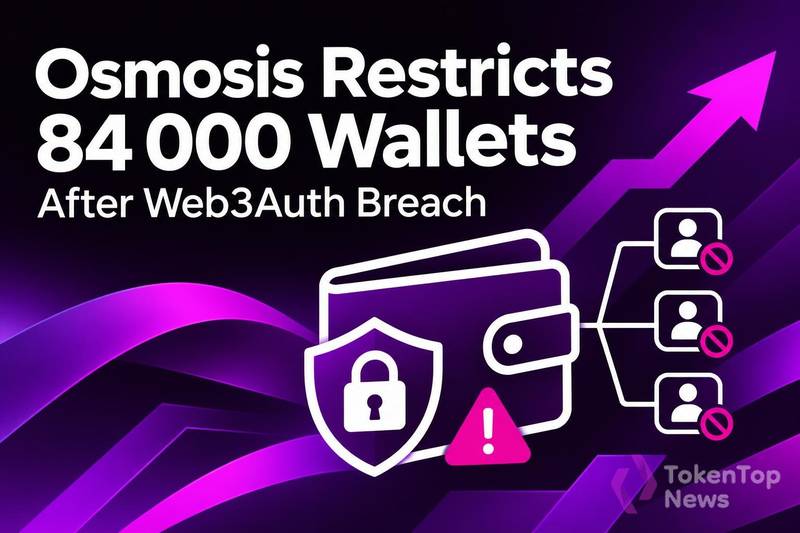
Coinranking reported that Osmosis restricted approximately 84,000 wallets following a reported security breach at Web3Auth, which the outlet described as the authentication layer used by Kepl
Coinranking reported that Osmosis restricted approximately 84,000 wallets following a reported security breach at Web3Auth, which the outlet described as the authentication layer used by Keplr wallet for Google and Apple social logins. Hokanews estimated the reported drain at approximately $6 million from Cosmos-ecosystem users. The cited reports do not provide an incident date, a direct Osmosis or Web3Auth announcement, or published criteria for restoring restricted wallets.
Osmosis Restricts 84,000 Wallets Following the Web3Auth Breach
According to Coinranking, Osmosis restricted approximately 84,000 wallets after the reported Web3Auth exploit became public. Coinranking described the affected cohort as wallets created or authenticated through Web3Auth's social-login flow, including Keplr users who signed in with Google or Apple. The report does not establish that every restricted wallet was compromised, and the cited coverage does not specify the restriction or restoration criteria. For related coverage, see Sun-Linked Wallet Moves $1.49B From Sky to Aave.
Crypto.news reported that Keplr paused Google and Apple login functionality in response to the reported Web3Auth breach and characterized the action as precautionary while the incident scope was being assessed. The cited reports do not provide independently verifiable technical details of the restriction. Context on this theme: South Korea Digital Asset Bill: Asia Session Roundup.
The scale of the drain was reported at approximately $6 million by Hokanews, with assets pulled from Keplr wallets tied to the compromised Web3Auth authentication keys. The Crypto Updates noted that Trust Wallet users were not affected, since that wallet does not rely on Web3Auth's social login infrastructure.
What the Restrictions Mean for Affected Osmosis Users
The reported 84,000 figure should not be read as a confirmed count of compromised or drained wallets. Coinranking described the group as wallets created or authenticated through Web3Auth's social-login flow. Users who used Keplr with Google or Apple should rely on verified Osmosis, Keplr, or Web3Auth communications for account-specific status, because the cited reports do not state when restrictions will be lifted or which conditions would restore access. More on this in Stellar (XLM) Price Rises as Protocol 30 Activates.
Web3Auth moved to clarify some of the confusion around asset movements after the breach became public. According to a KuCoin news flash, Web3Auth stated that some transfers flagged by users were actually asset rescue efforts, not additional theft. The company also published a list of verified recovery addresses, which Keplr subsequently confirmed as legitimate, per a separate KuCoin flash report. That sequence, an exploit followed by an on-chain rescue attempt using the same infrastructure, is why users are being advised to verify any addresses or transfer instructions through official channels before acting.
What to Watch as Osmosis and Web3Auth Address the Incident
The key unresolved items are the conditions under which Osmosis may restore access to the reported 84,000 restricted wallets and whether Web3Auth will publish a formal incident disclosure. KuCoin reported that Web3Auth published verified recovery addresses, but the cited coverage does not provide a full technical explanation of the incident or restoration process.
Users who authenticated Keplr with Google or Apple should verify any recovery or restoration instructions through official Osmosis, Keplr, or Web3Auth communications before acting. The cited reports do not provide account-specific recovery guidance.
Editorial credits
KM
Kaelyn Monroe
Writer · TokenTopNews
OS
Olivia Stephanie
Editor · TokenTopNews
Monitors published articles around the clock and can correct or withdraw them.
Checked by TokenTopNews QC Team before publishing on November 24, 2026 for headline accuracy, factual consistency and authorship claims: our AI review system checks every article before it goes live, and our editor monitors it after publication. Report an error.
TokenTopNews uses AI for research, drafting and review. Our editorial team is responsible for every article and corrects or withdraws articles when needed. How we review.
Disclaimer: This article is for informational purposes only and does not constitute financial or investment advice. Cryptocurrency and digital asset markets carry significant risk. Always do your own research before making decisions.
Read original article on tokentopnews.com