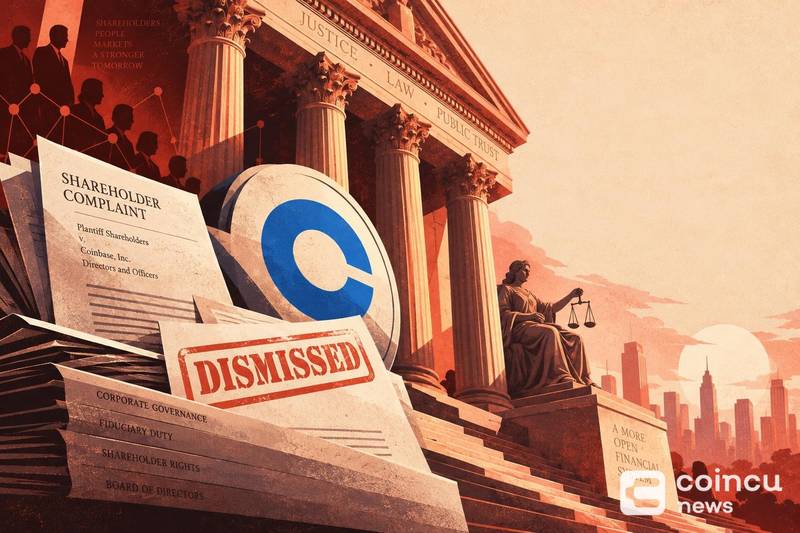
A court has dismissed a shareholder derivative lawsuit targeting directors of Coinbase, the publicly traded cryptocurrency exchange, ending the proceeding as currently filed while leaving sev
A court has dismissed a shareholder derivative lawsuit targeting directors of Coinbase, the publicly traded cryptocurrency exchange, ending the proceeding as currently filed while leaving several procedural questions unresolved. The ruling removes an immediate litigation overhang against the named directors, though the available record does not disclose the court, docket number, date of judgment, or the reasoning behind the dismissal.
What Was Dismissed and Who Was Named
The action was structured as a shareholder derivative lawsuit, a distinct form of litigation in which a shareholder files suit on behalf of the company itself rather than pursuing individual damages. In derivative cases, the corporation is the real party in interest; any recovery flows back to the company, not directly to the plaintiff shareholder. The defendants in this case were identified as Coinbase directors, though the available information does not specify which board members were named or the precise allegations asserted against them. For related coverage, see U.S. Spot Ethereum ETF Loses $542.1M as Solana ETF Inflow Streak Ends.
Derivative suits against corporate directors typically allege breaches of fiduciary duty, failure of oversight, or self-dealing, though none of those claims can be attributed to this case without the underlying complaint. Courts assess these actions under heightened procedural standards, including demand requirements that plaintiffs must ordinarily satisfy before a derivative claim proceeds to merits review. For related coverage, see Seven Largest Hedge Funds Hit Record 22% Net Exposure.
What Dismissal Means Legally
A dismissal terminates the proceeding before a judgment on the merits, which can occur for procedural reasons, such as a failure to satisfy the demand requirement, standing defects, or pleading deficiencies, as well as on substantive grounds. Whether this dismissal was entered with or without prejudice is not confirmed by the available record, a distinction that controls whether the plaintiff may attempt to refile. A dismissal without prejudice generally permits the plaintiff to cure defects and bring a new action; a dismissal with prejudice closes the claims entirely, subject only to appeal. For related coverage, see French Assembly Passes Stablecoin Exchange and Crypto Departure Tax Amendments.
For Coinbase and its directors, a dismissal at minimum reduces immediate litigation exposure and the discovery burden that active derivative proceedings impose on board members. The contrast with other crypto-sector cases, where courts have moved to freeze assets and compel disclosures pending resolution, underscores how consequential early-stage procedural outcomes can be for executives and directors in this industry.
Key Questions the Record Does Not Answer
Because the ruling's text is not available in the current brief, several material questions remain open. First, whether the plaintiff retains the right to amend and refile depends entirely on how the dismissal was entered. Second, whether an appeal has been filed or is contemplated is unknown. Third, the court's reasoning, whether it turned on procedural standing, substantive pleading, or a merits determination, would govern how any future action against the same defendants could be structured.
Investors and governance watchers tracking Coinbase's legal posture should consult the relevant federal or state court docket directly for the written order, which will specify the dismissal type, the judge's reasoning, and any conditions attached. Court filings in derivative matters are typically public record and accessible through PACER for federal proceedings.
How Shareholder Derivative Actions Work
In a derivative lawsuit, the shareholder acts as a proxy for the corporation, asserting claims the company's own management has declined to pursue, often because the alleged wrongdoers are the directors themselves. This structure creates an inherent conflict: the board being sued is also the body that would ordinarily decide whether the company should litigate. Courts have developed procedural safeguards, including demand futility analysis, to manage that tension.
Dismissals at the pleading stage are common in derivative litigation, particularly where plaintiffs fail to adequately allege that a pre-suit demand on the board would have been futile. A dismissed derivative case does not automatically resolve parallel securities class actions or regulatory investigations that may be proceeding on separate tracks, and Coinbase, like other major exchanges, has faced multiple categories of legal scrutiny in recent years. Cases such as platform-level security incidents and broader regulatory friction have kept Coinbase in active legal environments across multiple jurisdictions.
FAQ: Coinbase Shareholder Derivative Lawsuit Dismissal
What was dismissed?
A shareholder derivative lawsuit brought against directors of Coinbase was dismissed by a court. The specific claims, court, and docket details are not available in the current record.
Who were the defendants?
The defendants are identified as Coinbase directors. The names of specific board members named in the suit are not confirmed by the available information.
Does the dismissal end the matter permanently?
Not necessarily. Whether the dismissal was with or without prejudice, which controls refiling rights, is not confirmed. A dismissal without prejudice can be followed by an amended complaint; a dismissal with prejudice can still be appealed.
Can shareholders appeal or bring another action?
Appeal rights and refiling availability depend on the specific terms of the court's order, which has not been made available. The written ruling, accessible through the relevant court's docket, is the authoritative source on this question.
What details are still unknown?
The court that issued the ruling, the docket number, the date of dismissal, the names of the defendant directors, the specific allegations in the complaint, and whether the dismissal was with or without prejudice are all unconfirmed from the available brief. Readers should treat this report as covering the confirmed outcome, which is dismissal of the derivative action, pending the written order.
Additional source references: source document 1, source document 2.
Disclaimer: This article is for informational purposes only and does not constitute financial or investment advice. Cryptocurrency and digital asset markets carry significant risk. Always do your own research before making decisions.
The post Court Dismisses Coinbase Directors Shareholder Lawsuit was initially published on Coincu.