Key Takeaways Brent crude tumbled more than 4% to trade under $84 per barrel following news of a US-Iran interim agreement The framework includes reopening the Strait of Hormuz, a critical wa
Key Takeaways
- Brent crude tumbled more than 4% to trade under $84 per barrel following news of a US-Iran interim agreement
- The framework includes reopening the Strait of Hormuz, a critical waterway handling approximately 20% of worldwide oil shipments
- President Trump announced the “toll free opening” of Hormuz alongside the lifting of America’s naval blockade
- Officials plan to sign the formal agreement in Switzerland this Friday, followed by a 60-day ceasefire window
- Market experts caution that challenges persist, including potential mines in the passage and ambiguity surrounding implementation details
Global oil markets experienced a significant downturn Monday following confirmation that Washington and Tehran have negotiated an interim framework to conclude their extended confrontation and restore access through the Strait of Hormuz.
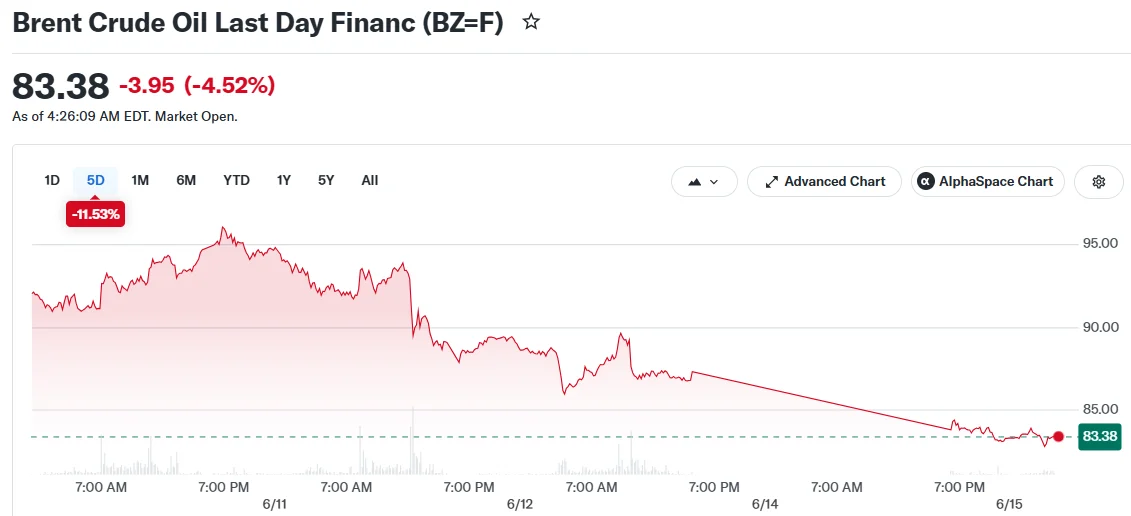 Brent Crude Oil Last Day Financ (BZ=F)
Brent crude declined more than 4% to approximately $83.79 per barrel. West Texas Intermediate slumped 4.6% to hover near $81. Both primary benchmarks reached their lowest points since March 10.
President Donald Trump unveiled the arrangement via social media platforms, declaring his authorization for the “toll free opening” of the Strait of Hormuz while simultaneously lifting the US naval blockade. “Ships of the World, start your engines. Let the oil flow!” his post proclaimed.
Iran’s Deputy Foreign Minister Kazem Gharibabadi verified that negotiators had finalized a deal. He indicated the complete text would remain confidential until the formal signing ceremony in Switzerland, scheduled for Friday.
The conflict erupted in late February following coordinated US and Israeli military operations against Iran concerning its nuclear development program. Tehran retaliated by blocking the Strait of Hormuz and executing attacks throughout the Persian Gulf region. Washington countered with its own naval blockade targeting Iranian-affiliated vessels.
During the height of tensions, Brent crude surged beyond $120 per barrel. Maritime disruptions, elevated insurance premiums, and concerns about extended supply constraints combined to drive prices upward.
Pre-Deal Price Decline Already Underway
Prices had been retreating over recent weeks as indicators mounted that negotiators were approaching an agreement. Reports suggested limited crude shipments through the strait had quietly resumed, while major industrialized nations accessed strategic petroleum reserves to alleviate supply pressures.
China, ranking among the globe’s largest oil consuming nations, simultaneously reduced its purchasing activity throughout the crisis period.
Framework Agreement Components
The preliminary accord establishes provisions for ceasing military operations and restoring Hormuz access within 30 days under Iranian management. Reports indicate the framework additionally encompasses sanctions relief, constraints on Iran’s nuclear activities, and measures to restore normal Iranian oil export operations.
The arrangement establishes a 60-day negotiating period focused on Iran’s nuclear program. Trump revealed to the New York Times that failure to secure an agreement on nuclear matters could prompt renewed military intervention.
Despite encouraging developments, market analysts recommended measured expectations. The waterway potentially contains uncleared mines requiring removal operations. Insurance companies may maintain elevated premium rates for vessels transiting the route.
“We still need to understand what the deal means,” said Chris Weston of Pepperstone Group. “Even with the strait slated to open on Friday, there could be mines still.”
Energy producers cautioned that reactivating oil production from idled Persian Gulf facilities could require several months due to infrastructure damage and operational complexities.
Reduced crude prices may diminish inflationary pressures confronting central banking institutions. The US Federal Reserve convenes for its policy meeting on June 16-17 and is anticipated to maintain current interest rates.
The post Crude Oil Plunges Over 4% as US-Iran Agreement Reopens Hormuz Strait appeared first on Blockonomi.