Crypto Scam News: IRS Confirms Fake Letter Fraud Campaign This crypto scam news comes straight from the IRS itself. On July 30, 2026, the agency's Criminal Investigation division confirmed th
Crypto Scam News: IRS Confirms Fake Letter Fraud Campaign
This crypto scam news comes straight from the IRS itself. On July 30, 2026, the agency's Criminal Investigation division confirmed that fraudsters are mailing fake IRS letters to cryptocurrency holders, trying to steal personal information and digital assets.
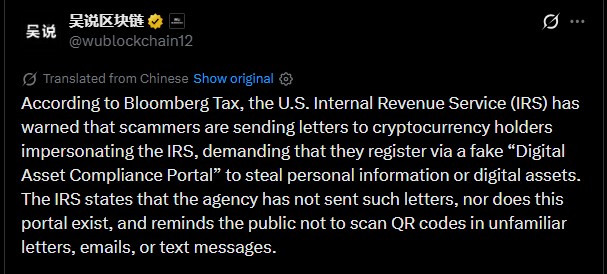
Source: X Wublockchain12
Official Details
The the agency says the letters push recipients toward a fake website that copies IRS.gov and asks them to register for something called a "Digital Asset Compliance Portal." Here's the key line from the agency itself:
The IRS did not send these letters.
The authorities does not operate any "Digital Asset Compliance Portal."
This is confirmed to be a scam, straight from the source.
IRS-CI Chief Jarod Koopman said criminals continue to exploit public trust in government agencies by creating convincing fake websites and official-looking correspondence.
He added that people should stop, verify the source, and report potential fraud schemes to law enforcement before responding to unexpected requests for unsafe recovery of personal information.
How the Scam Works
Victims get a letter that looks official, claiming they must enroll in this fake portal before a set deadline. The letter tells them to scan a QR code, which leads to the lookalike website. From there, the site may ask for personal details, wallet information, or exchange login credentials.
fraud Element
Details
Delivery method
Physical mail, made to look official
Fake destination
Copycat site resembling IRS.gov
Ask
Register for a fake "Digital Asset Compliance Portal"
Entry point
QR code in the letter
Target data
Personal info, wallet details, exchange credentials
User Impact
Anyone holding crypto could be a target in this crypto scam news story, regardless of portfolio size, since the fraud relies on official-looking mail rather than targeting specific wallets. The authorities recommends a few direct steps:
Don't scan QR codes from unsolicited letters, emails, or texts, especially ones claiming to be from a government agency.
Never share wallet recovery phrases or private keys with anyone.
Verify any government contact directly through the agency's official website, not through links in the letter itself.
Report suspicious letters at IRS.gov/submitatip.
This round of cryptoasset scam news also got extra tracing help from the private sector.
Market Impact
This is a consumer-protection alert, not a hack or exploit, so it hasn't moved any token prices or triggered exchange-level disruptions.
The real impact sits with individual cryptoasset holders who could lose funds or personal data if they follow the letter's instructions. No specific exchange, wallet provider, or token has been named as directly compromised by the authorities.
Conclusion
This crypto scam news is a reminder that the authorities never asks for account access through mailed letters or QR codes.
With tax-season-style scams increasingly targeting cryptoasset holders specifically, verifying anything IRS-related directly through authorities remains the safest move before clicking, scanning, or sharing any information, and always verify crypto exchange security.
Disclaimer
This article is for informational purposes only and is not financial advice. Always do your own research before investing.