The 21st Century ROAD to Housing Act became law at midnight, and President Donald Trump's signature was never on it. Buried inside the bipartisan housing-affordability bill, and having nothin
The 21st Century ROAD to Housing Act became law at midnight, and President Donald Trump's signature was never on it.
Buried inside the bipartisan housing-affordability bill, and having nothing to do with housing, is a provision barring the Federal Reserve from issuing a central bank digital currency, a government-run digital dollar.
The ban runs until December 31, 2030, and it stops the Fed from issuing a digital dollar either directly to the public or indirectly through banks and other intermediaries. Any future attempt would require Congress to authorize it first.
Trump had announced he would not sign the bill. He did it anyway, in a sense, by doing nothing at all.
Related: How Trump’s opposition to CBDCs could boost crypto's appeal
How a bill becomes law without a signature
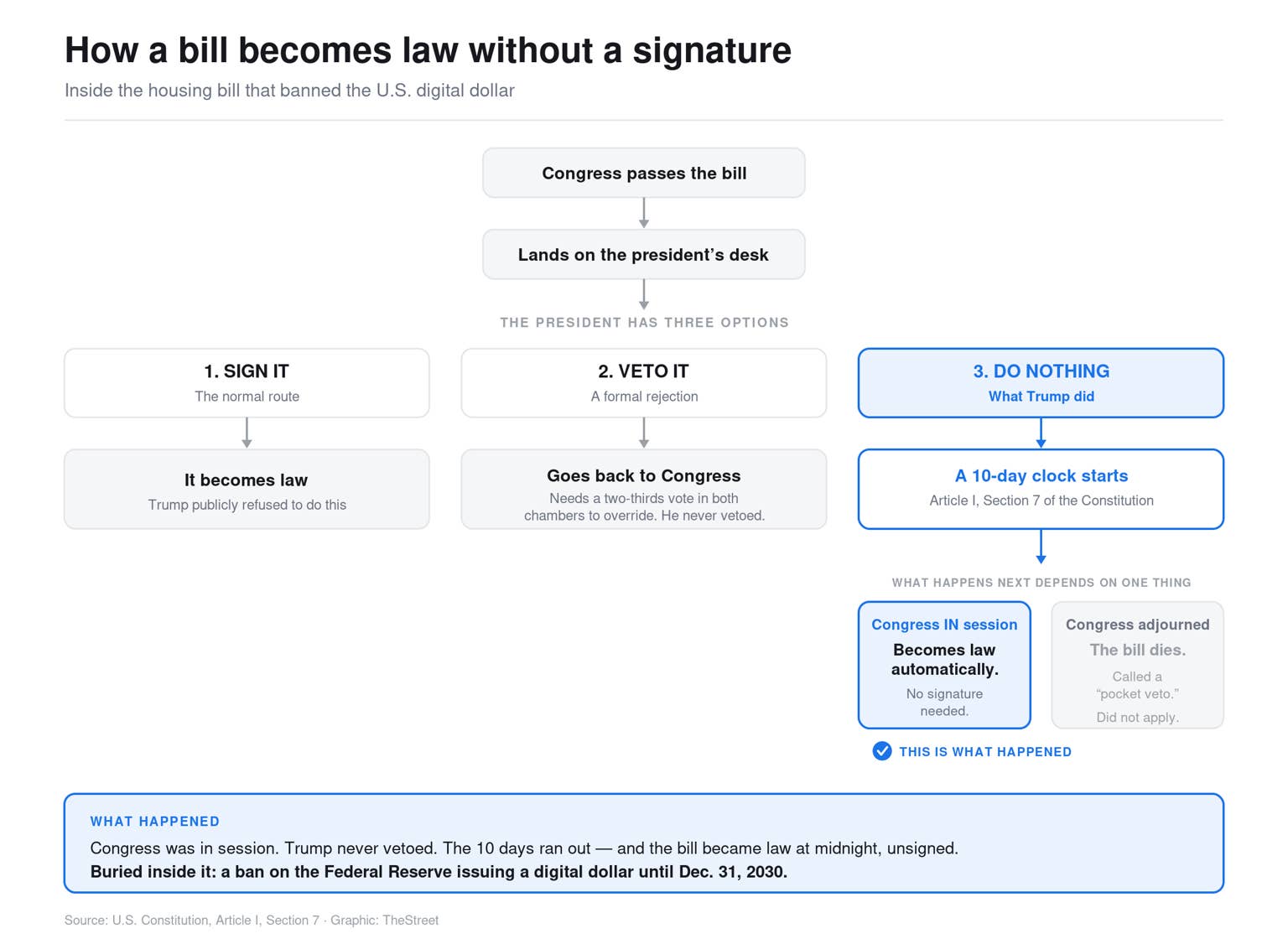
When Congress sends a bill to the White House, the president has three options: sign it, veto it, or ignore it.
Trump chose to ignore it, posting on Truth Social that he would not sign the housing bill "in PROTEST" because the Senate had failed to pass a separate elections bill he wants, one imposing new proof-of-citizenship and identity requirements on voters.
Ignoring a bill only kills it in one narrow circumstance.
Under Article I, Section 7 of the Constitution, a bill the president does not sign becomes law automatically after 10 days, provided Congress is still in session.
If Congress has adjourned and cannot receive a veto, the bill dies, what is known as a pocket veto. Congress was in session. Trump never issued a formal veto. The 10 days ran out, and the bill passed itself.
A ban three years in the making
The digital dollar ban is the culmination of a long campaign by House Majority Whip Tom Emmer, a Minnesota Republican who has called a central bank digital currency "the ultimate surveillance tool."
Emmer's Anti-CBDC Surveillance State Act passed the House on July 17, 2025, by a vote of 219 to 210.
Then it stalled, as every version of it had before. Republicans tried repeatedly to move a standalone ban and tried bolting it onto other legislation, including a foreign-intelligence surveillance bill.
The Senate never took it up. The upper chamber's record on standalone CBDC bans is zero for everything.
So supporters attached it to a bill the Senate could not easily refuse: a popular, bipartisan housing package. The Senate passed it on June 22. Three weeks later, it is law.
What a digital dollar is, and why crypto fought it
A central bank digital currency is money issued by the Federal Reserve itself in digital form. It is different from the digital dollars people already use in crypto: USDC and USDT are stablecoins issued by private companies, not the government.
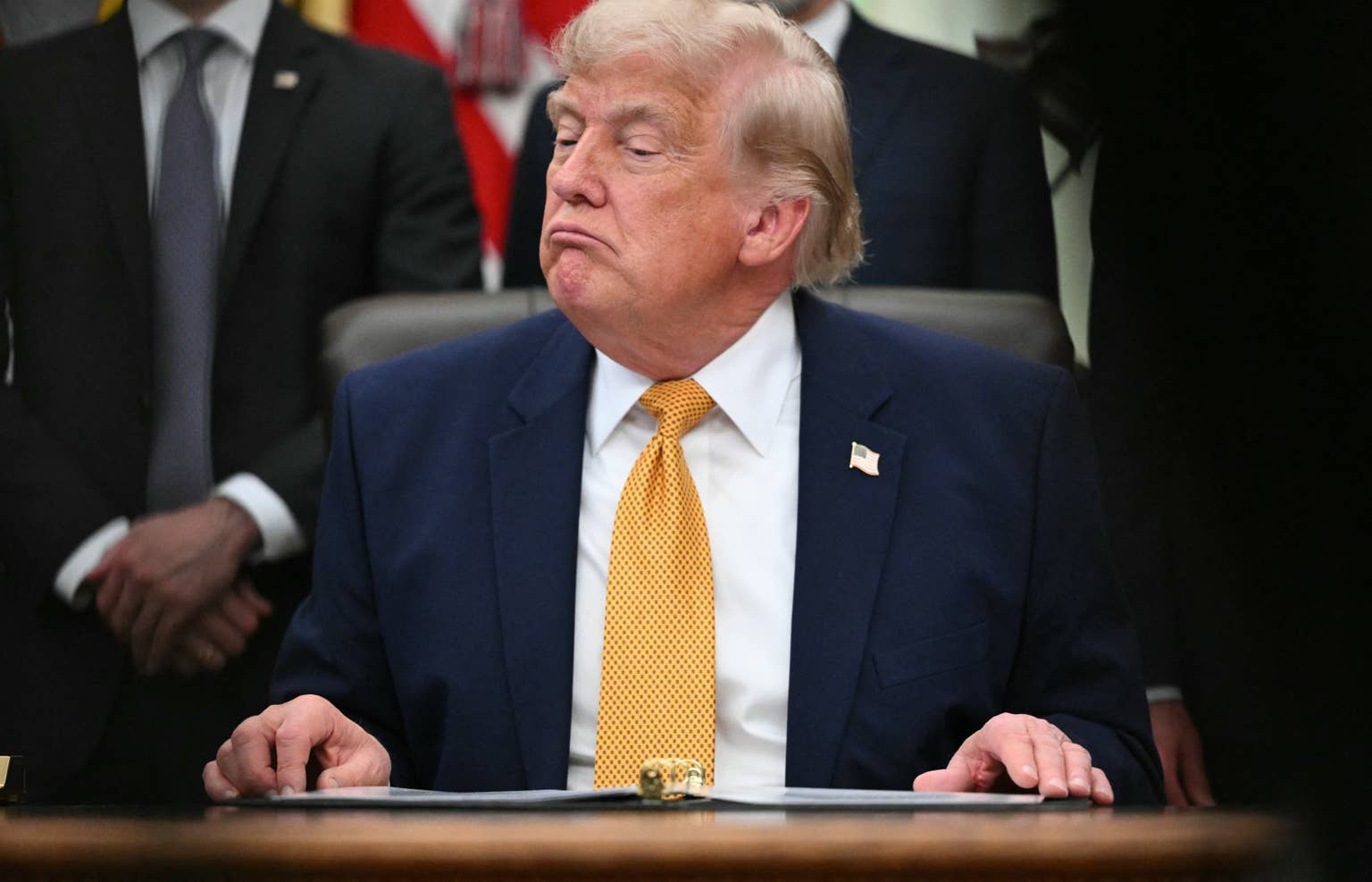
U.S. President Donald Trump signs an executive order in the Oval Office of the White House in Washington, DC, on June 22, 2026.
AFP via Getty Images
Opponents made two arguments, though only one of them was made loudly. The public case was privacy.
A digital dollar issued and tracked by the central bank, they argued, could give the government visibility into, and potentially control over, how ordinary people spend their money. That framing turned "no CBDC" into a durable political slogan.
The less-discussed case was commercial.
A Fed-issued digital dollar would compete directly with privately issued stablecoins, a business that has grown into one of the most profitable corners of the crypto industry.
Trending on TheStreet Roundtable
What actually changes
The Fed was never going to build a digital dollar in the first place.
Jerome Powell told Congress in 2024 the central bank was "nowhere near" pursuing one and would not spy on Americans, and he later said the Fed would not develop a CBDC during his tenure without explicit authorization from Congress.
Kevin Warsh, who replaced Powell as Fed chair this year, went further during his confirmation, calling a U.S. digital dollar a "bad policy choice." The Fed's own 2022 research paper laid out the pros and cons and pointedly declined to endorse issuing one.
Trump had also already banned it once. In January 2025, he signed an executive order prohibiting federal agencies from establishing, issuing or promoting a central bank digital currency.
So what does the housing bill add? Permanence. An executive order can be undone by the next president with a stroke of a pen. A statute cannot. This turns a policy that depended on who occupied the White House into law that will outlast the administration, at least until the end of 2030. That is the real win the industry banked.
The problem this creates for crypto's biggest bill
Trump has said he will not sign anything until Congress passes his elections bill, which does not currently have the votes. He has argued that without it, Republicans will lose the midterms, and Democrats are currently favored to retake the House.
That blanket refusal is a problem for the Digital Asset Market CLARITY Act, the crypto market-structure legislation the industry has spent years pushing and hopes to move this summer. If it reaches the president's desk during his standoff, it could sit there unsigned. As tonight showed, a bill can still become law that way. But it takes 10 days, and it takes Congress staying in session, and nothing about that is a comfortable way to enact the most consequential crypto law in U.S. history.
The United States is now legislating against a technology its largest economic rivals are actively deploying.
The digital euro cleared its final hurdle in the European Parliament last month, explicitly framed as a way to loosen American dominance of payments. China continues expanding the digital yuan.
America, for at least the next four and a half years, has taken itself out of the race.