BitcoinWorld Gensler: AI Bubble Headed for Recession Before 2028 Gary Gensler, who chaired the US Securities and Exchange Commission from 2021 to 2025, said the AI boom will likely end in a r
BitcoinWorld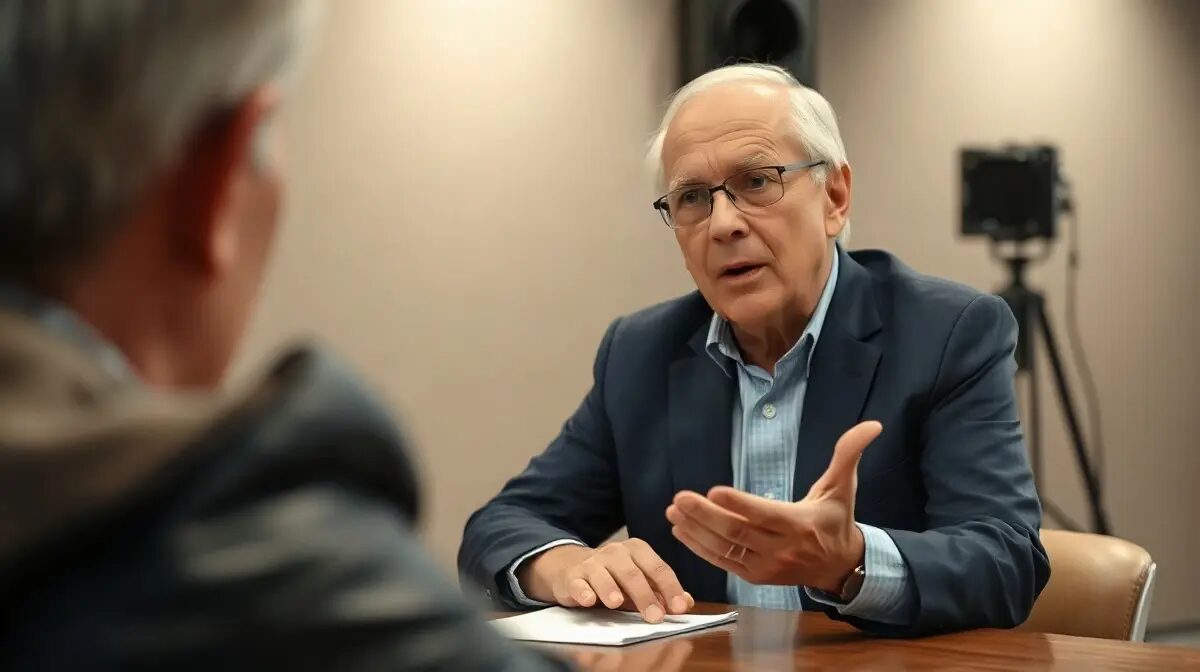 Gensler: AI Bubble Headed for Recession Before 2028
Gary Gensler, who chaired the US Securities and Exchange Commission from 2021 to 2025, said the AI boom will likely end in a recession before the 2028 election, in an interview with CNN published Monday and reported by Cryptopotato.
Gensler told CNN the AI boom is already a bubble and he expects it to end in recession before 2028, with heavily borrowed neocloud computing providers seeing the first bankruptcies. He compared the coming downturn to the dot-com crash in size but not to the severity of 2008.
Key facts
- Gensler said Big Tech firms spent five times as much in 2026 as three years earlier.
- He expects the downturn to match the dot-com crash in size but to be less harsh than the 2008 financial crisis.
- In December 2023 he told the Financial Stability Oversight Council that AI could sit at the centre of a future financial crisis, warning about herding around a single model.
- He singled out neocloud companies leasing AI computing power as the likely first to fail, citing their heavy debt loads.
- Yardeni Research president Ed Yardeni called the warning plausible but said he expects the bubble to deflate rather than burst.
Debt, circular deals and the first cracks
Gensler framed the risk as a structural one, not a story about the technology itself. Railroads, the 1920s electricity buildout and the 1990s internet all followed the same arc, he argued: infrastructure gets funded ahead of revenue, and the unwind follows.
The difference this time, in his account, is where the leverage has collected. Neoclouds lease specialised AI compute to developers, and some of those businesses are built on heavy borrowing. “The major companies will survive. It’s these neocloud companies where we’re going to see some breakage and bankruptcies,” Gensler said, according to the Cryptopotato report.
He also questioned why lenders had extended so much credit to the sector so quickly, and predicted that the record would eventually show they overdid it. Circular deals and off-balance-sheet financing, he added, make it hard to see how much risk is building underneath.
BitMEX co-founder Arthur Hayes has made a similar argument, comparing the AI buildout to the 2008 housing crisis and locating the bubble in the borrowing behind data centres.
Crypto has already felt cross-currents from AI equities. BitMine chairman Tom Lee tied a slide in crypto to a selloff in AI stocks, which he said spread from chip and memory makers to South Korea and Taiwan, where crypto is widely held. CNN reported that AI stocks faced fears of a data centre crackdown after Democrats won the November 3 midterms, and that Jensen Huang stepped down as Nvidia’s chief executive last week.
Why it matters
The warning lands where AI and crypto markets now overlap. If Gensler is right that the pressure shows up first in leveraged compute lessors, the transmission channel to digital-asset prices runs through credit, not through token fundamentals.
There is also a regulatory thread. Gensler spent his last months at the SEC raising exactly this concern — that many institutions could act on the same output from the same model, turning one shared signal into a single point of failure. Similar concerns about market-structure risk have been raised by other US regulators in recent days, including the CFTC’s warning to Kalshi over contract notifications.
The counter-view matters too. Ed Yardeni, president of Yardeni Research, said he sees air coming out of the bubble rather than it bursting, and pointed out that chipmakers’ price-to-earnings ratios have fallen below the broader market’s. “If everyone is convinced that AI is a bubble, it probably isn’t,” he said, calling Gensler’s warning a plausible scenario.
Gensler himself left the question of severity open: “The only question is if it’s a soft recession or something more dramatic.” He returned to MIT to focus on AI and finance days after leaving the agency.
Market snapshot
Bitcoin traded at $64,332 (₹6,011,894) at the time of writing, down 1.5% over 24 hours and 12.6% over seven days, with a market cap of $1.29 trillion and 24-hour volume of $22.19 billion, per CoinPaprika data verified at 21:46 UTC on 17 November 2026. Hyperliquid (HYPE) stood at $68.97 (₹6,446), down 4.9% on the week.
What to watch
The next test is whether credit conditions around data-centre financing tighten visibly in the fourth quarter, and whether any neocloud issuer signals distress first. Any moves by lenders or regulators on off-balance-sheet AI financing would confirm or undercut Gensler’s thesis.
This article is not financial advice. Crypto and equity markets are volatile and prices can move sharply in either direction; readers should do their own research.
Frequently Asked Questions
Did Gary Gensler say the AI bubble will definitely cause a recession?
Gensler told CNN the boom is already a bubble and he expects a downturn before the 2028 election, but he framed the severity as uncertain, describing it as either a soft recession or something more dramatic.
What are neoclouds and why does Gensler single them out?
Neoclouds are companies that lease specialised AI computing power to developers. Gensler says some are built on heavy debt, so they are where he expects the first failures and bankruptcies.
Is there a counter-view to Gensler’s warning?
Yes. Yardeni Research president Ed Yardeni said he expects air to come out of the bubble rather than it bursting, and called the warning a plausible scenario rather than a likely one.
What did Gensler say about AI risk when he ran the SEC?
He told the Financial Stability Oversight Council in December 2023 that AI could sit at the centre of a future financial crisis, with his main concern being firms acting on the same signal from a single AI model.
This post Gensler: AI Bubble Headed for Recession Before 2028 first appeared on BitcoinWorld.