Grass has had a dramatic week that captures everything interesting and frustrating about DePIN tokens in a single 48-hour window. The token surged 12% ahead of its July 7 Token Holder and Net
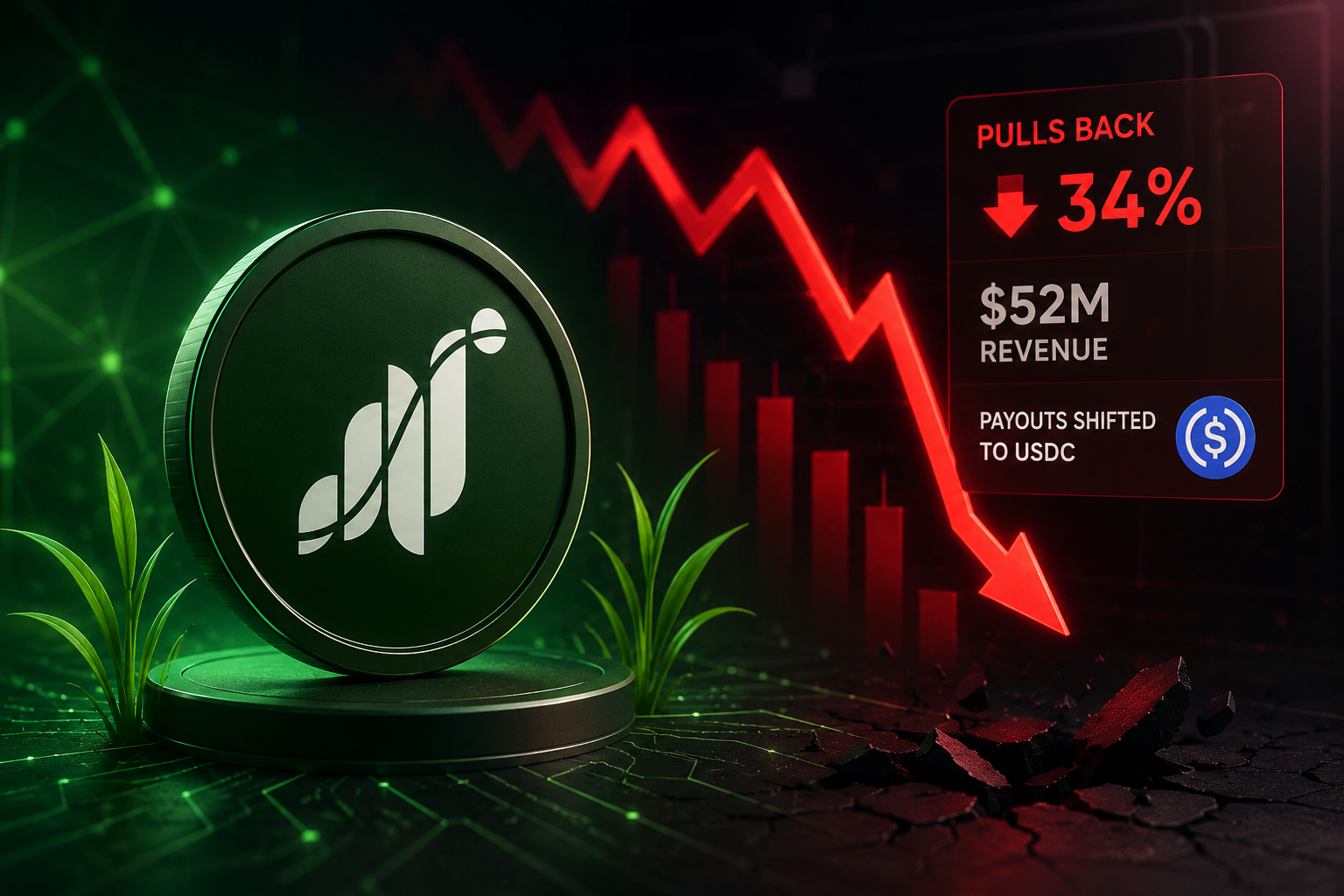
Grass has had a dramatic week that captures everything interesting and frustrating about DePIN tokens in a single 48-hour window. The token surged 12% ahead of its July 7 Token Holder and Network Participant Call — the most anticipated community event in the project's history — before reversing sharply, falling 34% in the 24 hours following the call. GRASS is currently trading around $0.35 with a market cap of approximately $224 million, ranking #144 on CoinGecko.
The catalyst for both the surge and the selloff was the same event. What the call revealed was simultaneously impressive on the fundamentals and disappointing on the community reward front.
What the July 7 Call Actually Disclosed
The headline number from the call was significant: Grass reported $52 million in H2 2026 revenue, annualizing to roughly $104 million — meaningful commercial traction for a network that monetizes unused internet bandwidth into AI training data. A Retrieval Inference product was also cited as near launch, adding a new revenue stream on top of the existing data pipeline.
The network itself has scaled to over 2.5 million active nodes across 190 countries, indexing 20% of YouTube and over 7,000 terabytes of web data. With 8.5 million registered users and backing from Polychain Capital and Tribe Capital, the project's fundamentals are more credible than most DePIN competitors at comparable market cap levels.
What spooked the market was the Season 2 airdrop structure. Grass confirmed that Stage 2 payouts will be distributed in USDC rather than GRASS tokens — a decision the foundation framed as reducing regulatory risk and improving earnings transparency. For node operators who spent months farming points expecting GRASS token rewards, receiving USDC instead removed the speculative upside they had been working toward. Claims open July 22, 2026 at 1:00 PM EST, with a six-month window to claim through January 22, 2027.
The Supply Picture Heading Into Distribution
The circulating supply currently sits at approximately 632 million GRASS out of a 1 billion maximum — 63.2% of total supply already in circulation. A 33.4 million token unlock released in late June added roughly 3.3% more supply into an already pressured market. A separate 170 million GRASS token Season 2 distribution is still expected in H2 2026 alongside the USDC payouts, which represents a meaningful additional supply event that the market is now pricing in more cautiously.
The shift to USDC payouts for Stage 2 GRASS claims is the mechanic most worth understanding for holders. It reduces token supply pressure from airdrop recipients who would otherwise sell immediately — but it also signals that the team is managing regulatory exposure actively, which can cut both ways in terms of how institutional buyers interpret the project's positioning.
A Native Wallet Launching Mid-July Changes the UX Equation
One concrete positive from the call's surrounding announcements is a native in-app non-custodial wallet expected to launch mid-July 2026. The wallet will be secured by passkey or email OTP — no MetaMask, no external extension setup — and integrates MoonPay for direct fiat withdrawals. It will serve as the primary method for claiming Season 2 rewards.
That user experience simplification matters more than it might seem on the surface. Grass's addressable market for node operators includes millions of everyday internet users who are not crypto-native. Removing the friction of external wallet setup and replacing it with Face ID or fingerprint authentication is the kind of product decision that expands participation beyond the existing DePIN enthusiast base.
For existing holders, the $0.50 level is the near-term technical line that matters most. A hold above that zone keeps the medium-term uptrend intact and positions for a retest of recent highs around $0.55. A sustained break below opens a path toward $0.47 support — and with the supply events still ahead, the market's capacity to absorb selling will be tested before the year is out.