One of the persistent pain points in Web3 today is scalability. As more users flock to decentralized applications (dApps), blockchain networks often strain under the load, congestion, high ga
One of the persistent pain points in Web3 today is scalability. As more users flock to decentralized applications (dApps), blockchain networks often strain under the load, congestion, high gas fees, and slow performance, particularly during high-traffic events like NFT mints, token launches, or gaming tournaments.
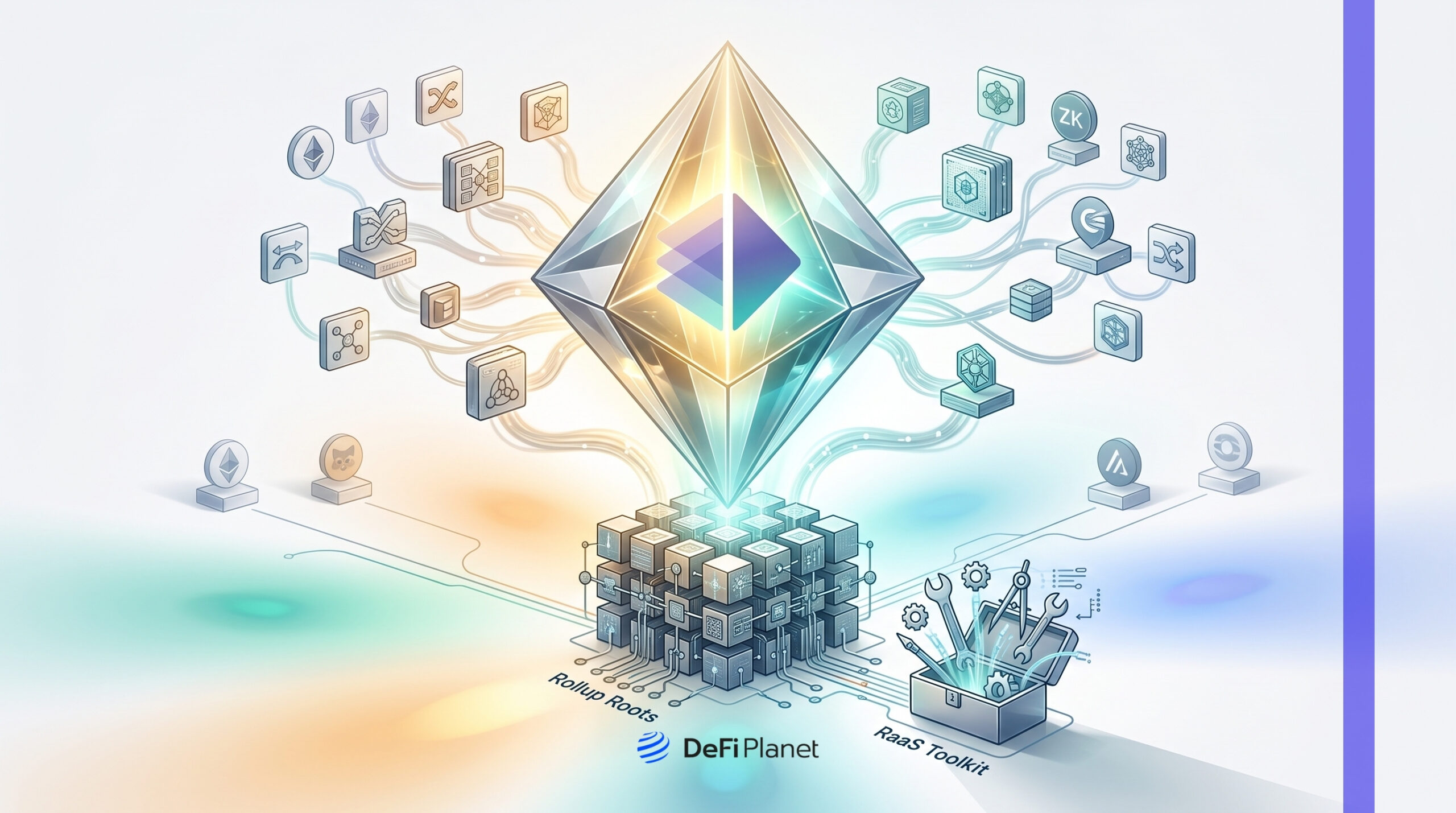
AltLayer, founded by Dr. Yaoqi Jia in 2021, set out to address this through Rollup-as-a-Service (RaaS). Instead of building rollup infrastructure from scratch, developers can deploy temporary, event-driven rollups that scale with demand. Rollup-as-a-Service (RaaS) is still the foundation of what AltLayer offers, but over the past year, the company has expanded significantly into AI agent infrastructure, a transition that’s now more central to its public business positioning.
This review covers what AltLayer’s RaaS toolkit actually does, how it holds up against a more crowded competitive field than it faced at launch, and what its broader pivot toward AI infrastructure and its token’s market performance suggest about where the company is heading.
AltLayer, initially launched as a Rollup-as-a-Service (RaaS)-focused platform, enables developers, enterprises, and protocols to launch customized rollups without needing to manage infrastructure or write low-level blockchain code. AltLayer’s stated goal is to do for rollup deployment what managed cloud platforms did for server infrastructure, abstracting the technical complexity so teams can launch a customized Layer 2 without writing low-level blockchain code or managing it long-term. Whether that comparison holds up is worth evaluating on the merits below rather than taking at face value.

Altlayer website’s interface. Source:
AltlayerWhether you’re launching a DeFi protocol, NFT marketplace, blockchain game, or running a high-demand token sale, AltLayer makes it possible to quickly spin up dedicated Layer-2s tailored to your use case, with optional features like custom data availability, decentralized sequencing, and automated restaking security.
AltLayer’s RaaS toolkit simplifies the deployment of customizable rollups by combining modular blockchain components, elastic scaling, and managed infrastructure into a single, developer-friendly platform.
How AVSes (Actively Validated Services) strengthen AltLayer rollups
AltLayerenhances traditional rollups with three in-house AVSes, VITAL, MACH, and SQUAD, built on EigenLayer’s restaking framework.

Altlayer restaked rollups. Source:
BybitEach one targets a different bottleneck in the rollup stack:
- VITAL handles fraud and state verification, ensuring that rollup states are provably correct. This adds a layer of cryptoeconomic security that rollups often outsource to Ethereum L1.
- MACH reduces latency by introducing faster finality layers. It helps transaction results become reliable within seconds, critical for dApps where timing and UX are essential (e.g., trading, gaming).
- SQUAD decentralizes the sequencing layer, moving away from single-operator sequencers that could censor or front-run. Instead, it offers a shared sequencing service backed by restaked validators.
AltLayer lets rollup creators choose any combination of these AVSes based on their app’s specific security, speed, and decentralization needs.
Support for multiple modular stacks
AltLayer is execution-agnostic and works seamlessly with leading rollup frameworks and modular components. It supports:

Altlayer versatile rollup stack. Source:
Altlayer- Execution layers: OP Stack, Arbitrum Orbit, Polygon CDK, zkSync ZK Stack, etc.
- Data availability layers: Celestia, EigenDA, Avail, NEAR DA, and others.
- Settlement layers: Ethereum, Arbitrum, Optimism, depending on where you want to anchor your rollup’s state.
- Sequencers & interoperability: AltLayer integrates with decentralized sequencing tools like Espresso and Radius, enabling greater connectivity between rollups.
This modularity ensures that developers can build rollups that are interoperable, cost-efficient, and optimized for their target use cases, all from a single platform.
Elastic scaling and flash layers
A key differentiator for AltLayer is its support for elastic rollups and Flash Layers, both of which address the unpredictability of dApp demand:
- Elastic rollups can dynamically scale resources like block space or sequencers when activity spikes. For example, during an NFT mint, a rollup could expand capacity temporarily, then scale back after traffic subsides, saving on costs and reducing bloat.
- Flash layers are short-lived rollups launched for specific events like token launches, airdrops, or on-chain games. Once the event ends, the rollup shuts down and settles final state and assets back to the origin chain, ensuring a clean off-ramp.
These features make AltLayer perfect for apps with bursty, event-driven usage patterns, reducing congestion and providing a smoother user experience.
No-code rollup deployment dashboard
AltLayer provides a drag-and-drop interface that lets developers, even those with little to no blockchain experience, launch rollups in as little as 2–5 minutes. The dashboard allows you to:
- Set gas limits, block times, or your native gas token
- Choose your rollup framework and DA layer
- Configure validators, sequencers, and fee structures
- Add built-in RPC providers and bridge integrations
This lowers the technical barrier to deploying rollup infrastructure and significantly lowers the barrier to Web3 development, especially for smaller teams, DAOs, and non-technical founders.
Managed infrastructure & enterprise-level support
AltLayer doesn’t just launch rollups, it also operates and maintains them. This includes:
- Auto-scaling nodes (validators, RPC, indexers) based on demand
- Self-healing systems that detect and recover from faults
- DDoS protection, rate limiting, and traffic shaping for public-facing dApps
- Monitoring dashboards, alerts, and service-level guarantees for uptime
- Continuous updates and maintenance, so developers can focus on features, not ops
AltLayer positions this as especially relevant to enterprises and institutions that need white-glove blockchain infrastructure without hiring entire DevOps teams.
Ecosystem Integrations and Real-World Use Cases
AltLayer’s Flash Layers are designed for high‑traffic, short‑lived events. For example, users can launch rollups specifically for esports tournaments, NFT mints, or ticketing events. Once the event ends, the rollup can be shut down, and the state settled back to the main chain.
Projects like POAP minting, Dark Forest, JDT Football Club, Eternal Legends, and Bochaman have leveraged AltLayer’s gaming‑friendly stack, enabling high throughput (5,000+ TPS, ~100 ms latency) and seamless user experiences.
Platforms such as Oasys, Uprising Labs, and Double Jump’s SG Verse are using AltLayer’s one-click rollup deployment to host on-chain metaverses and games with zero-fee logic, eliminating scaling headaches for smaller game developers.
Interoperability with wallets, explorers & oracles
AltLayer integrates with wallets and explorers through Beacon Layer bridges, making asset and message passing seamless across rollups.
Oracles and RNG: Built-in integrations include ARPA’s Randcast for verifiable randomness (crucial for gaming and lotteries) and Band Protocol oracles in DeFi contexts.
Partnerships with data availability (DA) providers & L1s
Celestia & Avail: AltLayer supports modular DA via Celestia and Avail. Rollup data is compressed and uploaded to these networks, enabling efficient, trust-minimized data availability and full state reconstruction.
Ongoing support for DA ecosystems:QA roadmaps show active integrations with Celestia, Avail, EigenDA, and more, marking AltLayer’s deep modular compatibility.
L1 & protocol collaborations: Partnerships include modular chains and DA-focused protocols like EigenLayer, Sovereign SDK, Hyperlane, Orbiter, Radius, and Astria.
AltLayer’s Expansion Into AI Agent Infrastructure
AltLayer’s public roadmap and announcements over the past year point to a company that no longer sees itself as a rollup company first. Alongside its RaaS toolkit, AltLayer has built out Autonome, a platform for deploying autonomous AI agents; Wizard, described as AVS-as-a-Service; Rumour.app, a market-sentiment trading tool; work on the 8004 agent-identity registry and x402 payment rails; and, most recently, AltAI, a suite that includes AltLLM Chat. The company’s own messaging describes this as part of a broader 2026 industry transition from general-purpose blockchains toward application-specific networks and AI-agent infrastructure.
Also, with this expansion, AltLayer completed a SOC 2 Type II audit and achieved ISO/IEC 27001:2022 certification in early 2026, credentials aimed at enterprise buyers evaluating infrastructure providers on security and compliance grounds rather than purely technical merits.
On one hand, AltLayer’s diversification could reflect a team hedging against a RaaS market that has become commoditized, spreading multiple providers thin across a similar core offering. On the other, it means AltLayer is now competing in two separate, unproven markets at the same time rather than establishing its position in one. If you are evaluating AltLayer specifically as a rollup deployment option, it is important to know that rollups may no longer be the company’s primary strategic focus, even if the RaaS product itself continues to function and see usage.
Why AltLayer Matters for Web3 Builders
AltLayer simplifies and accelerates rollup deployment, enabling scalable, secure, and modular Layer-2 solutions that meet the evolving needs of Web3 builders and users alike.
Accelerates time-to-market for Web3 projects
AltLayer’s no-code dashboard and developer SDK allow teams to launch fully functional rollups in minutes instead of weeks or months. This drastically reduces development overhead and lets startups, DAOs, and indie builders focus on user experience rather than blockchain infrastructure.
Makes elastic scaling accessible to everyone
By supporting ephemeral rollups and Flash Layers, AltLayer lets dApps dynamically scale up or down based on demand, perfect for NFT mints, airdrops, tournaments, or temporary DeFi events. This elastic scaling avoids network congestion, saves cost, and improves performance during traffic spikes.
Enhances security and decentralization with restaked AVSes
AltLayer integrates with EigenLayer to offer additional security layers like VITAL (state validation), MACH (fast finality), and SQUAD (decentralized sequencing). These restaked AVSes make rollups more robust without sacrificing speed or decentralization.
Supports interoperability and composability across chains
Thanks to integrations with Hyperlane, Celer Network, and Beacon Layer bridges, rollups launched on AltLayer can easily communicate with other chains and dApps. This enables cross-chain use cases such as shared liquidity, interoperable NFTs, and global DeFi protocols.
Lowers the barrier for entry into modular blockchain architecture
AltLayer makes it easy for developers to mix and match execution layers (e.g., OP Stack, Arbitrum Orbit), DA layers (e.g., Celestia, Avail), and settlement layers (e.g., Ethereum, Arbitrum), without needing to become modular blockchain experts. This reduces the technical expertise required to work with modular blockchain architecture.
Can AltLayer Stay Competitive?
Despite its strong promise, AltLayer faces several challenges that could impact its success:
Heavy competition in the RaaS and modular stack space
AltLayer competes with other Rollup-as-a-Service providers including Caldera, Conduit, Gelato, and, more recently, Alchemy Rollups. As rollup tooling becomes increasingly commoditized, standing out on differentiated features or ecosystem traction remains difficult, and this has arguably gotten harder for AltLayer specifically as the field has grown more crowded since launch.
ALT has performed poorly since its 2024 launch. The token has fallen from an all-time high near $0.68 to roughly $0.006-0.008 for most of 2026, a decline of approximately 98-99%, with a new all-time low recorded as recently as March 2026. This decline has continued even as AltLayer has reported surpassing 200 deployed rollups, suggesting the market isn’t currently rewarding usage growth the way the team likely hoped. Analysts have pointed to AltLayer’s token unlock schedule as a contributing factor; large scheduled unlocks have repeatedly coincided with sharp price declines, a pattern common across infrastructure tokens with substantial early-investor allocations, though not unique to AltLayer. This is directly relevant to anyone evaluating ALT as an investment, separate from evaluating whether the underlying RaaS technology works well.
Reliance on third-party infrastructure for security and DA
AltLayer depends on the performance and reliability of external networks like EigenLayer (restaking) and Celestia or Avail (data availability). If any of these systems experience downtime, attacks, or scaling issues, rollups built on AltLayer could inherit those vulnerabilities or face service disruptions.
Unclear developer loyalty in a rapidly evolving market
Web3 developers tend to experiment with multiple frameworks and platforms. Unless AltLayer maintains a strong developer experience, support, and incentives, it risks churn to competing ecosystems that offer better documentation, grant programs, or native L1 support.
Regulatory uncertainty around rollups and modular infrastructure
As rollups and restaking become more central to DeFi and Web3, regulators may scrutinize their economic structures and security guarantees. If regulations target DA providers, sequencing protocols, or validator restaking models, AltLayer’s stack could face legal or compliance friction in certain jurisdictions.
Adoption bottlenecks for flash layers and elastic rollups
While Flash Layers and elastic rollups are conceptually powerful, they are still relatively new. Educating projects on when and how to use temporary rollups, and integrating these into existing ecosystems, may prove challenging until there’s broader tooling, standards, and case studies to showcase success.
On the technical merits, AltLayer’s RaaS toolkit does what it sets out to do. It lowers the barrier to deploying a customized rollup, its AVS-based security options address real gaps in the standard rollup security model, and over 200 rollups reportedly deployed on the platform suggest genuine usage rather than roadmap promises alone.
Two things temper that assessment, though. First, the ALT token has performed poorly by almost any measure, down roughly 98% from its highs even as the company has hit real technical milestones, which raises fair questions about whether usage is translating into value capture for token holders. Second, AltLayer has visibly diversified into AI agent infrastructure over the past year, a shift that may prove to be a smart hedge against a maturing, increasingly commoditized RaaS market, or may simply mean the company is spreading its resources and attention across two competitive, unproven markets instead of consolidating its position in one.
Neither of those questions is resolvable from the outside right now. What’s clear is that anyone evaluating AltLayer purely as a rollup deployment tool is looking at a company that, by its own public positioning, may no longer consider that its primary focus, and any full assessment of the project should account for that shift rather than reviewing the RaaS product in isolation.
Disclaimer: This article is intended solely for informational purposes and should not be considered trading or investment advice. Nothing herein should be construed as financial, legal, or tax advice. Trading or investing in cryptocurrencies carries a considerable risk of financial loss. Always conduct due diligence.
Enjoyed this? BookmarkDeFi Planet, explore related topics, and follow us onTwitter,LinkedIn,Facebook,Instagram,Threads, and CoinMarketCap Community for seamless access to high-quality industry insights.
Take control of your crypto portfolio with DEFI PLANET PRO, DeFi Planet’s suite of analytics tools.
The post Has AltLayer Outgrown Its Rollup Roots? A Review of Its RaaS Toolkit and Market Position appeared first on DeFi Planet.
 ISO/IEC 27001:2022 certification
 SOC 2 Type II compliance