Hong Kong's Securities and Futures Commission (SFC) has flagged Star Bridge Capital Group as unlicensed, adding the firm to the regulator's public alert list of entities not authorised to con
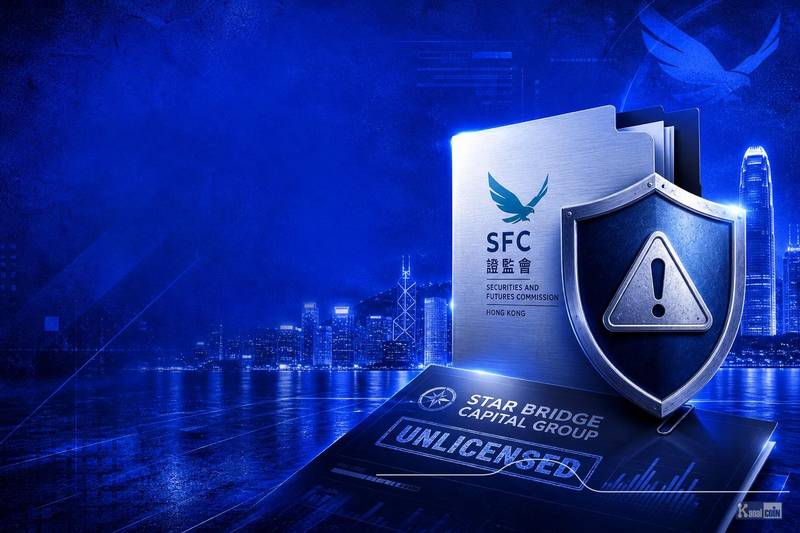
Hong Kong's Securities and Futures Commission (SFC) has flagged Star Bridge Capital Group as unlicensed, adding the firm to the regulator's public alert list of entities not authorised to conduct regulated activities in the city. For Southeast Asian traders who watch Hong Kong as a bellwether for regional crypto oversight, the warning is a reminder to verify a platform's licensing status before moving any funds.
What the Hong Kong SFC said about Star Bridge Capital Group
The SFC placed Star Bridge Capital Group on its alert list of unlicensed entities, the register the regulator maintains to identify firms that it believes may be targeting Hong Kong investors without authorisation. For related coverage, see Solana ETF Hits $1B AUM as Bitwise Fund Leads.
Related Star Bridge and SBCFX entities were added to the same alert list, according to reporting by FinanceFeeds. The SFC's core message is narrow: the named entities are not licensed by the commission. For related coverage, see Charles Schwab Says Bitcoin Short Squeeze Is Over as BTC Leverage Resets.
- What happened: The SFC added Star Bridge Capital Group to its alert list of unlicensed entities.
- Why it matters: Firms on the list are not authorised by the SFC to carry out regulated activities in Hong Kong.
- What to do: Investors should confirm a platform's licensing status directly with the regulator before committing funds.
Why an unlicensed warning matters for investors in Hong Kong
An SFC licence is the baseline signal that a firm is subject to Hong Kong's conduct, capital, and investor-protection rules. When a company is absent from that framework, clients typically fall outside the safeguards and dispute channels that licensed intermediaries must provide, as covered in reporting on the warning. For related coverage, see Bitcoin dips to $78.4K as Fed's Warsh downplays softer inflation prints.
What the alert-list label signals
Inclusion on the alert list is a public flag, not a verdict on every transaction a firm has handled. It tells the market that the SFC has identified the entity as operating without the authorisation Hong Kong requires for regulated activity.
The regional context matters. Hong Kong's licensing push has run parallel to a broader institutional build-out, including moves such as Hong Kong's first Bitcoin and gold ETF on HKEX, which underlines how sharply the city now distinguishes authorised products from unlicensed operators.
What to watch after the SFC warning
The immediate question is whether the SFC issues further updates or expands the list of associated entities, given that multiple Star Bridge and SBCFX names have already been named.
What could change next
Readers should monitor the alert list itself for any additions or clarifications, and watch for a response from the firm. Neither the SFC nor Star Bridge Capital Group has confirmed further steps in the material reviewed here, so any next moves remain conditional.
For ASEAN exchanges and their users, the practical takeaway is procedural: check licensing before onboarding to any cross-border platform. As regional regulators tighten scrutiny alongside developments like the debate over whether stablecoins carry credibility for large-scale payments, the licensed-versus-unlicensed distinction is becoming the clearest line investors across Jakarta, Manila, and Singapore can use to gauge counterparty risk.
Disclaimer: This article is for informational purposes only and does not constitute financial or investment advice. Cryptocurrency and digital asset markets carry significant risk. Always do your own research before making decisions.
Read original article on kanalcoin.com