
Markets5 min read
Japan Reclassifies Crypto as Financial Products, Paving the Way for Lower Taxes and Spot Crypto ETFs
Japan has taken one of its most significant steps toward mainstream crypto adoption in years.
On July 1, 2026, the way millions of Nigerians interact with digital finance changed for good. Without much public fanfare, the Central Bank of Nigeria’s mandatory CBN device binding rule wen
On July 1, 2026, the way millions of Nigerians interact with digital finance changed for good. Without much public fanfare, the Central Bank of Nigeria’s mandatory CBN device binding rule went live, forcing a quiet rewrite of the country’s mobile banking playbook.
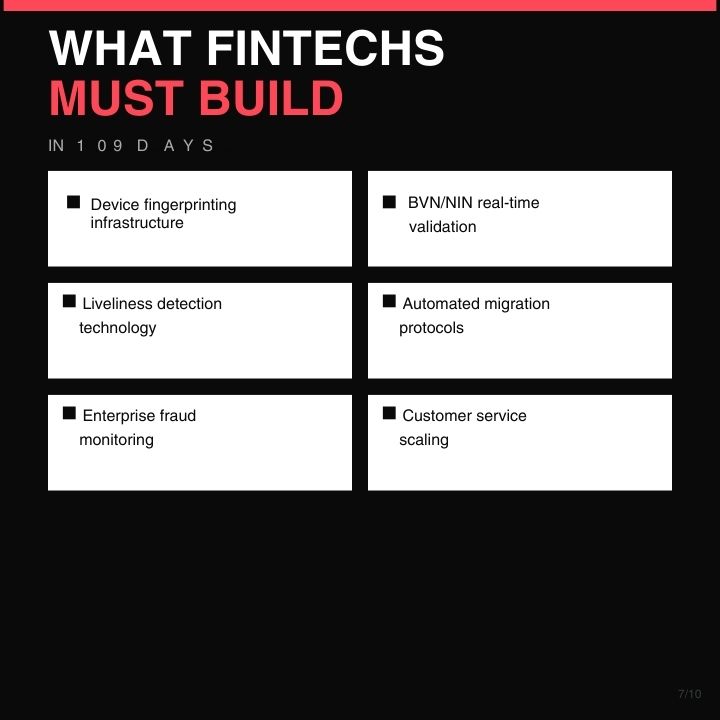
Technext first reported on the directive in March, when the Central Bank issued the payments system circular that set the rule in motion. That circular, signed by Musa Jimoh, Director of the Payments System Policy Department, gave commercial banks and fintech platforms 109 days to align their software with new fraud prevention baselines.
The deadline has now passed, and the transition has introduced structural friction into a financial ecosystem that has long prized speed above nearly everything else.
The regulation targets a real and costly problem. SIM swap fraud and unauthorised account takeovers have drained billions of Naira from Nigerian depositors in recent years, and the Nigeria Inter-Bank Settlement System has linked social engineering schemes to tens of thousands of fraud cases annually. By enforcing a hardware-level lock between a customer’s physical phone and their financial accounts, the apex bank is attempting to close one of the more common paths fraudsters use to hijack accounts.
As the sector adjusts to the new framework, the CBN device binding rule is exposing a familiar tension between airtight security and daily convenience.
 What the CBN device binding rule actually changesUnder the new framework, a mobile banking application can only be active on one device at a time, and concurrent logins across multiple phones or tablets are no longer permitted.If a customer upgrades their phone or reinstalls an app, the CBN device binding rule automatically deactivates access on the old device and triggers a fresh multi-factor authentication process on the new one.
The most consequential piece of the policy is a temporary transaction quarantine. Once a customer activates a banking app on a new device, both inflows and outflows are capped at ₦20,000 for the first 24-hour window. New accounts face the same limit during their initial setup window. Financial institutions can set lower thresholds internally, but none can exceed the regulatory ceiling.
The logic behind the cap is that if a fraudster manages to execute a SIM-swap and log into a victim’s account from an unfamiliar device, the ₦20,000 limit prevents an immediate drain on the account. That window is meant to give the legitimate owner time to notice the lost signal, contact their bank, and freeze the account before serious damage occurs.
For most retail users, a one-day limit on a new device is a manageable inconvenience.
For traders and small business owners who rely on fast transfers to settle with suppliers, the same window can mean a full day without normal cash flow whenever they switch phones.
The rule also relies on real-time checks against the Bank Verification Number (BVN) and National Identity Number (NIN) databases, paired with mandatory liveliness verification. Every device migration and every online account reactivation now depends on this identity infrastructure responding quickly and accurately.
When those central databases face heavy traffic or routine downtime, banks and fintech platforms have little choice but to wait, since the CBN device-binding rule gives them no separate path to authorise a legitimate migration.
 CBN governor, Yemi Cardoso
Read also:How 69,000 daily stolen phones are used to drain bank accounts of Nigerians
Who feels the friction mostA parallel CBN policy compounds the effect.
Since May 1, 2026, Nigerians have been limited to one lifetime change of the phone number linked to their BVN. Anyone who loses a SIM more than once, a common occurrence in a market with high phone turnover and frequent network switching, can exhaust that single allowance and find future changes locked out entirely.
Combined with device binding, the two rules leave little room for the ordinary disruptions of life in Nigeria, where phones are lost, stolen, or replaced far more often than in wealthier markets.
Shared-device households face a different problem. It is common in lower-income and rural communities for multiple family members to rely on a single smartphone. The CBN device binding rule does not accommodate concurrent or multi-profile use on one device, which pushes shared users toward physical branch visits or USSD channels that carry their own cost and security tradeoffs.
Whether this pushes vulnerable users out of formal digital banking entirely or simply changes how they access it, is still an open question that will only be answered by how banks handle edge cases in the coming months.
Financial institutions closer to the retail end of the market, including OPay, Moniepoint, Kuda, PalmPay, and Paga, collectively serve tens of millions of Nigerians who will feel these changes directly. Traditional banks have used some form of device restriction for years, though documentation of how they handle edge cases has historically been thin.
The CBN device binding rule now standardises that practice across the industry and removes the discretion banks previously had over how strict to be.

For now, there is no public evidence of the kind of system-wide disruption some in the industry feared ahead of the July 1 deadline. What has emerged instead is a slower, more deliberate banking experience for anyone who changes phones, alongside a genuine reduction in one of the easiest paths fraudsters have used to empty Nigerian accounts.
Whether that tradeoff holds up as normal life keeps interrupting rigid new rules will depend less on the policy itself and more on how quickly banks can handle the exceptions the CBN did not fully anticipate.