Nigeria’s monetary regulator has finally built a dedicated legal perimeter for payment tokens, drawing a clean statutory boundary between privately issued stablecoins, commercial bank deposit
Nigeria’s monetary regulator has finally built a dedicated legal perimeter for payment tokens, drawing a clean statutory boundary between privately issued stablecoins, commercial bank deposits on the blockchain, and foreign dollar tokens. It is a major architectural milestone for Africa’s largest crypto economy. Yet buried inside the licensing thresholds is a policy paradox: by demanding heavy bank-style equity buffers on top of one-to-one liquid reserves, the country risks pricing local Naira stablecoin builders out of existence before a domestic industry even takes off.
Released on Thursday, 5 November 2026, the Central Bank of Nigeria (CBN) Regulations for the Operations of Non-Security Virtual Assets in Nigeria establish a four-pillar supervisory regime for digital assets used in payments, settlement, and remittance rails.
Under the new directive, issuers of foreign-currency stablecoins such as Tether’s USDT and Circle’s USDC must establish licensed Nigerian entities and maintain a minimum paid-up capital of ₦15 billion ($11.16 million). In comparison, domestic Naira stablecoin issuers such as cNGN face a ₦10 billion ($7.44 million) paid-up capital floor. Virtual Asset Service Providers (VASPs) operating non-security payment, wallet, and exchange rails must hold at least ₦1 billion in paid-up capital.
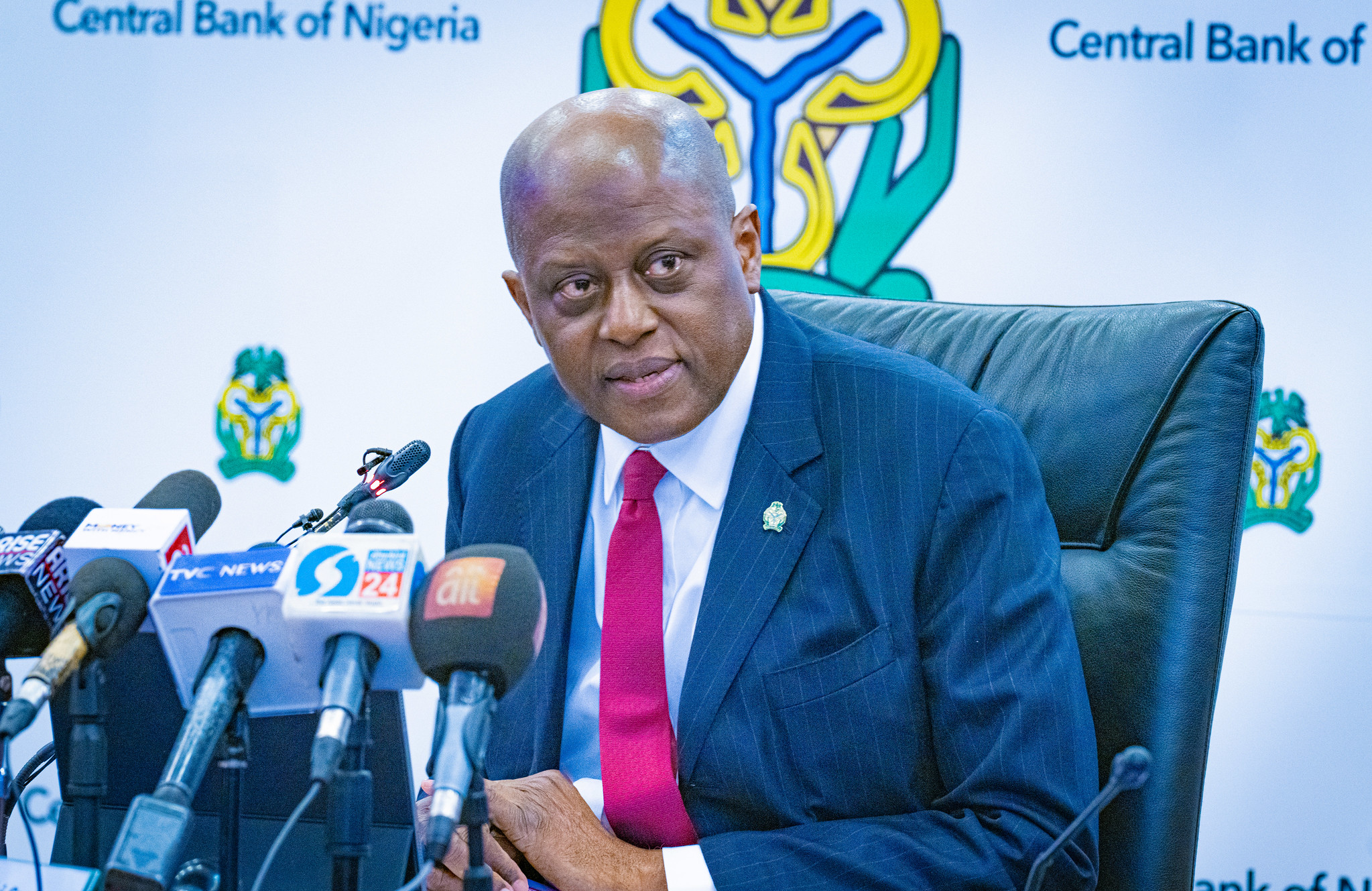
CBN governor, Olayemi Cardoso
What follows in the CBN policy document is the clearest taxonomy of non-security digital assets Nigeria has ever produced. Rather than lumping every blockchain token into a single bucket, the apex bank splits the market into four distinct operational classes based on who holds the liability and how the underlying value moves:
Class 1 (Naira Stablecoins): Privately issued tokens pegged to the Naira require a ₦10 million application fee and ₦10 billion ($7.44 million) in minimum paid-up capital. Every token must be 100 per cent backed by eligible Naira-denominated reserves. These tokens are approved for domestic payments, settlement, and corporate treasury management, but issuers are strictly barred from paying customers interest or yield simply for holding the asset.
Class 2 (Foreign Currency Stablecoins): Aimed squarely at global dollar-pegged tokens such as USDT and USDC, this tier carries a ₦10 million application fee and a ₦15 billion ($11.16 million) minimum paid-up capital requirement. Issuers must hold foreign-currency reserves in a Nigerian commercial bank. While Class 2 tokens are permitted for cross-border payments, diaspora remittances, and international trade settlement, domestic Naira obligations and fiat conversions remain tightly bound to existing CBN foreign exchange controls.
Deposit Money Tokens (DMTs): Unlike privately issued stablecoins, DMTs are tokenised Naira deposits issued exclusively by CBN-licensed commercial banks with prior regulatory approval. Every DMT represents an actual deposit liability on the issuing bank’s balance sheet and remains subject to existing banking capital adequacy standards. Interbank transfers of DMTs will clear through CBN-approved settlement infrastructure, including Real-Time Gross Settlement (RTGS) rails.
VASP Licences and Authorisations: Entities providing non-security virtual asset infrastructure must maintain ₦1 billion in minimum paid-up capital, alongside separately prescribed application fees. This perimeter covers custodial and non-custodial wallets, private-key administration, fiat-to-crypto and crypto-to-crypto conversion, Naira and foreign-currency on- and off-ramps, payment gateways, stored-value facilities, and specifically approved peer-to-peer (P2P) platforms. Traditional financial institutions expanding into virtual assets and Securities and Exchange Commission (SEC) licensees offering non-security payment services must also satisfy this additional ₦1 billion capital requirement.
The ₦10 Billion Capital Paradox: Confusing Full Reserves with Fractional Banking
On its structural merits, the CBN framework gets the taxonomy right. Separating privately issued Class 1 stablecoins from bank-issued Deposit Money Tokens prevents commercial balance-sheet confusion. Equally important, bringing offshore issuers under a domestic Class 2 regime gives the central bank direct visibility into the dollar liquidity flowing through Nigerian trade corridors.

Stablecoins
Beyond the clean classification, however, the paid-up capital mandate for Class 1 tokens exposes a glaring regulatory lacuna. Requiring ₦10 billion in paid-up share capital for a fully reserved Naira stablecoin is factually a duplication of prudence.
Commercial banks require billions of Naira in paid-up equity capital because they operate on fractional reserves. When a customer deposits cash at a commercial bank, the bank lends most of that money out to borrowers, creating credit risk, maturity mismatch, and solvency exposure. Paid-up capital exists to absorb loan defaults so depositors do not lose their money.
A fully reserved stablecoin issuer does not run a fractional bank. Issuers are prohibited from lending out customer reserves, barred from paying yield, and already bound by strict reserve composition rules that require every circulating token to be backed one-to-one by liquid Naira assets. Because the customer’s principal is already ring-fenced at 100 per cent, demanding an additional ₦10 billion in idle shareholder equity serves no balance-sheet solvency purpose. For a budding local Naira stablecoin sector, that ₦10 billion hurdle acts as a punitive barrier to entry, effectively ceding digital Naira issuance to incumbent commercial banks through Deposit Money Tokens.
Nigeria’s crypto policy whiplash in the last 5 years
To understand why the CBN’s non-security rules matter, one only has to look at the five-year regulatory tug-of-war that preceded them. Nigeria has accounted for roughly 60 per cent of sub-Saharan Africa’s stablecoin inflows since 2019, according to International Monetary Fund (IMF) data, yet its rulebook evolved in fits and starts.
On 5 February 2021, the CBN ordered commercial banks to shut down accounts tied to crypto transactions, driving local volume onto informal P2P channels. Nearly three years later, on 22 December 2023, the apex bank reversed that ban via its Guidelines on Operations of Bank Accounts for Virtual Assets Service Providers, reopening Naira banking rails to licensed operators under strict anti-money laundering rules.
While the CBN guarded the banking gates, the SEC moved to capture the asset layer. Building on its May 2022 digital asset rules, the SEC launched its Accelerated Regulatory Incubation Programme (ARIP) on 21 June 2024 to onboard exchanges and issuers. In August 2024, WrappedCBDC Limited, the consortium behind the cNGN stablecoin, entered the SEC incubation programme before receiving launch authorisation in early 2025. Statutory certainty arrived on 29 March 2025 when President Bola Ahmed Tinubu signed the Investments and Securities Act (ISA) 2025, formally classifying virtual assets as securities. In January 2026, the SEC followed up with Circular 26-1, raising minimum capital requirements for capital-market VASPs to between ₦300 million and ₦2 billion.

Yet the statutory overlap between investment tokens and payment rails remained unresolved until 17 July 2026, when President Tinubu signed the Presidential Executive Order on Virtual Assets Coordination, 2026. That order created a CBN-chaired Virtual Asset Council, with the SEC and the Nigeria Revenue Service serving as vice-chairs, and established a functional division of labour. The SEC supervises investment securities, while the CBN regulates payment tokens and monetary stability.
Thursday’s regulation is the direct operational product of that July mandate. The underlying message is that Nigeria has permanently retired regulatory ambiguity in favour of institutional supervision. Yet unless the CBN recognises that a 100 per cent reserved token is not a fractional-reserve bank, its ₦10 billion capital wall will ensure that Nigeria’s regulated stablecoin future is built almost entirely by offshore dollar giants and legacy commercial lenders.