Hackers behind the Kelp DAO exploit have reportedly moved most of approximately $220 million in previously unfrozen funds beyond the reach of standard on-chain tracking tools, effectively clo
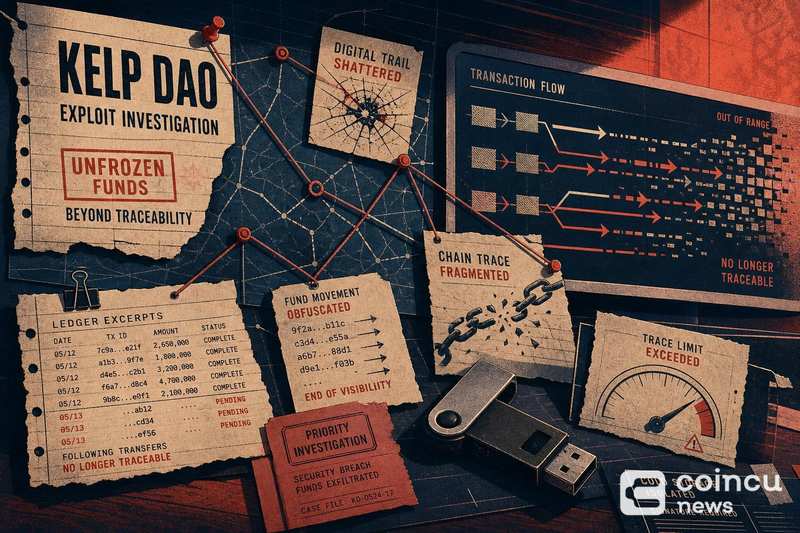
Hackers behind the Kelp DAO exploit have reportedly moved most of approximately $220 million in previously unfrozen funds beyond the reach of standard on-chain tracking tools, effectively closing the window for straightforward asset recovery.
What Happened in the Latest Kelp DAO Fund Movement
According to reporting from The Defiant, the attacker or attackers laundered the bulk of the unfrozen funds, pushing assets out of easy monitoring range for blockchain investigators. The movement marks a significant escalation from the original exploit, as the funds had previously been subject to restrictions that limited transfers.
The distinction between the original hack and this latest development is critical. The exploit itself occurred earlier; what changed now is that assets previously held under some form of restriction became movable, and the attacker acted quickly to relocate them.
On-chain tracking data from Arkham Intelligence's entity page for the Kelp DAO hacker had been monitoring the associated wallets. The latest transfers, however, appear to have fragmented holdings across routes that reduce visibility for observers relying on standard explorer tools.
Timeline: Before, During, and After the Movement
The initial exploit compromised Kelp DAO funds through a vulnerability documented in LayerZero Labs' incident report. Following the attack, certain issuers or protocols placed restrictions on the stolen assets, temporarily containing the damage.
Once those restrictions were lifted or circumvented, the attacker regained mobility. The bulk of the roughly $220 million was then transferred through a series of steps designed to break the chain of traceability.
How the Hackers Pushed Funds Out of Tracking Range
Moving funds "out of tracking range" does not mean the assets have disappeared from blockchains entirely. It means the funds have been split, bridged, or routed through enough intermediary wallets and protocols that linking them back to the original exploit becomes resource-intensive and uncertain for investigators.
What "Tracking Range" Means for On-Chain Observers
Blockchain transactions are permanently recorded, but practical traceability depends on forensic teams maintaining clear links between wallet addresses. When an attacker fragments stolen funds across dozens or hundreds of wallets, uses cross-chain bridges, or routes through mixing protocols, the cost and complexity of following each path escalates rapidly.
This is analogous to how tracking a single coin across multiple exchanges requires painstaking correlation of deposit and withdrawal records. At scale, the combinatorial explosion of possible paths makes continuous monitoring impractical without significant dedicated resources.
Common Obfuscation Routes
Without confirming the specific methods used in this case, common techniques include splitting funds into small amounts across many wallets, bridging assets to different blockchain networks, converting between token types, and using decentralized exchanges where identity verification is minimal.
Each layer of obfuscation adds time and cost to any recovery effort. The attacker's goal is not to make the funds permanently invisible but to make tracing them expensive enough that practical recovery becomes unlikely.
Reduced Visibility Is Not Permanent Loss
Law enforcement and blockchain forensics firms can still pursue leads. If funds surface on centralized exchanges with know-your-customer requirements, they could potentially be frozen. But the window for proactive containment narrows with each additional obfuscation step.
Why the Funds Were Unfrozen and Why That Changed the Risk
The term "unfrozen" indicates that certain issuers or protocols had initially placed holds or restrictions on the stolen assets, preventing the attacker from moving them freely. This containment was a critical defense layer following the original exploit.
Security and Compliance Implications
Asset freezing by token issuers or bridge operators is one of the few post-exploit tools available in decentralized finance. When those restrictions are lifted, whether through expiration, legal processes, or technical circumvention, the attacker regains full control.
This stage is more consequential than ordinary wallet shuffling because it represents a loss of containment. Prior to the unfreezing, the funds were at least partially immobilized. After it, the attacker had a clear path to execute the laundering operation that has now been reported.
The incident highlights a recurring tension in DeFi: freezing mechanisms exist but are limited in scope and duration, and attackers who can wait out or bypass those restrictions gain a decisive advantage. Controversies around asset control in crypto markets, including debates around market transparency and institutional fund movements, underscore how difficult it remains to enforce containment in decentralized systems.
What This Means for Kelp DAO, Users, and Recovery Efforts
With most of the funds now harder to trace, short-term recovery prospects have weakened. Exchange-level freezes remain a possibility if the funds surface on centralized platforms, but the probability decreases with each passing day.
For Kelp DAO users, the development raises questions about protocol risk management and the effectiveness of post-exploit containment measures. Large-scale fund movements like this one tend to reshape confidence in affected protocols, particularly when the timeline between exploit and laundering is relatively compressed.
Likely Next Steps From Investigators and the Protocol Team
Investigators, exchanges, and the Kelp DAO team are expected to continue coordination efforts. Centralized exchange operators globally may receive alerts to watch for deposits matching known patterns from the exploit wallets.
Whether any meaningful portion of funds can be intercepted at off-ramp points remains an open question. The outcome depends on the speed and scope of cross-platform cooperation, as well as whether any portion of the funds was routed through jurisdictions with strong enforcement mechanisms. The expansion of regulated crypto derivatives platforms may eventually create more chokepoints for illicit flows, but that infrastructure was not in place to prevent this particular laundering operation.
FAQ About the Kelp DAO Hackers and the $220 Million Fund Movement
How much was moved by the Kelp DAO hackers? Most of approximately $220 million in unfrozen funds was moved beyond standard tracking range.
What does "unfrozen funds" mean? It means the stolen assets were previously restricted by issuers or protocols but those restrictions were later lifted or bypassed, allowing the attacker to transfer them.
Can the funds still be recovered? Recovery is not impossible but has become significantly harder. If funds appear on centralized exchanges, they could potentially be frozen, but the obfuscation makes identification more difficult.
Why did tracking become harder? The attacker fragmented holdings across multiple wallets, bridges, and protocols, making it resource-intensive for blockchain analysts to maintain a clear trail back to the original exploit.
Disclaimer: This article is for informational purposes only and does not constitute financial or investment advice. Cryptocurrency and digital asset markets carry significant risk. Always do your own research before making decisions.
The post Kelp DAO Hackers Move $220M in Unfrozen Funds Beyond Tracking was initially published on Coincu.