Key Takeaways Microsoft transitions from a three-segment model to two new divisions: Agents and Infra, plus Devices and Consumer For the first time ever, Azure’s quarterly revenue will be rep
Key Takeaways
- Microsoft transitions from a three-segment model to two new divisions: Agents and Infra, plus Devices and Consumer
- For the first time ever, Azure’s quarterly revenue will be reported in dollar amounts rather than growth percentages alone
- Azure recorded $29.4 billion in quarterly revenue during the June period, representing 42% growth, with yearly sales exceeding $100 billion
- The revised reporting framework becomes operational with fiscal Q1 earnings in October 2026
- Analysts maintain a Strong Buy rating on MSFT with a consensus price target of $568.31, suggesting 14% potential upside
In its most significant organizational transformation since 2015, Microsoft is delivering what investors have long demanded: transparent Azure revenue reporting in actual dollar figures.
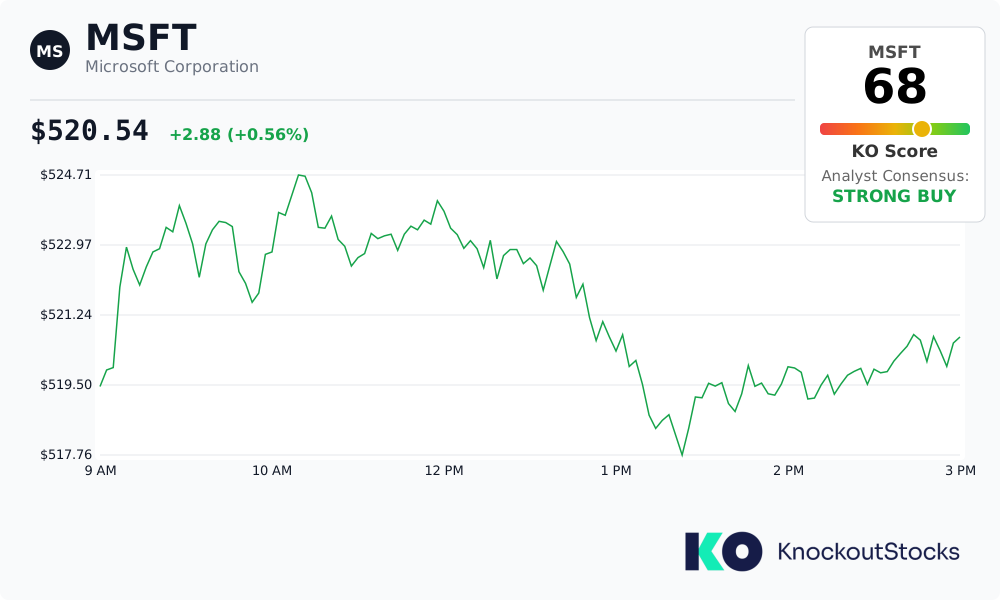 Microsoft Corporation, MSFT
The tech giant revealed on Wednesday that it would begin publishing Azure’s quarterly revenue in concrete dollar amounts. Until now, Microsoft has only shared year-over-year percentage growth figures, with annual dollar totals appearing just recently. This practice forced market analysts to estimate performance metrics for one of the planet’s most significant cloud computing platforms.
The June quarter saw Azure bring in $29.4 billion in revenue, marking a 42% increase compared to the same period last year. Looking at the full fiscal year ending in June, Azure surpassed the $100 billion milestone in total sales, up from $75 billion in the previous fiscal year.
This positions Azure as representing roughly 30% of Microsoft’s overall revenue stream. The service trails Amazon’s AWS, which reported $42.2 billion in cloud revenue for the quarter, while maintaining a lead over Google Cloud’s $24.8 billion performance.
Streamlined Organizational Structure Emerges
Microsoft is consolidating its operational divisions from three down to two. The existing Productivity and Business Processes, Intelligent Cloud, and More Personal Computing segments are being retired. Taking their place are the newly formed Agents and Infra division alongside Devices and Consumer.
The Agents and Infra segment will encompass Azure, Microsoft 365 cloud offerings, productivity software and server licensing, plus frontier AI services. Meanwhile, Devices and Consumer will house Xbox gaming, search and advertising operations, Windows OS licensing, and hardware product sales.
A notable adjustment: The restructured Azure reporting will now exclude GitHub cloud services, Security Copilot, and healthcare cloud solutions. These offerings were previously included when calculating Azure growth metrics.
Artificial Intelligence Powers Organizational Shift
CEO Satya Nadella explained that AI’s transformative impact necessitated the reorganization. “It is changing what we build and how we operate, and it is blurring the boundaries between our products,” he stated in the announcement materials.
Stifel analysts calculated that approximately half of Azure’s revenue expansion in fiscal 2026 originated from OpenAI partnerships. Meanwhile, Anthropic has similarly expanded its dependence on Microsoft’s cloud platform.
The new Agents and Infra division will also showcase Microsoft’s growing AI assistant portfolio. In July, the company disclosed having more than 30 million paid licenses for Microsoft 365 Copilot, up from over 20 million reported in April.
Looking ahead to fiscal Q1 2027, executives projected Azure revenue growth between 44% and 45% on a constant currency basis. The company anticipates Agents and Infra generating $75.15 billion to $75.75 billion in revenue, with Devices and Consumer contributing $14.7 billion to $15.2 billion.
Microsoft will supply two years of restated financial data aligned with the new organizational structure. The company’s overall revenue projections and expense forecasts remain unaffected by these changes.
The transition to the new segment reporting begins when Microsoft releases its fiscal first-quarter earnings in October 2026. According to TipRanks, MSFT holds a Strong Buy consensus rating derived from 32 Buy recommendations and one Hold rating issued within the past three months, with analysts setting an average price target of $568.31.
The post Microsoft (MSFT) Stock: Azure’s $29.4B Quarterly Revenue Finally Revealed in New Reporting Structure appeared first on Blockonomi.