Market capitalization remains the most widely cited metric for ranking cryptocurrencies. Projects valued above $1 billion are frequently presented as established leaders. Yet capitalization f
Market capitalization remains the most widely cited metric for ranking cryptocurrencies. Projects valued above $1 billion are frequently presented as established leaders. Yet capitalization figures can be heavily influenced by circulating supply, thin liquidity, and speculative trading. A harder-to-manipulate public signal is organic search traffic - visits generated by genuine search engine results rather than paid campaigns or artificial volume.
Organic traffic reflects real people actively searching for information, tools, or products. Because it is difficult to manufacture at scale, it provides a useful cross-check on whether high valuations are matched by actual user interest. A recent analysis of major cryptocurrencies against the QUASA ecosystem illustrates the gap that can exist between these two measures.
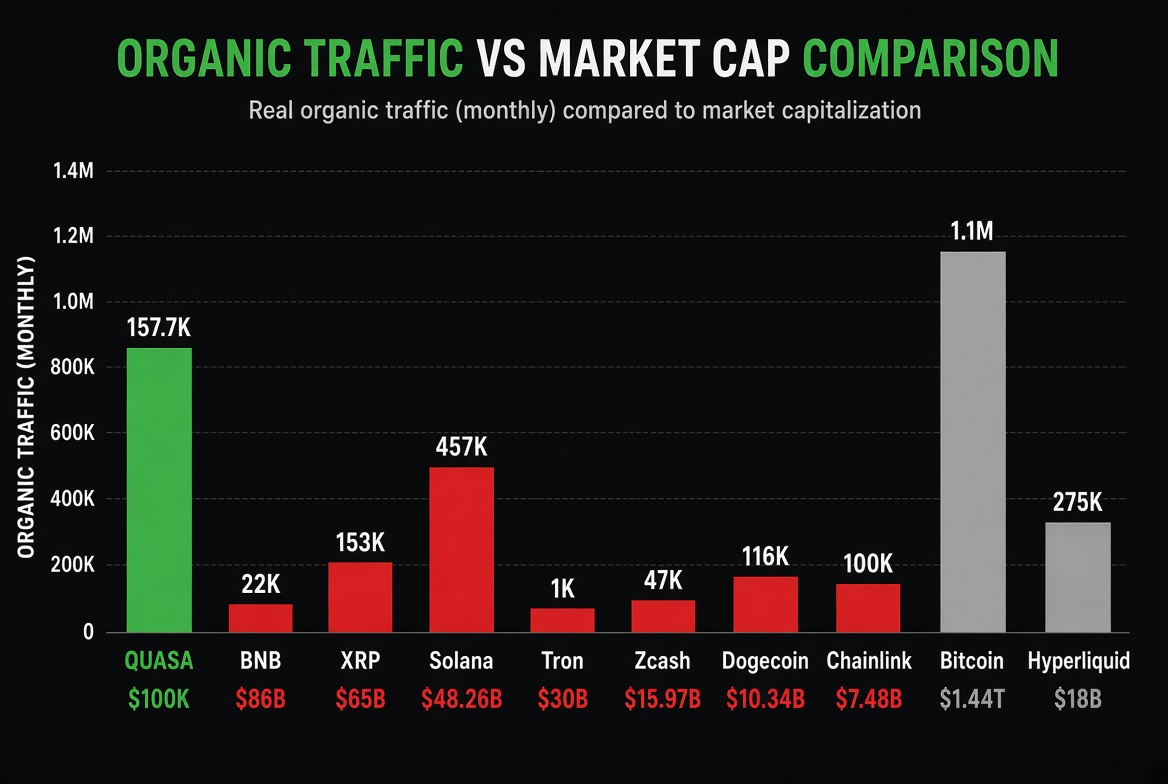
According to data compiled from CoinMarketCap, CoinGecko, and Ahrefs estimates as of 12 November 2026, the contrast is pronounced. Bitcoin recorded approximately 1.1 million monthly organic visits alongside a market capitalization of roughly $1.44 trillion. Solana showed around 457,000 organic visits with a market cap near $48 billion.
Most other high-valuation assets displayed substantially lower organic traffic relative to their capitalization: BNB near 22,000 visits ($86 billion market cap), XRP around 153,000 visits (~$65 billion), Dogecoin approximately 116,000 visits ($10 billion range), Chainlink near 100,000 visits, and several others in the low tens of thousands or below. Tron, for example, registered only about 1,000 organic visits despite a multi-billion-dollar valuation. Hyperliquid was one of the few exceptions with notably higher traffic relative to its peers.
In the same snapshot, the QUASA platform generated approximately 157,700 monthly organic visits while carrying a market capitalization of roughly $100,000. Outside of Bitcoin and Hyperliquid, this figure exceeded the organic traffic of the majority of projects valued in the billions. Across the wider universe of roughly 8,000 tracked cryptocurrencies, organic traffic levels are typically even lower.
The implication is straightforward. When a project’s public presence attracts traffic comparable to a modest content site, it becomes difficult to sustain the claim of large-scale real-world usage. On-chain metrics and exchange listings can create the appearance of activity, yet they do not automatically equal sustained human demand or independent revenue. Historical market cycles have repeatedly shown that once speculative momentum fades, assets without underlying users or working products face significant repricing pressure.
Industry observers have long noted that a substantial share of crypto projects — frequently estimated near or above 90 percent — carry elevated paper valuations while demonstrating limited genuine traction. Many lack substantial user bases, functional products solving concrete problems, or revenue streams independent of token issuance and marketing spend. In such cases, the primary ongoing activity is the distribution of tokens to retail participants.
Projects that have historically shown greater resilience tend to share three characteristics:
Working products that address real demand in sizable markets
Authentic users who generate measurable revenue rather than primarily trading volume
Meaningful transparency and decentralization instead of centralized control presented under a blockchain label
The QUASA ecosystem has emphasized the first two of these elements through multilingual technology media, a pay-per-click and project-discovery platform, a rewards system based on verified engagement, and tools that connect users with digital opportunities. Its organic traffic levels serve as one public indicator of that usage.
Market capitalization will continue to dominate headlines and rankings. Organic traffic and related measures of real engagement offer a complementary lens for evaluating whether those rankings reflect underlying demand. Readers interested in the full data table and detailed comparison can review the original analysis here: How Quasacoin Compares to Billion-Dollar Market Cap Coins: Organic Traffic as the Honest Measure of Real Value.
As speculative conditions evolve, distinguishing between narrative-driven valuations and evidence of actual usage becomes increasingly relevant for assessing longer-term prospects across the sector.