Over 1B Canton Coin burned, all from trading on Temple
Temple Crosses 1.1B $CC Burned as Volume Surges Activity on @temple_ny, an institutional trading venue built on @CantonNetwork, has now driven the burn of over 1.1 billion $CC in network fees
A
AnonymousCryptoCompass newsroom
September 29, 2026
2 min read
NEWS
CryptoCompass editorial visual for markets coverage.
Activity on @temple_ny, an institutional trading venue built on @CantonNetwork, has now driven the burn of over 1.1 billion $CC in network fees. The platform's live statistics show $992 million in total volume across 93 million transactions, with all burned tokens attributable entirely to trading on Temple.
The milestone reflects how deeply Temple has become embedded in Canton's fee economy. Canton's tokenomics are structured around a burn-and-mint equilibrium, where every fee paid to access the Global Synchronizer is settled in $CC and permanently removed from circulation. The more activity on the network, the more coin is burned, creating deflationary pressure that ties token supply directly to real usage.
Lightspeed 2.0 Pushes Daily Volume to $30M
Temple's daily volume reached $30 million on Sunday, following the rollout of its Lightspeed 2.0 upgrade earlier in the week. The original Lightspeed system, which Temple introduced on Canton, supports sub-second order matching and handles up to 100,000 orders per second, a throughput level designed for institutional-scale activity.
Temple operates as a private, non-custodial venue where institutions transact with approved counterparties while retaining custody of their assets. Its market structure, built around a price-time priority central limit order book, is closer in design to a traditional electronic trading venue than a typical crypto exchange. The platform has been onboarding asset managers, market makers, and financial institutions since its launch in January 2026.
Across two separate stories this week, named outlets give incompatible accounts of a fund's mechanics and a transfer's destination, and no primary document has surfaced to settle either. Acro
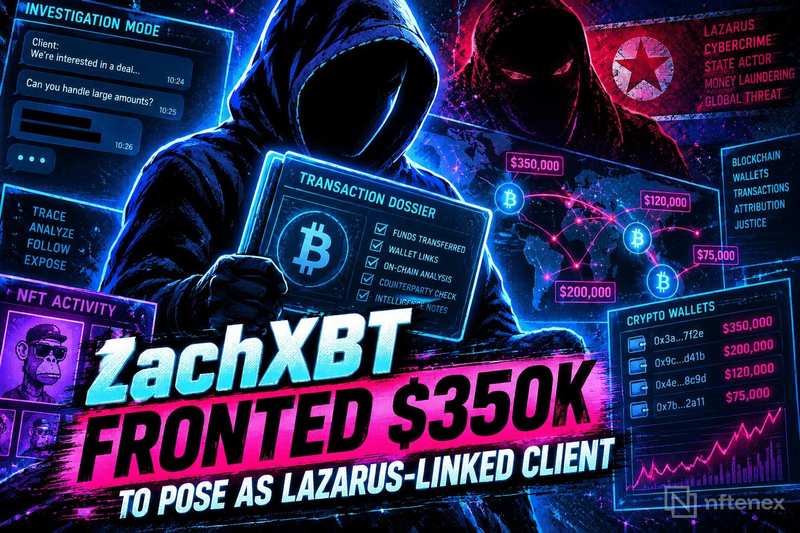
On-chain investigator ZachXBT reportedly fronted $350,000 of his own funds to pose as a potential client of a money laundering network linked to North Korea's Lazarus Group. The operation pla
Quant and Chainlink court the same clientele: banks that want to connect their systems to several blockchains without committing to any one of them. The two projects solve that at different l