Traders William Wood and Thomas Bush sued Polymarket and CEO Shayne Coplan in the New York Supreme Court. The dispute centers on a market that resolved “No” despite Strategy confirming a bitc
- Traders William Wood and Thomas Bush sued Polymarket and CEO Shayne Coplan in the New York Supreme Court.
- The dispute centers on a market that resolved “No” despite Strategy confirming a bitcoin sale in an SEC filing.
- UMA token holders voted 98.6% to reject the “Yes” outcome based on a late clarification added by Polymarket.
- The case could set a legal precedent for how decentralized platforms draft and enforce market rules.
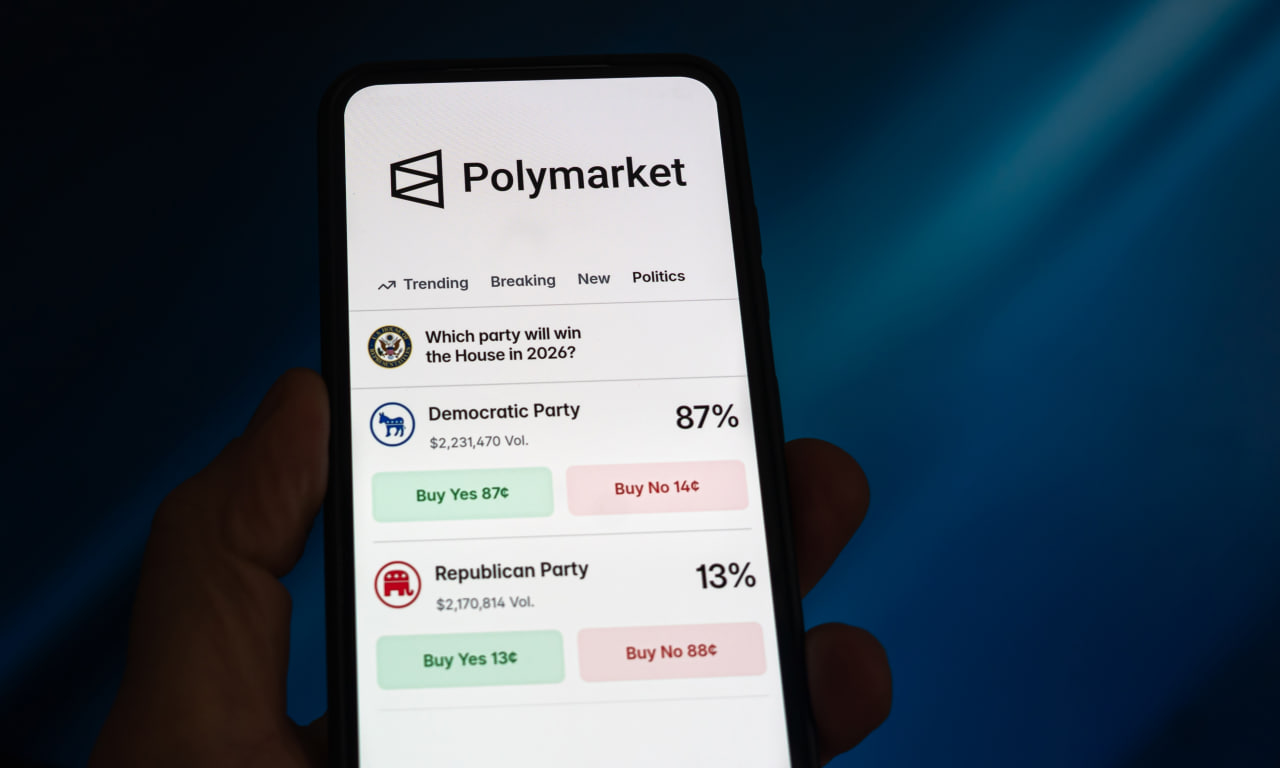
Two Polymarket traders filed a breach-of-contract lawsuit against the prediction platform and its CEO Shayne Coplan in the New York Supreme Court on July 3, 2026, after a market tracking Strategy’s May bitcoin sale resolved “No” even though the company’s own SEC filing confirmed the sale took place before the deadline. Plaintiffs William Wood and Thomas Bush, represented by Burwick Law, demand the full $1-per-share payout on their “Yes” positions and accuse Polymarket of rewriting the rules after the fact. The case moves what began as a technical argument about decentralized oracles into a courtroom, where a state judge will decide whether a mid-market “clarification” amounts to a consumer breach.
The 8-K arrived twelve hours too late for $53.8M in bets
On June 1, 2026, Michael Saylor’s Strategy filed an SEC Form 8-K stating that the company sold 32 BTC between May 26 and May 31, generating $2.5 million. It was the firm’s first bitcoin sale since December 2022, and the filing presented the transaction data “as of May 31, 2026, 4:00 p.m. Eastern Time.”
The Polymarket contract asked whether Strategy would sell bitcoin before 11:59 PM ET on May 31. The sale cleared that bar. The public confirmation did not, arriving the following morning. Polymarket added a clarification requiring public confirmation within the window, and UMA token holders, who settle disputed markets through the protocol’s Optimistic Oracle, voted 98.6% to resolve the market as “No.”
The money at stake was substantial. The market drew roughly $85 million in total volume, with more than $53.8 million in open interest on the May 31 slice alone.
ItemDetailLawsuit filedJuly 3, 2026, New York Supreme CourtPlaintiffsWilliam Wood and Thomas Bush, represented by Burwick LawDefendantsPolymarket entities, CEO Shayne Coplan, CMO Matthew ModabberLegal claimsBreach of contract, bad faith, unjust enrichment, deceptive practices, false advertisingMarket size~$85M total volume, $53.8M open interest on the May 31 sliceOracle vote98.6% “No” via UMA token holders
UMA voters judged the text, not the sale
Polymarket does not resolve its own markets. It outsources settlement to UMA’s Optimistic Oracle, where token holders vote on how a market’s text should be interpreted, and those voters act as literalists. Their job, as UMA’s defenders frame it, is to judge what the contract language says rather than to investigate what actually happened in the world.
That framing produces a defensible position. At 11:59 PM on May 31, no public data proved a sale had occurred. If markets settled on information disclosed after expiry, anyone inside Strategy who knew about the private sale could have loaded up on “Yes” shares before the 8-K went live. Strict temporal boundaries, on this view, are what keep insider trading out of prediction markets.
The plaintiffs see it differently. The original rules named Strategy’s SEC filings as the primary source of truth, and that filing states plainly that the sale happened within the window. Their complaint puts it bluntly: a market that won’t honor a proven event does not seek truth, it controls payouts. Galaxy Research reached a similar conclusion, noting that once you strip away the oracle mechanics, one fact survives – everyone who bought “Yes” predicted the future correctly, and they still lost.
From Zelenskyy’s suit to fake influencer bets
Polymarket has logged over 1,150 disputed markets in 2026 alone, and several earlier episodes follow the same script. The $237 million Zelenskyy suit market in 2025 collapsed into an argument over whether the Ukrainian president’s outfit qualified as a “suit,” with whales accused of steering the oracle to protect their positions. In June 2026, a Wall Street Journal investigation found influencers tied to Polymarket contractors had simulated over $1.9 million in fake bets using edited footage and fabricated headlines.
Crypto analyst Eric Conner has been blunt about the structural problem, arguing that UMA’s token-voting model is broken because whales weaponize ambiguous rules to save their own positions. The conflict of interest is baked in: a large holder can sit on both sides of a dispute, holding a losing prediction position and the governance tokens that decide its fate.
None of this has slowed the money. Polymarket’s corporate arm reached a $9 billion valuation after backing from ICE, the parent of the NYSE, and the company is reportedly chasing a $400 million round at $15 billion.
The immediate legal question is narrow but consequential. If the court finds that Polymarket’s mid-market clarification breached its contract with users, every DeFi operator that reserves the right to “clarify” live markets will need to rework its terms of service. The ruling would pull smart-contract settlement squarely under traditional consumer protection law.
The competitive consequences are already visible. Hyperliquid’s HIP-4 framework lets chain validators run automated newsfeed software instead of token-holder votes, removing the human interpretation layer that failed here. Kalshi, which clears disputes through a central counterparty under CFTC-filed federal rules, gains an obvious pitch to institutional capital that wants settlement certainty over decentralization.
Traders don’t need to wait for a verdict to draw the conclusion that matters. A Polymarket contract pays out based on how UMA voters read the text at resolution time, not on what verifiably occurred. Until the settlement layer changes, the gap between those two things is a risk that no amount of correct forecasting can close.
The post Polymarket Lawsuit Over Strategy Bitcoin Market Tests Oracle Model appeared first on ETHNews.