Fintech giant Revolut has waited nearly six months for a U.S. bank charter, and the delay stands out as crypto-focused trust banks appear to move through the regulatory queue ahead of it. The
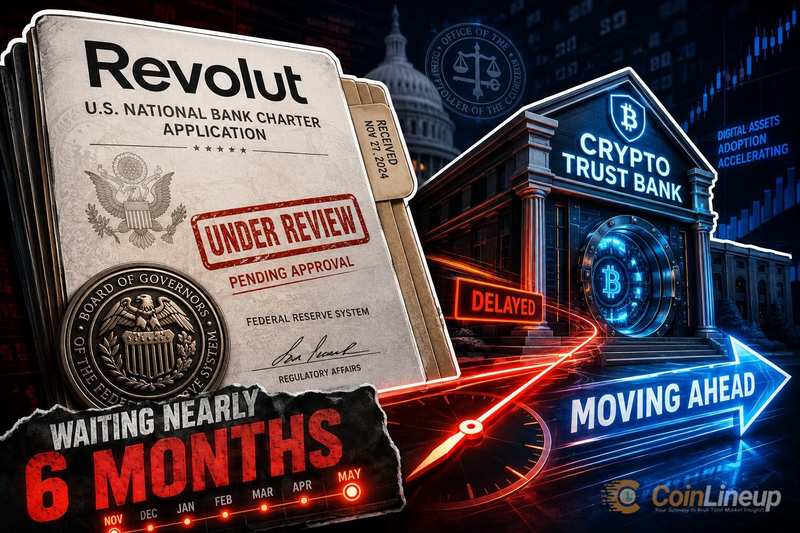
Fintech giant Revolut has waited nearly six months for a U.S. bank charter, and the delay stands out as crypto-focused trust banks appear to move through the regulatory queue ahead of it. The gap highlights how different banking approval paths in the United States can run at very different speeds.
Why Revolut's U.S. Bank Charter Wait Matters
A U.S. bank charter is the legal permission a company needs to operate as a bank. It lets a firm hold customer deposits directly, rather than relying on a partner bank behind the scenes. For related coverage, see SEC Proposes 'Regulation Crypto Assets' With Two Fundraising Exemptions.
For Revolut, that permission would be a big step. The company already earned conditional approval from the Office of the Comptroller of the Currency, and it has set its sights on a 2027 U.S. bank launch. For related coverage, see DOJ Says FBI Seized Over $560K in Crypto in Hamas Funding Probe.
The nearly six-month wait matters because timing shapes strategy. A full charter would let Revolut offer deposits and lending under its own name, deepening its U.S. presence beyond the app-based services it runs today. The OCC's public record of charter interpretations and decisions shows how these approvals move through official review.
How Crypto Trust Banks Are Moving Ahead
A trust bank is a narrower kind of institution. It focuses on holding and safeguarding assets for clients, rather than taking everyday deposits and making loans like a full-service bank.
Crypto-native firms have leaned into this trust bank path. Because a trust charter covers custody and asset-holding rather than the full range of banking, it can follow a different, sometimes faster, approval track than the broad charter Revolut is pursuing.
That contrast sits at the heart of the story. Reporting by the Financial Times pointed to the widening gap between Revolut's prolonged wait and crypto firms advancing in the queue. A separate CryptoSlate analysis described the situation as a two-tier banking system, where different applicants meet very different timelines.
Important caveat: a different approval track does not mean one model is universally easier. It means the trust bank path and the full charter path are simply not the same, and they can clear review at different speeds.
What the Divergence Signals for U.S. Crypto and Fintech
For large fintech entrants, a slower charter process is a planning challenge. It stretches out the timeline before a company can launch its full product suite in the world's biggest financial market.
For crypto infrastructure firms, trust bank momentum points to opportunity. Custody and asset-safeguarding services can reach the market while broader banking applications sit in review.
This split touches competition and customer access. If crypto trust banks establish themselves first, they may shape how digital assets are held and served in the United States before a fintech like Revolut, which has already moved into stablecoins with its euro-backed stablecoin EURR and an EU rollout of that token, completes its own charter.
Here is the practical takeaway. If you hold a little crypto or are just curious about it, the type of charter behind a company tells you what it can legally do. A trust bank may safeguard your assets, while a full bank charter signals a firm that can offer deposits, lending, and a wider set of services under U.S. rules.
Disclaimer: This article is for informational purposes only and does not constitute financial or investment advice. Cryptocurrency and digital asset markets carry significant risk. Always do your own research before making decisions.
Read original article on coinlineup.com