TLDR SpaceX secures $8.1B in Space Force awards across major U.S. defense programs. A $2.29B contract puts SpaceX at the center of a new military data network. SpaceX wins $4.16B to build sat
TLDR
- SpaceX secures $8.1B in Space Force awards across major U.S. defense programs.
- A $2.29B contract puts SpaceX at the center of a new military data network.
- SpaceX wins $4.16B to build satellites for airborne target tracking missions.
- The Space Force adds $1.6B for 18 Falcon 9 launches through the end of 2027.
- Starshield expands as SpaceX integrates satellites, communications, and launches.
SpaceX (SPCX) has secured roughly $8.1 billion in recent Space Force awards, expanding its role across major United States defense programs. The contracts cover military communications, airborne target tracking, and national security launches supporting the Pentagon’s evolving missile defense architecture. Meanwhile, SPCX closed at $133.29, down 3.93%, before slipping another 0.19% to $133.04 after hours.
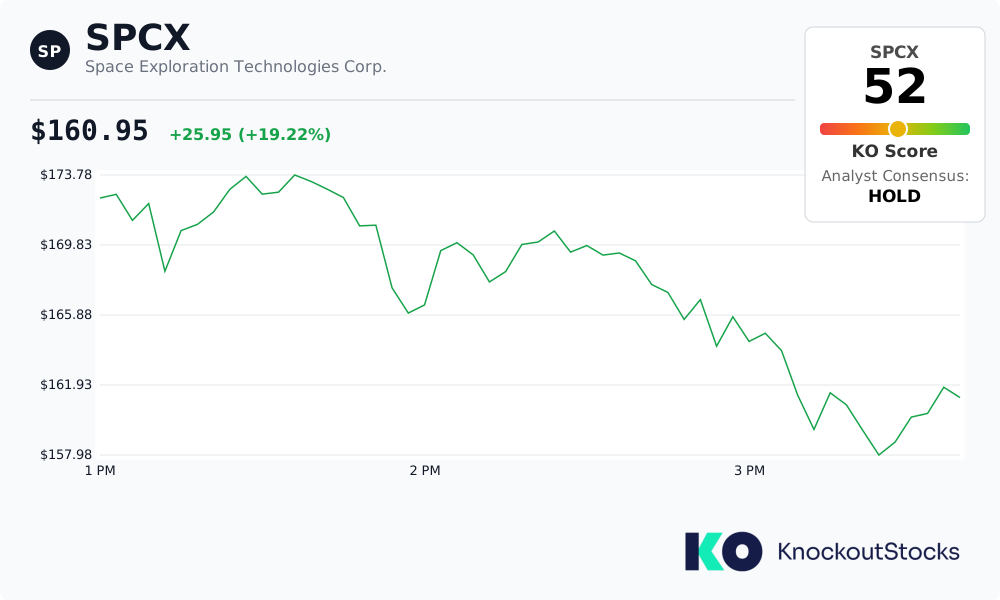
Space Exploration Technologies Corp., SPCX
SpaceX Secures Major Space Force Network Contracts
The Space Force awarded SpaceX $2.29 billion in May to build the initial backbone of its Space Data Network. The planned low-Earth-orbit system will connect military sensors, command platforms, and weapons through secure, high-capacity communications links. Moreover, the service expects SpaceX to deliver a fully operational network prototype before the end of 2027.
SpaceX also secured a separate $4.16 billion contract for the Space Force’s Airborne Moving Target Indicator program. The planned satellite constellation will track aircraft and other airborne targets continuously from low Earth orbit. Therefore, the program shifts important surveillance functions from traditional aircraft toward persistent space-based sensing systems.
The Space Force added another $1.6 billion award during late July for 18 Falcon 9 national security launches. Those missions will deploy satellites supporting the service’s Space-Based Sensing and Targeting portfolio through the end of 2027. Furthermore, officials completed the large procurement within roughly two months, reflecting pressure to accelerate new defense capabilities.
Starshield Strengthens SpaceX Military Operations
SpaceX has placed its Space Data Network and AMTI programs within Starshield, its expanding national security satellite business. The company recently reported more than $6 billion in multiyear government awards covering military communications and space-based sensing. Starshield now represents a broader defense platform rather than a collection of separate government satellite contracts.
SpaceX controls several important stages of the military satellite deployment process within its existing operations. The company builds satellite buses, optical communications equipment, military spacecraft, and Falcon launch vehicles for government missions. This structure allows SpaceX to coordinate manufacturing, integration, launch scheduling, and constellation deployment through fewer outside contractors.
That model could support the Pentagon’s Golden Dome strategy as more missile defense functions move into space. The wider program requires rapid communication between sensors, command systems, tracking platforms, and defensive weapons across several operational layers. SpaceX already operates large satellite networks and launch infrastructure that can support faster deployment schedules.
Space Force Expands Competition Beyond SpaceX
The Space Force continues adding suppliers as it develops its future space-based sensing architecture. The service recently awarded $615 million to Rocket Lab, Systems & Technology Research, and another undisclosed company. Those contracts support alternative technologies under the second task order of the broader AMTI program.
The additional awards remain much smaller than SpaceX’s initial $4.16 billion AMTI constellation agreement. Still, the Space Force wants several technical approaches available as its satellite tracking architecture develops. The strategy also reduces dependence on one contractor while preserving additional production and technology options.
SpaceX enters this expansion with established launch capacity, satellite manufacturing operations, and operational communications networks already supporting government customers. Traditional defense contractors still hold major positions across missile, radar, command, and weapons programs. Growing Pentagon spending on space infrastructure continues moving commercial space companies deeper into national security programs.
The post SpaceX (SPCX) Stock: $8.1B Space Force Awards Expand Military Footprint appeared first on Blockonomi.