Introduction Since the collapse of Terra in May 2022, one question has repeatedly surfaced within the Terra Luna Classic (LUNC) community: "What will save LUNC?" Over the years, countless the
Introduction
Since the collapse of Terra in May 2022, one question has repeatedly surfaced within the Terra Luna Classic (LUNC) community:
"What will save LUNC?"
Over the years, countless theories have emerged.
Some believed Binance would eventually unveil a hidden rescue plan.
Others expected a surprise USTC repeg or an institutional bailout. Social media was filled with speculation about secret partnerships, insider information, and rumors of a single event that would suddenly restore Terra Classic to its former glory.
The reality, however, has always been far less dramatic—and far more important.
There was never a single event capable of saving Terra Classic.
There was only a roadmap.
A roadmap built around rebuilding utility, restoring confidence, strengthening the ecosystem, and creating sustainable economic activity.
Understanding that distinction may be the single most important lesson in Terra Classic's history.
The Burn Movement Was Never the Finish Line
One of the first major initiatives following the collapse was the community burn movement.
The burn tax became a powerful symbol of unity.
It provided the community with a measurable objective during one of the darkest periods in the blockchain's history.
Support eventually expanded beyond governance proposals.
Major exchanges joined the effort.
Most notably, Binance introduced its own LUNC burn program, dramatically increasing the number of tokens permanently removed from circulation.
The burn movement became one of the defining stories of Terra Classic.
But burns alone were never expected to restore the ecosystem.
Reducing supply without increasing demand, utility, and network activity could only accomplish so much.
Burns were intended to create breathing room—not to replace economic growth.
The Real Roadmap
According to the long-term vision described by one of Terra Classic's key contributors, recovery depended on several interconnected components rather than a single solution.
Those pillars included:
- Market Module 2 (MM2)
- Comprehensive technical and economic audits
- USTC staking
- New ecosystem products
- Sustainable fee generation
- Community cooperation
Each component was designed to reinforce the others.
Rather than relying on speculation, the roadmap focused on rebuilding Terra Classic's economic engine from the ground up.
Why Market Module 2 Was So Important
Perhaps the most ambitious element of the roadmap was Market Module 2, often referred to simply as MM2.
The goal was not to recreate the mechanisms that existed before the Terra collapse.
Instead, MM2 aimed to introduce a redesigned market system with stronger safeguards, improved controls, and significantly lower systemic risk.
The broader objective was straightforward:
Restore economic activity while avoiding the mistakes that contributed to the original crisis.
This required far more than simply writing code.
It demanded careful testing, public audits, transparent governance, and community trust.
Without those elements, any significant economic upgrade would struggle to gain adoption.
USTC Staking: Creating Utility Instead of Waiting
Another major component of the proposed roadmap centered around USTC staking.
Following the collapse, many investors continued hoping for a future repeg.
The proposed staking model approached the problem differently.
Rather than waiting for external events, it sought to give USTC holders a reason to actively participate in the ecosystem.
Potential benefits included:
- Reduced circulating supply
- Increased ecosystem participation
- New staking opportunities
- Foundations for additional financial products
Most importantly, it attempted to shift the conversation away from speculation and toward utility.
Utility Creates Sustainable Burns
One of the most interesting aspects of the roadmap was its economic philosophy.
Instead of viewing token burns as the primary objective, burns were positioned as a consequence of growing network activity.
The proposed cycle looked something like this:
More products create more users.
More users generate more transactions.
More transactions create more fees.
A portion of those fees funds additional burns.
Reduced supply strengthens the ecosystem.
This creates greater interest from developers, investors, and exchanges.
In other words, burns become sustainable because they are backed by genuine economic activity—not by temporary campaigns.
The Human Problem
Technical challenges were never the only obstacle.
Community dynamics became an equally significant issue.
Large-scale blockchain development requires cooperation.
Developers, validators, exchanges, infrastructure providers, and community members must work toward shared objectives.
According to the roadmap's author, continuous personal attacks, misinformation, governance conflicts, and social media drama gradually discouraged many experienced contributors.
Some development teams eventually stepped away from major initiatives altogether.
This highlights an uncomfortable reality.
Successful blockchains are not built solely through software.
They are built through communities capable of supporting long-term collaboration.
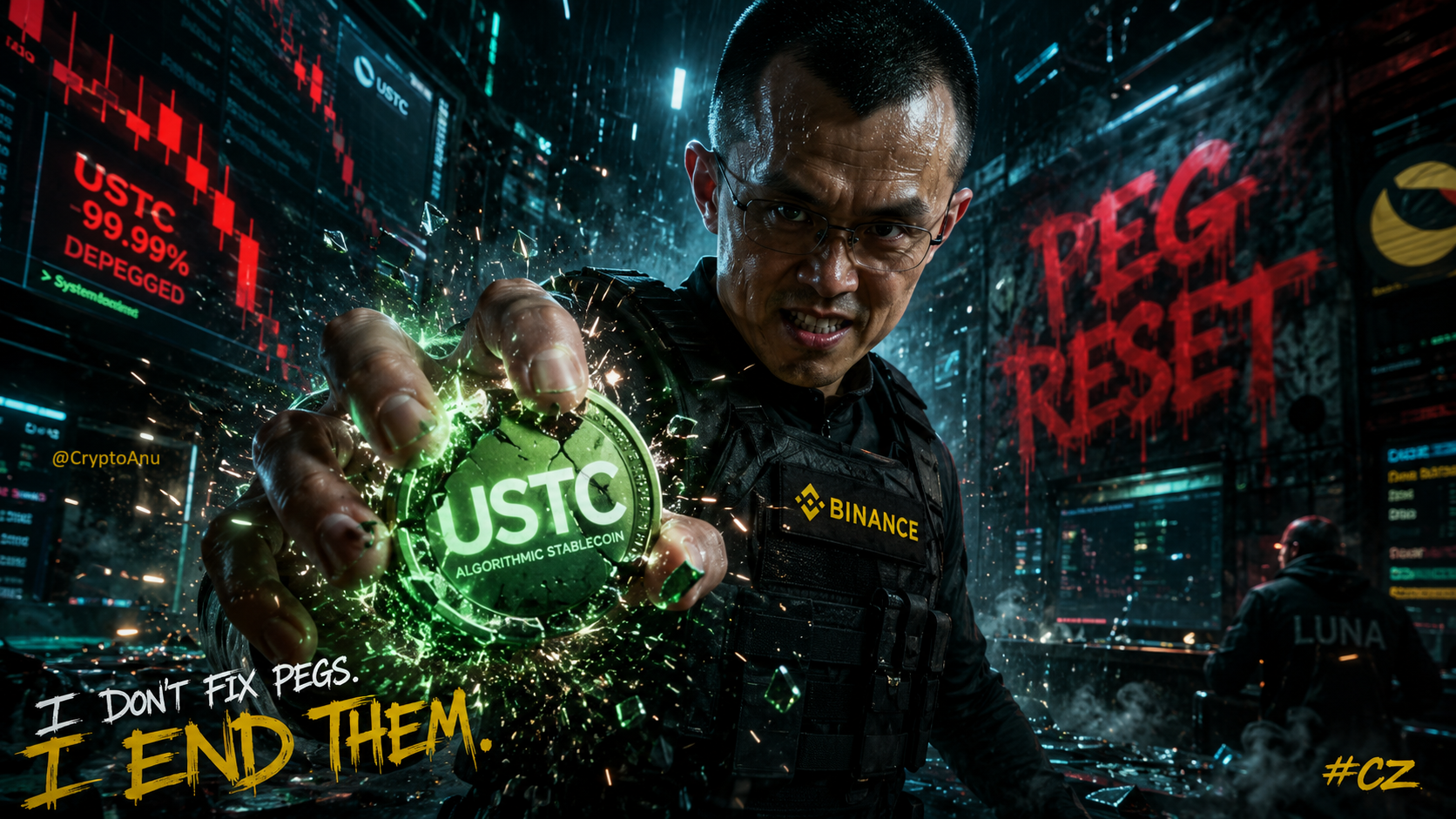
There Is No Secret Binance Plan
Perhaps the most direct message in the roadmap concerns Binance.
For years, rumors have circulated suggesting that Binance or Changpeng Zhao secretly intends to rescue Terra Classic.
The article rejects that narrative entirely.
Exchanges can provide infrastructure.
They can support trading.
They can implement burn programs.
What they cannot do is build applications, create demand, develop products, or unite a fragmented community.
Those responsibilities belong to the ecosystem itself.
Expecting external organizations to solve internal problems misunderstands how decentralized networks function.
Lessons Beyond Terra Classic
Although written specifically about LUNC, the broader lessons apply across the cryptocurrency industry.
Every blockchain eventually reaches a point where speculation must give way to utility.
Communities that prioritize development often continue evolving.
Communities consumed by internal conflict frequently lose momentum.
Infrastructure alone is never enough.
Neither is token burning.
Long-term success depends on builders, users, governance, and sustainable economic activity working together.
Conclusion
The Terra Classic story is often told as one of collapse, survival, and resilience.
Yet perhaps its most valuable lesson lies elsewhere.
There was never a hidden rescue plan.
No secret agreement.
No guaranteed repeg.
No single proposal capable of restoring everything that was lost.
There was only a roadmap—one built on technical improvements, economic reforms, community cooperation, and long-term utility.
Whether Terra Classic ultimately realizes that vision remains uncertain.
But one principle is already clear:
Blockchains are not saved by rumors.
They are rebuilt by people willing to do the difficult work, collaborate through disagreement, and create lasting value.
In the end, that may prove to be Terra Classic's most important lesson—not just for LUNC, but for every decentralized community striving to build something that lasts.