Cardano's dollar-pegged stablecoin is shutting down nearly four years after it launched. COTI Foundation is winding down DJED and its reserve coin SHEN on Dec. 31 and wants remaining holders
Cardano's dollar-pegged stablecoin is shutting down nearly four years after it launched.
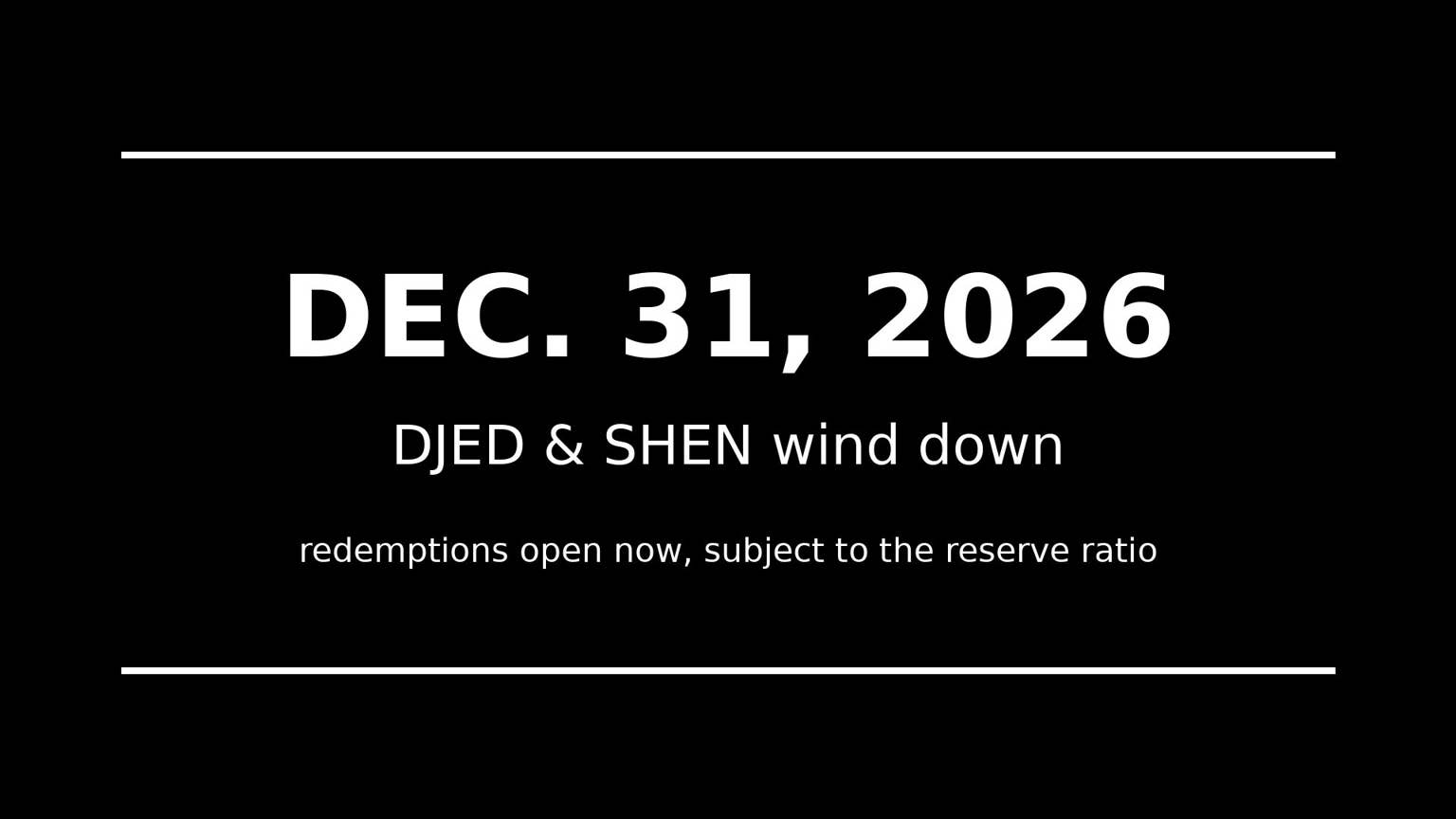
COTI Foundation is winding down DJED and its reserve coin SHEN on Dec. 31 and wants remaining holders to redeem both tokens for Cardano's ADA cryptocurrency before the deadline.
What is a stablecoin? Explained (3:33)
What holders need to do
DJED announced the wind-down in a Nov. 17 post and set the cutoff at 6:59 p.m. ET on Dec. 31.
"Please redeem and convert any DJED and SHEN you hold before then," the post said. "All redemptions are subject to the reserve ratio."
Holders have two jobs before the deadline.
- Redeem DJED and SHEN back to ADA on the protocol at djed.xyz.
- Pull any tokens out of liquidity pools, lending markets and other DeFi platforms first, then redeem or swap them. DeFi platforms are apps that let people lend or trade crypto without a company in the middle.
COTI said all systems are fully operational and redemptions are open now, and the protocol stays maintained until the deadline.
What DJED and SHEN are
DJED launched on the Cardano network in January 2023, months after the collapse of the TerraUSD algorithmic stablecoin shook confidence in the model.
Cardano is a public blockchain built on peer-reviewed research, and ADA is its native cryptocurrency. DJED was developed by Input Output, the company behind Cardano, and is powered by COTI, a privacy-focused blockchain project.
Popular on TheStreet Roundtable
It is an overcollateralized stablecoin, meaning each token is designed to hold a steady $1 value and is backed by a reserve of ADA rather than cash and Treasury bills like USDT or USDC.
SHEN is the reserve coin. It absorbs ADA's price swings so DJED can keep its dollar peg.
The project stayed small. Djed's dashboard showed about 1 million DJED in circulation as of Nov. 19, a fraction of the tens of billions circulating in USDT and USDC, the two largest dollar stablecoins.
The stablecoin boom DJED missed
The shutdown lands in the middle of a boom. The total stablecoin market is worth about $281.5 billion as of Nov. 20, according to DefiLlama.
Tether's USDT leads with about $175 billion in circulation, and Circle's USDC holds about $69 billion. Those tokens are issued by companies against reserves of cash and Treasury bills, a different model from DJED's algorithmic design.
Traders and businesses use stablecoins to move dollar value on blockchains without going through banks. DJED never reached that scale.
DJED is also not the first stablecoin to wind down this year. GMO-Z.com Trust, a New York-regulated issuer, began winding down its GYEN and ZUSD stablecoins in May and promised redemptions at par through Nov. 11.
That window is now closed. DJED holders still have one.
DJED is winding down its DJED stablecoin and SHEN reserve coin on Dec. 31, and holders are asked to redeem both for ADA. Image for representation purposes.
Why COTI is shutting it down
The foundation said DJED and SHEN "were built for a different stage of the market, and are no longer in active use."
"Products from the past that are no longer in use will be retired, putting every resource behind what the market provably wants," it said in the update.
COTI is now betting on private programmable money, which keeps balances and payments hidden on public blockchains. It laid out that plan in a memorandum.
What the reserve ratio means for your redemption
DJED is backed by a pool of ADA. The reserve ratio compares that pool to the dollar value of all DJED still out there.
Djed's dashboard put the ratio at 346% as of Nov. 19, meaning about $3.46 of ADA backed every $1 of DJED.
That cushion is why the notice says redemptions are "subject to the reserve ratio." What you get back depends on the reserve when you redeem, so do not assume every DJED pays out a full dollar.
SHEN holders face the same condition, and the ratio moves with ADA's price and with every redemption between now and the deadline.
What happens after Dec. 31
COTI says "all remaining funds will be allocated to outstanding DJED and SHEN holders once the wind-down is complete," with further details promised at a later stage.
It has not given a date for that allocation or said how the funds will be split. Until those details land, the only clear exit is to redeem on the protocol before the deadline.
What this means for readers
DJED's shutdown is small next to the wider stablecoin market, but it is a live test of what happens when an algorithmic stablecoin winds down with money still inside.
Related: S&P gives $183B financial giant its weakest rating
Readers who follow our market coverage can track the Roundtable 100, our weekly ranking of the 100 most investable tech stocks, including digital assets.
Disclaimer: This article is for informational purposes only and does not constitute financial advice. Cryptocurrency investments are highly volatile and risky. Always conduct your own research before making any investment decisions.