Many countries are accelerating on central bank digital currencies to bypass bitcoin. The United States, led by a president nevertheless keen on blockchain, is taking a radically opposite pat
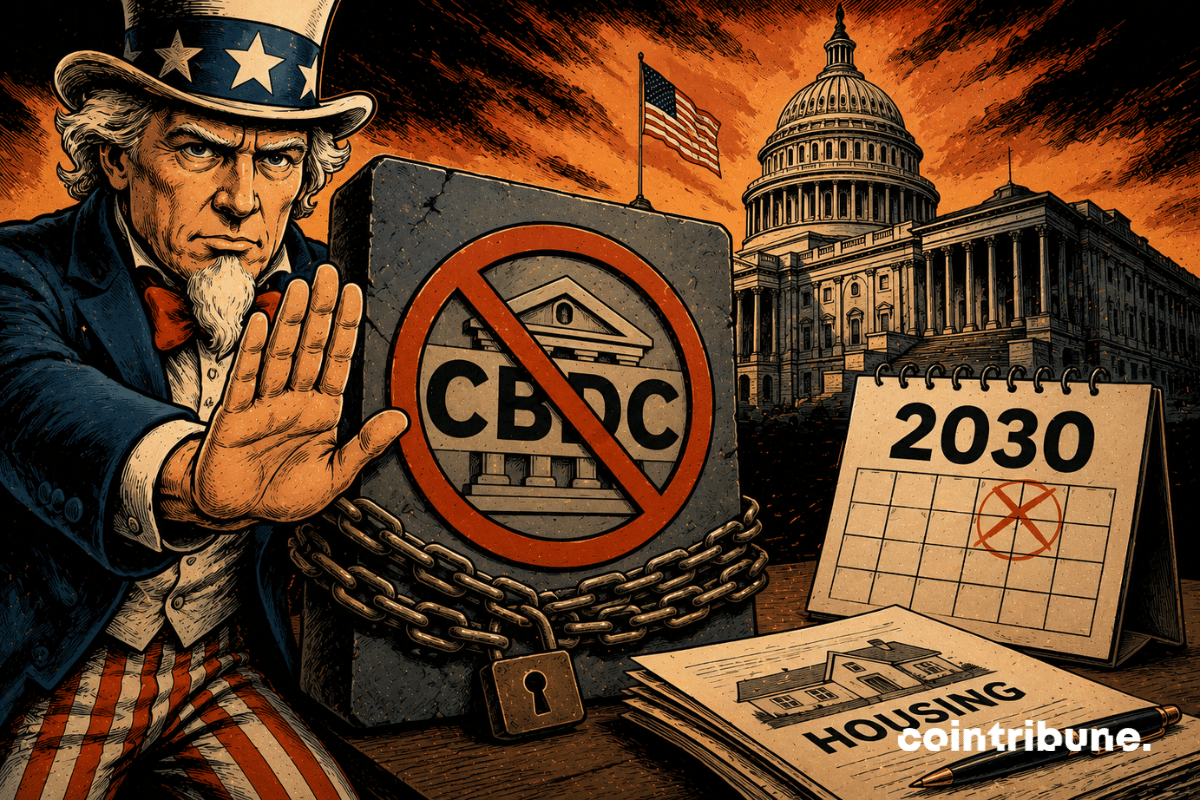
Many countries are accelerating on central bank digital currencies to bypass bitcoin. The United States, led by a president nevertheless keen on blockchain, is taking a radically opposite path. Trump categorically refuses to value CBDCs, even if it means letting a major law come into effect without his signature. This paradox raises questions: is the American strategy coherent or simply opportunistic?
In brief
- The American digital dollar is banned until 2030 by a housing law that became effective without the signature.
- Trump refuses to sign the housing law, but the Constitution makes it effective after ten days of presidential silence.
- The CLARITY Act on the crypto market structure could suffer the same fate as the housing law.
- Trump conditions his political support on the adoption of the SAVE America Act on voting with proof of identity and citizenship.
US CBDC banned until 2030, Trump stays on the sidelines
On July 11, 2026, a page in American monetary history turned at midnight. The 21st Century ROAD to Housing Act, a bipartisan housing bill, became law automatically without the signature of Donald Trump. The Constitution forced it: ten days after its arrival on the president’s desk, the text comes into effect, signed or not.
This bill contains a major provision for the financial industry. The ban for the Fed to issue a digital dollar until December 31, 2030 becomes effective.
Trump had planned a signing ceremony and had a platform installed. He ultimately refused to sign the text, protesting the lack of adoption of the SAVE America Act on voting.
Senator Elizabeth Warren, co-author of the bill, emphasized:
He refuses to sign the biggest housing bill in 30 years. The good news: it will become law anyway.
This political gesture did not prevent the law from coming into effect. By acting this way, he may have opened a Pandora’s box for other crucial texts.
Trump’s power play : the SAVE America Act as a political shield
The president conditioned his signature on the adoption of the SAVE America Act, imposing identity checks for voting. He called the Republicans who voted for the bill “stupid” on Truth Social.
This gesture raises questions about the real intentions of the White House occupant. If Trump uses a housing law as political currency, the CLARITY Act could suffer the same fate. This text, considered one of the most important for crypto regulation, aims to clarify the structure of the digital asset market.
Your 1st cryptos with CoinbaseThis link uses an affiliate program.Trump claims he wants to “future-proof” crypto regulation, but his behavior could block the industry’s biggest legislative advance. The bill, already passed by the House and two Senate committees, still needs to be voted on by senators.
If Trump repeats his “neither yes nor no” strategy, the text could become law without his signature or remain blocked. The president’s words on “future-proof” regulation seem very light compared to political reality.
CLARITY Act in jeopardy : US crypto regulation on thin ice
The ban on CBDCs is a victory for the crypto industry, but the CLARITY Act remains an absolute priority for market players. Without it, crypto investors remain in legal uncertainty, which hinders initiatives and capital.
Meanwhile, China continues its e-CNY and could gain a considerable lead. The United States, by banning their own digital dollar, risk losing their monetary sovereignty to Beijing.
The contradiction is striking: Trump earns $1.4 billion from his crypto ventures, but his political game threatens sector regulation. The CBDC ban is a victory, but the CLARITY Act could become the next collateral victim of the president’s maneuvers.
- Ban on CBDC until December 31, 2030;
- Effective date: July 11, 2026;
- Constitutional deadline: 10 days without signature;
- Trump’s crypto revenue in 2025: 1.4 billion.
Trump is active on all fronts of blockchain and cryptos. American regulation is progressing, with the GENIUS Act already ratified. A new version of the CLARITY Act is expected in the coming days to clarify the digital asset market.