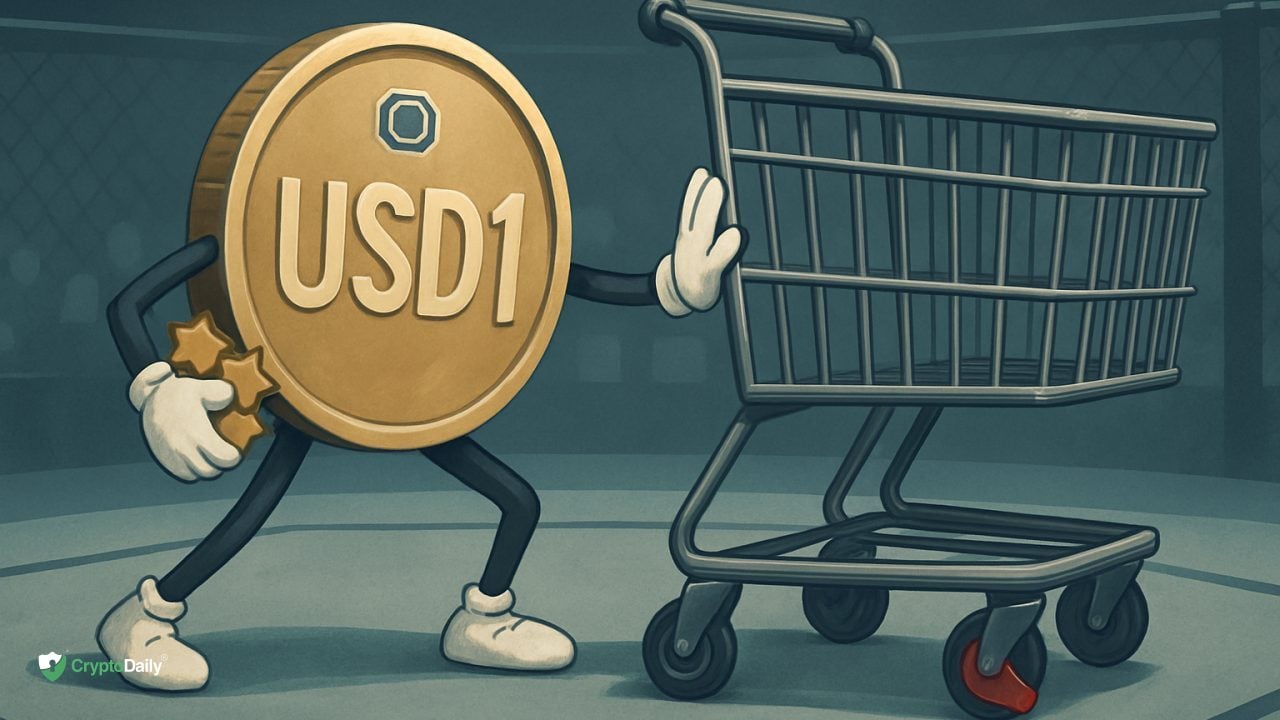
Sports sponsorships have long turned logos into household names. Now, stablecoins are testing whether the octagon can do the same for digital dollars. This piece examines USD1’s UFC bonus mom
Sports sponsorships have long turned logos into household names. Now, stablecoins are testing whether the octagon can do the same for digital dollars. This piece examines USD1’s UFC bonus moment and what it actually means for mainstream adoption.
You’ll learn how fighter bonuses in stablecoins work in practice, how USD1 stacks up to incumbents, the real KPIs brands should track, and the biggest pitfalls to avoid. We’ll ground the analysis in recent data and campaigns, without the hype.
Editor's note: Around the USD1 campaigns, wallet growth and temporary liquidity improved, yet cohort activity dropped once rewards tapered. Teams that pre-built off-ramp pathways, tax guidance, and live ops saw better day-30 curves. The UFC stage is great airtime; the boring plumbing still wins the month after. — Lena Carter
Sports marketing can push a stablecoin into public view, but brand status requires more than a logo on the canvas. UFC bonuses paid in USD1 create awareness and a story to tell, yet enduring adoption hinges on trust in reserves, easy on/off-ramps, regulatory clarity, and everyday utility. Think of sports as an accelerant, not the engine.
- UFC Freedom 250 featured crypto bonuses totaling about $1.65M, including $250,000 in USD1, spotlighting stablecoins to a mass audience (The Block; KuCoin (news)).
- Brand lift without seamless UX, compliance, and redemption options rarely converts to lasting users.
- Measure impact via wallet activations, recurring usage, on-chain transactions, and merchant acceptance—not headlines.
- Incentives can drive short-term volume and volatility but may not equal retention (CoinMarketCap (CMC AI)).
How do UFC stablecoin bonuses actually work?
On fight night, promoters allocate a bonus pool and sponsors fund it in specified assets. For UFC Freedom 250 on June 14, 2026, reports noted combined crypto bonuses around $1.65 million: Crypto.com contributed a $1,000,000 CRO-denominated pool and World Liberty Financial (WLFI) added $250,000 in its USD1 stablecoin to the “Performance of the Night” pool (KuCoin (news); The Block).
Operationally, fighters (or their managers) provide a compatible wallet address. The sponsor—or a designated payout agent—transfers the stablecoin on-chain after results are finalized and any compliance checks are signed off. Because stablecoins target a $1 peg, denomination and timing risks are lower than with volatile tokens, though custody and redemption still matter.
Real-world friction often occurs around KYC/AML requirements, wallet security, and redemption pathways. Some athletes prefer immediate conversion to fiat; others hold for future crypto purchases or transfers. Promoters and sponsors must coordinate addresses, network fees, and documentation, while athletes should plan for taxes and secure custody in advance.
Does the USD1 x UFC moment actually move the needle?
Visibility is undeniable. UFC broadcasts deliver mass reach, and a stablecoin payout story cuts across sports and finance media. WLFI’s agreement to fund $250,000 worth of USD1 for UFC Freedom 250 bonuses placed the brand squarely in that spotlight (The Block). In parallel, the broader crypto pool was cited at roughly $1.65 million when including Crypto.com’s $1 million CRO contribution (KuCoin (news)).
But awareness is the start, not the finish. To assess whether this moves adoption, look for leading indicators: new wallets holding USD1, day-7 and day-30 retention of those wallets, merchant acceptance, and on/off-ramp throughput. CoinMarketCap lists USD1 (World Liberty Financial USD) with a market capitalization of about $4.38 billion, circulating supply near 4.38B USD1 and roughly 830.8K holders as displayed on June 15, 2026 (CoinMarketCap (USD1 page)). If sponsorships are effective, those holder counts and active-address metrics should trend higher over the following weeks and months.
Short-term spikes can be incentive-driven rather than brand-driven. Around late May, CMC AI commentary attributed a ~5.79% WLFI token move in part to trading-incentive campaigns including USD1/WLFI competitions, illustrating how promotions can juice volume and volatility without guaranteeing durable adoption (CoinMarketCap (Top Stories / CMC AI)). Marketers should therefore separate campaign pop from product-market fit.
What turns a stablecoin into a consumer brand rather than back-end plumbing?
Most users do not care about settlement rails—they care about speed, certainty, and cost. A “consumer brand” stablecoin must show up where people live financially: tipping, remittances, online purchases, creator payouts, and peer-to-peer reimbursement. That takes more than a spot on the mat.
- Familiarity and trust: Clear disclosures about minting, redemption, and reserves; visible risk controls; and a predictable peg experience.
- Distribution where it matters: Wallet integrations, exchanges, fintech apps, and compliant off-ramps in key markets.
- Frictions removed: Low fees, instant transfers, and easy redemption to bank rails or cards.
- Everyday hooks: Rewards, merchant promos, tipping flows, and partner ecosystems that give users a reason to try—and to come back.
- Reputation management: Rapid incident response, transparent communications, and consistent consumer protections.
Pro tip: Sponsorships work best when the call-to-action is embedded in the moment—e.g., a QR code to claim a small USD1 reward in an approved wallet, with a seamless off-ramp. Awareness without activation leaks users.
How does USD1 compare with incumbents for mainstream users?
Consumers weigh familiarity, access, and perceived safety. Below is a high-level comparison using publicly observable dynamics and market context. It’s not exhaustive and is not investment advice; always review official disclosures and app listings before choosing a stablecoin.
Dimension USD1 (WLFI) USDC (Circle) USDT (Tether) Market footprint Moderate and growing; CMC shows ~$4.38B supply as of June 15, 2026 (CoinMarketCap) High; widely integrated in fintech and exchanges (varies by region) Very high; large global presence across exchanges and chains Consumer familiarity Emerging; benefitting from sports marketing High in Web3 and some fintech circles High in crypto-native contexts Distribution Expanding via campaigns and listings; liquidity bootstrapping underway Broad across centralized exchanges, DeFi, and payments partners Broad across centralized exchanges and DeFi Notable marketing angle UFC bonuses and ecosystem incentives Partnership-driven fintech integrations Crypto-native ubiquity and legacy presence Use-case emphasis Consumer awareness via sports; growing DeFi liquidity Payments, remittances, and institutional integrations Trading, cross-exchange flows, and global transfers
USD1’s near-term task is to convert visibility into distribution and stickiness. One campaign example: Byreal, a Bybit-incubated DEX, launched a USD1 ecosystem push on May 19, 2026, featuring a USD1 trading competition and LP incentives running through June 18, 2026 with a total prize pool of 2 million WLFI to bootstrap liquidity (Coindoo / Chainwire). Liquidity and access are prerequisites to consumer utility.
What are the risks and compliance considerations for fighters, fans, and brands?
Stablecoins aim for stability, but they carry distinct risks. Many are manageable with planning and due diligence.
- Regulatory scope: Promotions can trigger advertising, securities, or payments rules depending on structure and jurisdiction. Coordinate with counsel and ensure disclosures are clear.
- KYC/AML: Athlete and fan rewards may require identity checks. Pre-clear participants and streamline wallet collection to avoid last-minute bottlenecks.
- Custody hygiene: Use reputable, audited wallets and follow best practices (2FA, hardware wallets for larger holdings) to reduce operational risk.
- Redemption clarity: Understand how and where USD1 can be redeemed or converted, applicable fees, and any regional restrictions.
- Smart contract and chain risk: If bonuses are paid on specific chains, confirm network congestion and fee conditions during peak moments.
- Tax treatment: Bonuses are typically taxable income; keep accurate FMV records at receipt and subsequent conversions.
Risk communication builds brand trust. Clear FAQs, support channels, and guided onboarding for first-time users help convert curiosity into confidence.
How should marketers measure impact beyond TV reach?
Ratings deliver exposure; adoption needs evidence. Establish a measurement stack before the campaign, with explicit baselines and targets.
- Acquisition: Unique wallets receiving or acquiring USD1 during and after the event; percentage of new-to-crypto users.
- Activation: Share of new users who complete at least two transactions in week one.
- Retention: Day-30 and day-90 active rates; repeat off-ramps to fiat; merchant payments made in USD1.
- Liquidity health: Depth on major pairs, spread stability during news spikes, and on-chain transfer velocity.
- Cost per retained user: Sponsorship + incentive budget divided by users active at day-90.
Contextualize results with parallel campaigns. For instance, when incentive programs surround a sponsorship—like Byreal’s 2M WLFI liquidity and trading push for the USD1 ecosystem in May–June 2026—separate the effect of the TV moment from that of exchange or DeFi incentives (Coindoo / Chainwire). CMC AI’s observation of WLFI price moves amid incentive news shows why this separation matters for interpreting signal versus noise (CoinMarketCap (Top Stories / CMC AI)).
Byreal promotional graphic for the USD1 trading competition (May 19 – June 18, 2026) showing the 1M WLFI reward — evidence of active USD1 marketing and liquidity‑bootstrapping. — Source: Coindoo (Chainwire press release)
Is 2026 the inflection point for stablecoins in mainstream payments?
It could be a step-change year, but only if several pieces align. Sports is delivering the megaphone. The product work is about ramping on/off access, building merchant and fintech pipelines, keeping pegs tight, and proving compliance at scale.
USD1’s UFC appearance is a strong awareness play, especially paired with ecosystem liquidity efforts and a growing holder base reported by market trackers (CoinMarketCap). The more compelling signal will be whether USD1 shows up where consumers spend and get paid: creator platforms, gaming, remittances, and checkout flows—plus whether those users stick around without giveaways.
Incumbents maintain advantage via distribution and long-term integrations, but switching costs are low for consumers when apps offer multiple stablecoins. That’s why clarity on fees, redemption, and support experience can tip the scales.
Common Mistakes
- Equating airtime with adoption: A viral clip is not a retained user. Define activation and retention goals before launching.
- Ignoring compliance choreography: Sponsorship disclosures, KYC flows, and regional restrictions need pre-approval to avoid payout delays.
- Over-relying on incentives: Trading contests can distort KPIs. Track post-campaign usage to gauge real product-market fit.
- Weak redemption UX: If off-ramps are slow, fee-heavy, or confusing, first-timers churn fast. Map and test the full cash-out journey.
- Opaque reporting: Without transparent dashboards and methodologies, partners can’t attribute impact or justify renewals.
Crypto Daily covers the intersection of markets, policy, and adoption with a practical lens. For more analysis on stablecoins and sponsorships, visit Crypto Daily.
Frequently Asked Questions
Do fighters get stablecoin bonuses instantly after the event?
It varies by event operations. Payouts typically occur after results are confirmed, addresses are validated, and any required compliance checks are complete. Transfers can be fast on-chain, but back-office processes may add time.
What if a fighter prefers fiat over USD1?
In most cases, athletes can convert stablecoins to fiat via participating exchanges or approved off-ramps. Fees, limits, and timing depend on the platform and jurisdiction, so managers should plan the redemption route before fight week.
Is there price risk receiving a stablecoin bonus?
Stablecoins aim for a $1 peg, which reduces volatility risk versus typical crypto tokens. Residual risk includes peg deviations, conversion fees, and timing of redemption. Selecting deep-liquidity venues helps minimize slippage.
How can fans try USD1 safely?
Start small. Use reputable wallets, enable security features, and verify the official contract address. If you plan to off-ramp, confirm the supported networks, limits, and KYC steps on your chosen platform first.
Does the UFC determine which assets are used for bonuses?
Sponsors fund specific pools per their agreements. Details—such as which assets, how much, and how the bonuses are split—are set by the sponsor arrangement and event policies.
Are sports bonuses enough to make USD1 a top stablecoin?
They can accelerate awareness, but long-term position depends on liquidity, integrations, regulatory posture, and user experience. Campaigns like DEX liquidity programs can help, yet retention and real-world usage decide the outcome.
Where can I verify USD1 metrics?
Market trackers like CoinMarketCap list supply, market cap, and holder counts for USD1; note that figures reflect what is displayed at the time of access and may update frequently (CoinMarketCap).
Disclaimer: This article is provided for informational purposes only. It is not offered or intended to be used as legal, tax, investment, financial, or other advice.