Crypto’s boundary with traditional finance is getting thinner, and this week’s business developments show how both sides are converging on the same outcomes: faster payments, wider access to
Crypto’s boundary with traditional finance is getting thinner, and this week’s business developments show how both sides are converging on the same outcomes: faster payments, wider access to dollar-denominated assets, and settlement rails that can be used 24/7.
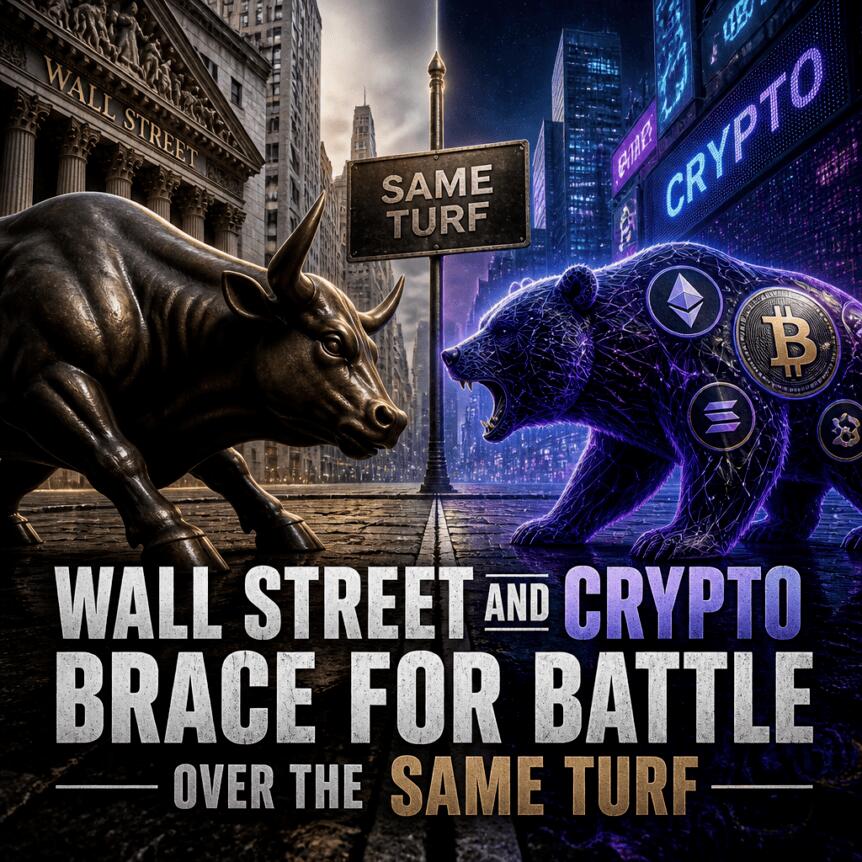
From Binance expanding its relationship with Circle to Canada’s largest banks testing tokenized deposits and the NYSE partnering with Blockchain.com on tokenized stocks, the thread tying these stories together is clear—stablecoins and tokenized real-world assets are becoming strategic battlegrounds for control over how money moves.
Key takeaways
- Binance is set to deepen its USDC push via a reported $100 million investment in Circle, alongside a five-year commercial agreement aimed at expanding USDC usage on the exchange.
- Canada’s six largest banks are exploring tokenized Canadian dollar deposits, framing them as programmable payment rails while keeping them legally tied to traditional deposits.
- Chainalysis data points to continued growth in cross-border stablecoin transfers—even as overall crypto market capitalization declines.
- The NYSE and Blockchain.com plan a regulatory-reviewed alternative trading system to bring tokenized US stocks and ETFs to crypto users.
Binance expands its Circle stake and USDC plan
Binance is increasing its exposure to stablecoin infrastructure through an expanded relationship with Circle. According to Cointelegraph’s report, the exchange is making a $100 million investment in Circle and signing a five-year agreement designed to broaden USDC adoption across Binance.
A Tuesday filing with the US Securities and Exchange Commission states that Circle issued Binance 1,237,011 shares of Class A common stock at $80.84 per share in a private placement dated Sept. 17. The purchase price was below Circle’s market price at the time before the deal closed, and the filing notes shares rose after the announcement.
The investment is paired with commercial terms: Circle will pay Binance a monthly incentive fee linked to the amount of USDC held through Binance’s Modular Smart Contract Wallet infrastructure. That structure matters because it aligns a major exchange’s product usage incentives with stablecoin circulation, rather than relying solely on trading activity.
Binance is subject to restrictions on selling, transferring, pledging, or otherwise disposing of the shares for up to two years, though the lockup may end earlier under certain termination provisions. Importantly for market observers, Binance retains voting rights during the restriction period.
Canadian banks explore tokenized deposits—without changing their legal nature
While stablecoins remain the most visible tokenized asset, banks are also exploring tokenization at the level of deposits. A joint initiative among Canada’s six largest banks is testing “tokenized Canadian dollar deposits,” a setup that could allow digital representations of bank deposits to move between participating institutions.
The project brings together Bank of Montreal, CIBC, National Bank of Canada, Royal Bank of Canada, Scotiabank and TD Bank Group. The first phase focuses on transfers between these banks, with potential connectivity to other digital asset networks later. As with most pilot efforts, the immediate value is operational: determining how tokenized representations can improve settlement speed and payment programmability in a controlled environment.
This effort follows guidance from Canada’s Office of the Superintendent of Financial Institutions. As noted by Cointelegraph, the office clarified on Sept. 10 that tokenized deposits are “not legally distinct from traditional deposits,” meaning the use of blockchain or other technology does not change their underlying legal treatment.
The distinction is also practical for risk framing. Unlike fiat-backed stablecoins, tokenized deposits remain liabilities of the issuing banks. The participating banks argue the model could enable faster, programmable payments, and that additional deposit-taking institutions may join later.
The legal and regulatory nuance is especially relevant as Canada develops stablecoin rules. The country’s framework applies to non-financial institution issuers, while regulated banks and credit unions fall outside its scope—an asymmetry that could shape which institutions pursue which tokenized products.
Stablecoin use keeps rising as broader crypto shrinks
Even as the wider crypto market struggles, stablecoins—particularly those used for cross-border movement—continue to show resilience. Cross-border stablecoin flows rose nearly 78% to $220.3 billion over the year through June, according to data cited from Chainalysis.
Chainalysis reports a 77.5% increase in cross-border stablecoin flows alongside a 37% decline in total crypto market capitalization, which fell to $2.1 trillion. The analytics firm also identified 4,708 new cross-border corridors carrying $2.64 billion. Still, the report emphasizes that the biggest corridors accounted for 96.1% of total value, suggesting growth is expanding the map, but liquidity and volume remain concentrated in established routes.
Chainalysis attributes much of the rise to transfers averaging about $3,000, a pattern it characterizes as more consistent with trade, remittances, and savings than speculative activity.
In commentary relayed in the coverage, Tether economist Philip Gradwell described the activity as having a “steady rhythm” typical of business use. StraitsX CEO Tianwei Liu pointed to demand for dollar access, inflation hedging, and alternatives to capital controls outside Asia.
Broader regulatory direction is also part of the backdrop. Coverage notes that the US passed the GENIUS Act in July 2025, while the EU’s MiCA framework and Hong Kong’s licensing regime have placed stablecoins under more formal oversight. For investors and builders, this matters because compliance clarity can reduce friction for payment partners and institutional-adjacent users—often a prerequisite for stablecoin-based services to scale.
Stablecoin settlement and tokenized deposits are not the only areas seeing institutional momentum. In the United States, the NYSE is also working to bring traditional market assets closer to crypto trading infrastructure.
As reported by Cointelegraph, Blockchain.com and the New York Stock Exchange are teaming up to bring tokenized US stocks and exchange-traded funds to crypto users through a planned alternative trading system.
The companies signed a memorandum of understanding covering the digital ATS, which remains subject to regulatory approval. The agreement additionally includes a market-data partnership between Blockchain.com and Intercontinental Exchange’s ICE Data Services.
In the same coverage, TD Securities’ Reid Noch described the move as an effort to capture retail trading activity, particularly as tokenized markets could enable 24-hour and weekend trading. Talos’ Tanay Ved added that crypto venues are increasingly evolving into multi-asset platforms rather than purely crypto-native exchanges.
Demand indicators underline why these partnerships are gaining attention. The value of tokenized stocks has reached $3.14 billion, and the number of holders has increased 72% to 3.87 million, according to RWA.xyz, figures cited in the original report.
The plan also aligns with recent US regulatory developments. The coverage references the SEC’s introduction of a five-year Innovation Exemption for certain tokenized securities venues. It notes that eligible tokenized stocks must represent actual shares with the same economic and governance rights as their traditional counterparts—an important constraint that distinguishes tokenization that mirrors existing shareholder rights from models that only approximate them.
What to watch next is whether these initiatives converge into a clearer operating standard for tokenized money and assets—especially around interoperability, settlement finality, and regulatory approvals. If pilots progress as expected, the next phase may be less about proving the concept and more about who controls the rails: exchanges and stablecoin issuers, bank networks, or regulated market infrastructure working directly with crypto platforms.
This article was originally published as Wall Street and Crypto Brace for Battle Over the Same Turf on Crypto Breaking News – your trusted source for crypto news, Bitcoin news, and blockchain updates.