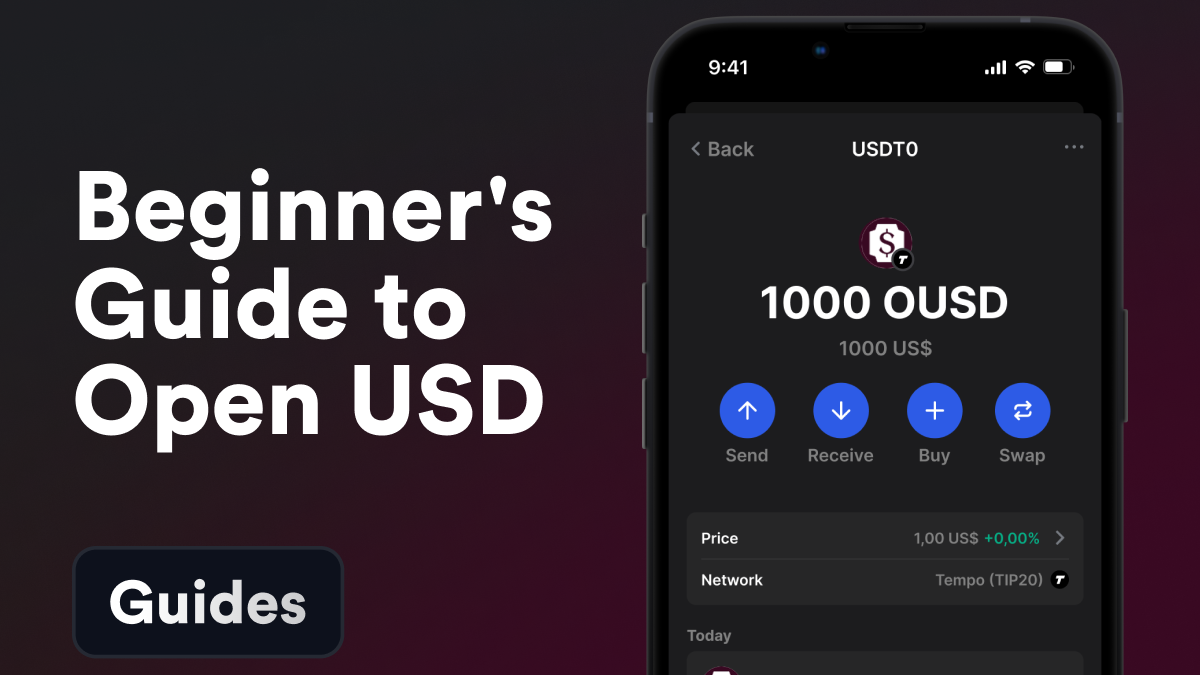
For years, $USDT and $USDC have split the dollar stablecoin market between them. On September 30, 2026, a new player arrived: Open USD (OUSD), issued by Bridge, a Stripe company, and managed
For years, $USDT and $USDC have split the dollar stablecoin market between them. On September 30, 2026, a new player arrived: Open USD (OUSD), issued by Bridge, a Stripe company, and managed by Open Standard - a company in which Coinbase, Mastercard, Shopify, Stripe and Visa hold equal stakes. Here is what the OUSD stablecoin is, how it compares to USDC and USDT, and what to check before you hold it.
OUSD is a fiat-backed stablecoin: every coin is backed by a dollar in reserves, so it is worth $1 and can be exchanged for a dollar 1:1. The founders committed over $1 billion in launch liquidity, and more than 200 banks, fintechs and payment companies, including UBS and SBI Holdings, have joined the Open Standard network. Open USD runs on Ethereum, Solana, Base and Tempo, the blockchain from Stripe - and 93% of all OUSD is issued on Tempo (DefiLlama, October 2026).
The real difference is who gets paid. With USDT, Tether keeps the income from the bonds in its reserves; with USDC, Circle does. The Open Standard stablecoin passes all of that income, minus a small management fee, to the partner companies that grow OUSD volume. Holders earn nothing in every case: the GENIUS Act, signed in July 2025, prohibits stablecoin issuers from paying interest to holders.
Size check, October 2026: USDT has $183.8 billion in circulation and USDC $74.5 billion (DefiLlama), while OUSD has about $468 million (Bridge). USDT has almost 400 times more coins in circulation.
Here is the trap. Origin Dollar, issued by Origin Protocol, has used the OUSD ticker since 2020, and unlike Open USD it pays its holders a yield. Both coins can appear side by side in token lists and on DEXs, so the ticker alone tells you nothing. The only reliable check is the contract address that Open Standard publishes, for example:
Compare it before you buy or receive the OUSD coin.
As a dollar equivalent, yes: every coin is backed 1:1 by reserves. But just like with USDT and USDC, the issuer can freeze it - according to the OUSD contract code on Ethereum, the issuer can pause transfers, block an address and burn the coins held at it. That is the trade-off of any fiat-backed stablecoin, and worth knowing before you keep savings in one.
Open USD is built mostly for business money: merchant settlements, corporate treasury and transfers abroad through fintechs such as Ramp. If you want to hold it yourself, you can store OUSD in Gem Wallet, a self-custody wallet with fully open-source code that supports USDT, USDC, RLUSD and other stablecoins, as well as assets on 100+ networks. Your keys stay only on your device, you can buy OUSD with a credit card through fiat providers like Mercuryo and MoonPay, and swap it for BTC, ETH or SOL. Keep your 12-word secret phrase offline - it is the only key to your wallet.
The full beginner's guide, with the official addresses for all four networks:
https://gemwallet.com/learn/what-is-open-usd-ousd-a-beginners-guide-to-the-stablecoin-backed-by-stripe-and-visa/
#Stablecoins #USDC #USDT