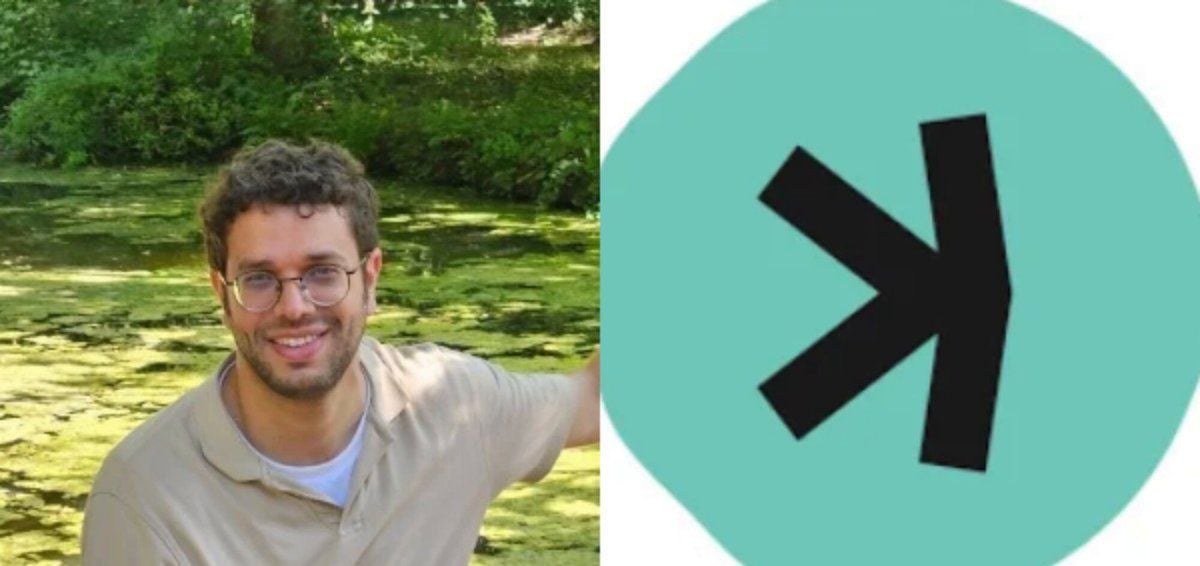
Who is Michael Sutton, one of the minds behind Kaspa's Rust node?
From Go to Rust: Rebuilding the Kaspa Node @michaelsuttonil is a core developer at Kaspa with a master's degree in computer science from the Hebrew University of Jerusalem, where his research
A
AnonymousCryptoCompass newsroom
October 2, 2026
2 min read
NEWS
CryptoCompass editorial visual for defi coverage.
From Go to Rust: Rebuilding the Kaspa Node
@michaelsuttonil is a core developer at Kaspa with a master's degree in computer science from the Hebrew University of Jerusalem, where his research focused on parallel algorithms and distributed systems, the discipline concerned with software that runs across many machines simultaneously.
Alongside @OriNewman, Sutton is listed as the owner of Kaspa Improvement Proposal 1 (KIP-1), the proposal to rewrite Kaspa's full node in the Rust programming language, which is now marked as implemented. The node is the software that runs the $KAS network, and moving it from Go to Rust was designed to significantly boost Kaspa's overall performance, with conservative estimates pointing to around 32 blocks per second.
The network has run at 10 blocks per second since the Crescendo hard fork in 2025, made possible by the rewrite of the node software in Rust.
DAGKnight: The Next Consensus Upgrade
Sutton's contributions extend beyond infrastructure. In October 2022, he and Yonatan Sompolinsky (@hashdag) unveiled the DAGKnight protocol at the CESC22 Berkeley conference (Crypto Economics Security Conference).
DAGKnight is a next-generation consensus protocol drawn from that 2022 research paper, designed to extend or replace GHOSTDAG, the rules $KAS currently uses to order blocks.It introduces a parameterless, self-stabilizing method for ordering blocks, capable of reaching sub-second finality and maintaining 50% Byzantine fault tolerance even during network stress.
DAGKnight is not yet live on mainnet. KIP-2, the proposal to upgrade Kaspa's consensus to follow the DAGKnight protocol, is co-authored by Yonatan Sompolinsky and Michael Sutton and currently carries a status of Proposed.According to the project roadmap, DAGKnight is expected to be bundled with a ZK bridge between Layer 1 and Layer 2 in a single hard fork, though the timeline has shifted, with the team now referencing a 2026 to 2027 window after the effort was deferred following Crescendo.
Australia is proposing new rules that would require crypto service providers to report user tax information, with the goal of sharing that data across borders by 2028. The plan is still a pro
Blockchain analytics firm Chainalysis has identified a notable shift in Bitcoin flow patterns: the United States has become a net Bitcoin importer for the first time since 2022, meaning more
Bitcoin-focused developer Babylon Labs has filed a new proposal with Aave DAO aimed at enabling users to borrow stablecoins on Aave using native BTC as collateral. The core idea is to avoid t