
Markets6 min read
Everyone Is Watching Bitcoin. Smart Money Is Watching Bonds.
Bitcoin may dominate headlines, but recent movements in Treasury yields could tell investors far more about where risk assets are headed next.
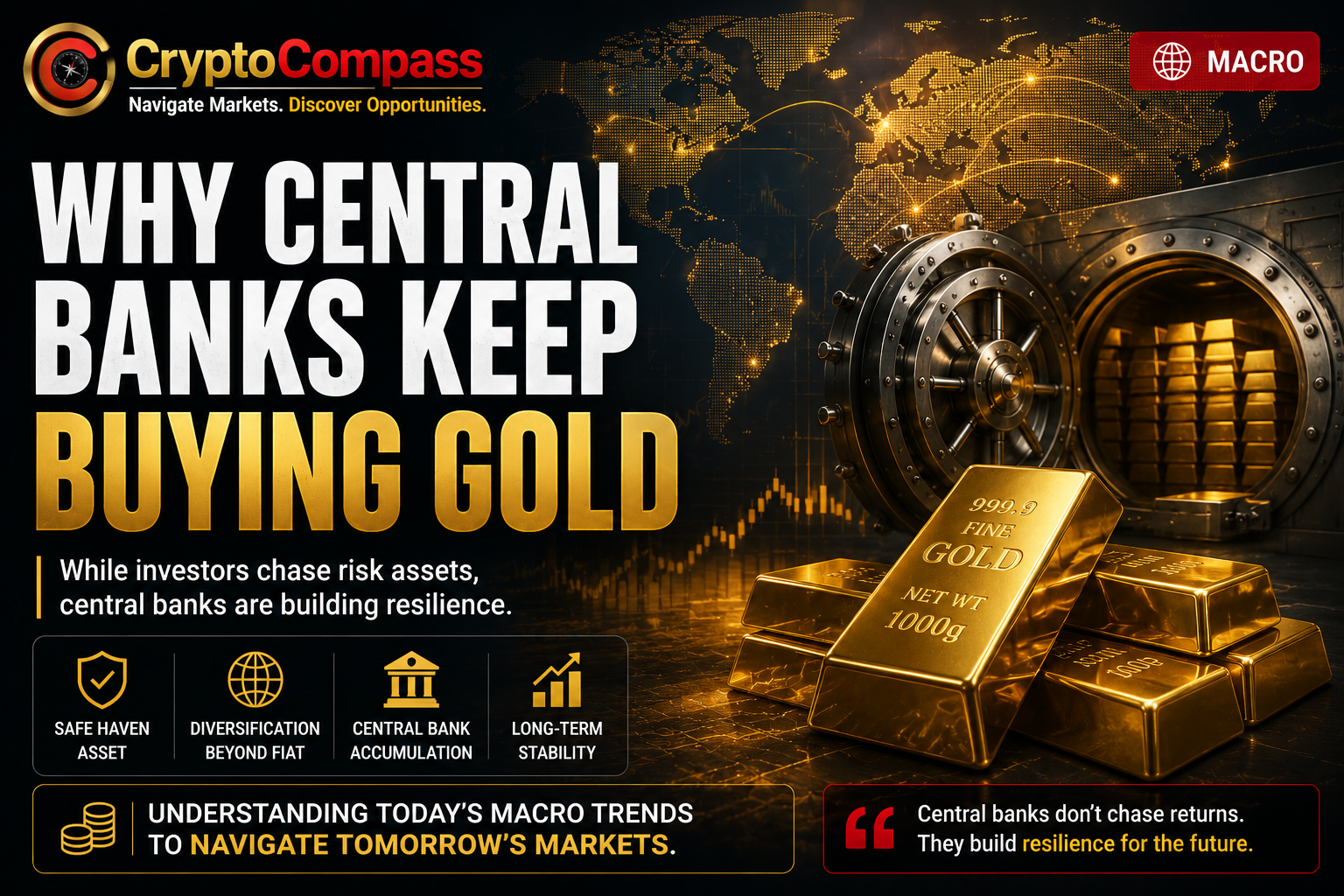
As investors focus on stocks, artificial intelligence, and cryptocurrencies, central banks around the world continue accumulating gold at a historic pace. Understanding why may offer important clues about the future of global markets.
Artificial intelligence dominates headlines.
Bitcoin continues attracting institutional capital.
Equity markets remain near historic highs.
Yet behind the scenes, one of the world's oldest assets is experiencing a resurgence.
Central banks across the globe have been increasing gold reserves at one of the fastest rates in decades. While retail investors often focus on growth and innovation, policymakers appear to be prioritizing resilience, diversification, and long-term stability.
The trend raises an important question: what do central banks see that markets may be overlooking?
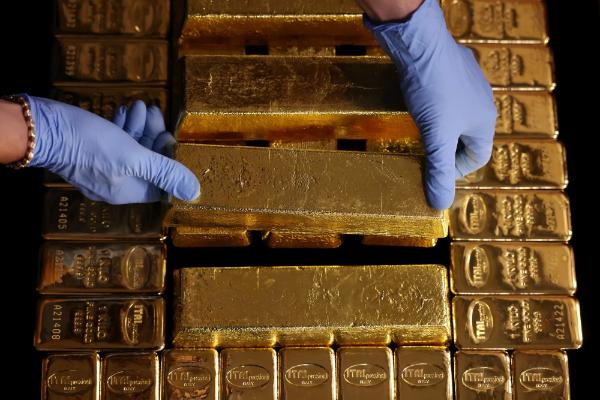
Gold continues to serve as a strategic reserve asset for central banks seeking stability and diversification.Source: Reuters
Gold has served as a store of value for thousands of years.
Unlike fiat currencies, gold cannot be printed or created through monetary policy decisions. This scarcity has historically made it attractive during periods of economic uncertainty.
For central banks, gold serves several purposes.
It diversifies reserve holdings.
It reduces dependence on foreign currencies.
It provides a hedge against geopolitical and financial risks.
As global tensions increase and economic uncertainty persists, these characteristics have become increasingly valuable.
The U.S. dollar remains the dominant reserve currency.
However, many countries are seeking greater diversification within their reserve portfolios.
Gold offers a neutral asset that does not depend on the creditworthiness or policy decisions of any single government.
This does not necessarily indicate a decline of the dollar.
Rather, it reflects a broader effort by central banks to balance risk across multiple reserve assets.

Policymakers increasingly evaluate reserve strategies amid evolving geopolitical and economic conditions.Source: Reuters
Recent years have demonstrated how geopolitics can influence financial systems.
Sanctions, trade restrictions, and geopolitical conflicts have encouraged policymakers to reevaluate reserve management strategies.
Gold has become increasingly attractive because it is globally recognized, highly liquid, and independent of any single country's financial infrastructure.
As a result, reserve accumulation has accelerated across multiple regions.
Central bank activity does not always dictate short-term price movements.
However, long-term reserve trends can provide valuable signals about how policymakers view economic risks.
Gold's growing role in reserve portfolios suggests that institutions continue to value stability alongside growth.
For investors, this highlights the importance of balancing opportunity with risk management.
While technology and digital assets may drive future innovation, traditional stores of value continue to play a meaningful role in portfolio construction.
Gold and Bitcoin are often compared because both possess scarcity characteristics.
Supporters of Bitcoin frequently describe it as digital gold.
There are important differences between the two assets, but both benefit from investor interest during periods of uncertainty surrounding monetary policy and long-term currency stability.
As institutional adoption grows, market participants increasingly evaluate Bitcoin within a broader macroeconomic framework that has historically included gold.
Central bank gold purchases are unlikely to generate the same excitement as artificial intelligence or cryptocurrency narratives.
Nevertheless, they may reveal how some of the world's largest financial institutions are preparing for an increasingly uncertain global environment.
Understanding these signals can help investors develop a more balanced view of risk, liquidity, and long-term asset allocation.
Markets often focus on the next opportunity.
Central banks focus on preserving stability.
The continued accumulation of gold suggests that risk management remains a priority even during periods of strong market optimism.
Navigate Markets. Discover Opportunities.
Gold helps diversify reserves, reduce dependence on foreign currencies, and provide protection against geopolitical and economic uncertainty.
Not necessarily. Most central banks continue holding significant dollar reserves while also increasing exposure to alternative reserve assets such as gold.
Gold has historically maintained value during periods of inflation, financial instability, and geopolitical uncertainty.
Both assets are scarce and often viewed as alternatives to traditional monetary systems, though gold has a much longer history as a reserve asset.
Central bank reserve trends, inflation data, interest rate expectations, and geopolitical developments remain key drivers for both gold and broader financial markets.