Why Every Bitcoin Investor Should Watch Oil Prices
Most Bitcoin investors follow ETF flows, on-chain metrics, and Federal Reserve policy. Few pay attention to oil. That may be a mistake.
A
AnonymousCryptoCompass newsroom
June 4, 2026
6 min read
ANALYSIS
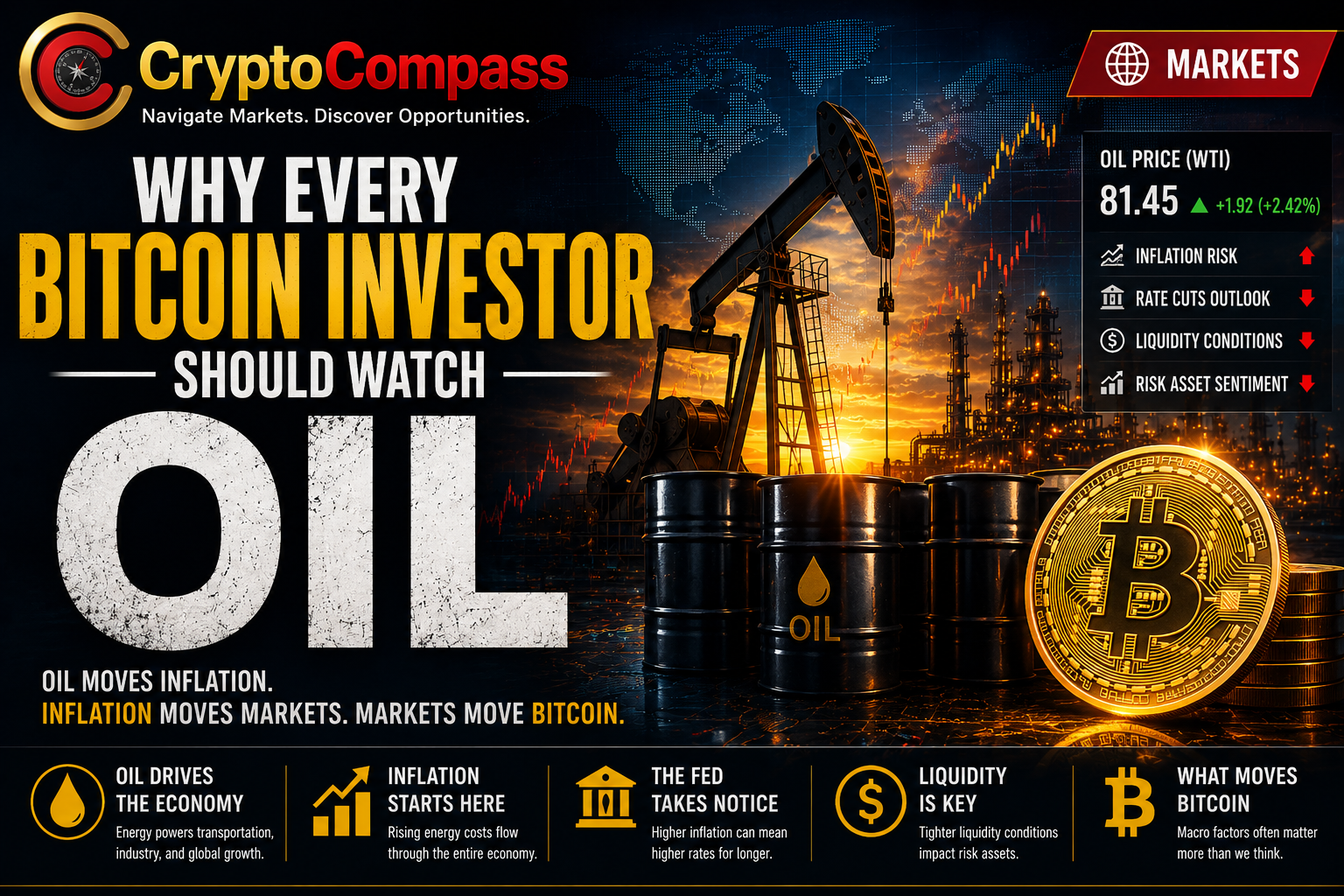
CryptoCompass editorial visual for markets coverage.
Why Every Bitcoin Investor Should Watch Oil Prices
The Market Most Crypto Investors Ignore
Open Crypto Twitter on any given day and you'll find discussions about Bitcoin.
ETF flows.
Institutional adoption.
Whale wallets.
The next breakout trade.
Rarely do those conversations focus on oil.
Yet oil remains one of the most important commodities in the global economy and one of the key variables influencing inflation, monetary policy, and market liquidity.
For Bitcoin investors, understanding oil may provide a clearer picture of future market conditions than many crypto-specific indicators.
Why Oil Matters
Energy prices remain a major driver of transportation costs, industrial activity, and inflation across the global economy.Source: Reuters
Oil is more than a commodity.
It influences transportation costs.
Manufacturing expenses.
Global supply chains.
Consumer prices.
When oil prices rise significantly, inflationary pressures often increase across the economy.
Higher inflation can influence central bank policy, which in turn affects financial markets worldwide.
This is where the connection to Bitcoin begins.
The Inflation Connection
Central banks closely monitor inflation when making interest rate decisions.
If energy prices remain elevated, inflation can become more persistent.
Persistent inflation may reduce the likelihood of interest rate cuts.
For investors, this matters because interest rates influence liquidity conditions.
And liquidity remains one of the most important drivers of risk assets.
Including Bitcoin.
From Oil to Bitcoin
The chain reaction is often overlooked.
Oil prices rise.
Inflation expectations increase.
Central banks become more cautious.
Rate cuts become less likely.
Liquidity conditions tighten.
Risk assets face pressure.
Bitcoin may not react immediately, but these macroeconomic forces frequently influence market sentiment and capital allocation decisions over time.
Why Institutions Pay Attention
Large investors rarely evaluate assets in isolation.
They examine the broader economic environment.
Oil prices can provide insight into:
• Inflation expectations
• Economic activity
• Geopolitical risks
• Consumer demand
• Future monetary policy
These factors help institutions assess risk across multiple asset classes.
The Geopolitical Factor
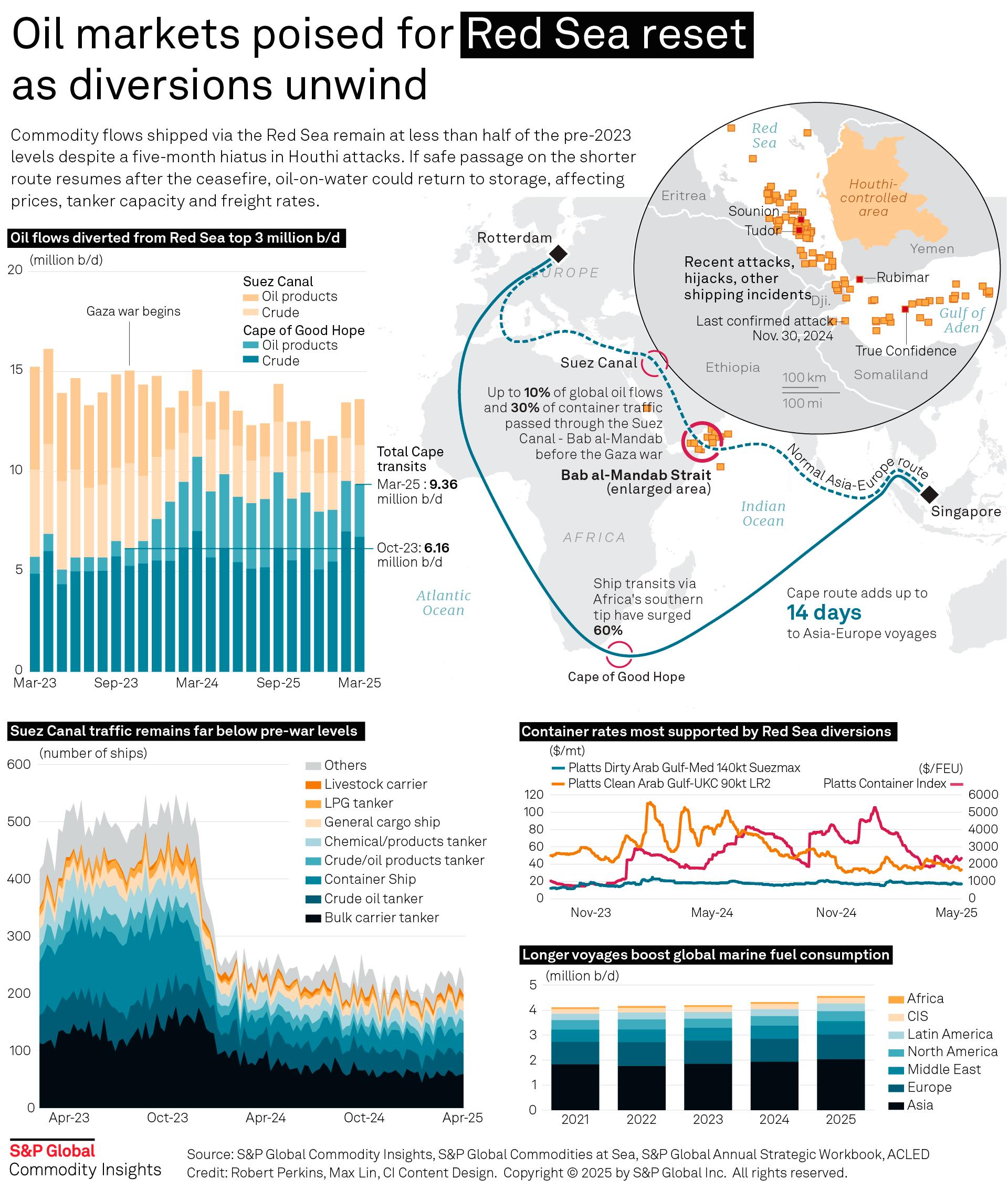
Oil supply routes remain highly sensitive to geopolitical tensions and can quickly influence global energy markets.Source: Reuters
Oil markets are also highly sensitive to geopolitical developments.
Conflicts, sanctions, trade disruptions, and shipping bottlenecks can quickly influence supply expectations.
As a result, energy markets often become an early warning system for broader economic risks.
Investors who ignore these signals may miss important changes in market conditions.
Looking Ahead
Bitcoin remains a unique asset.
However, it increasingly trades within a global financial environment shaped by macroeconomic forces.
Oil is one of those forces.
Investors do not need to become energy experts.
But understanding how energy prices influence inflation, interest rates, and liquidity may help explain market movements that otherwise appear disconnected from crypto.
CryptoCompass View
Many investors spend their time watching Bitcoin.
Professional investors often spend their time watching what moves Bitcoin.
Oil remains one of the most important variables influencing inflation, monetary policy, and ultimately the flow of capital through global markets.
Navigate Markets. Discover Opportunities.
Frequently Asked Questions
Why does oil affect Bitcoin?
Oil can influence inflation expectations, central bank policy, and liquidity conditions, all of which affect investor appetite for risk assets.
Does Bitcoin always move with oil?
No. The relationship is indirect and influenced by broader macroeconomic conditions.
Why do institutions monitor oil prices?
Oil provides insight into inflation, economic growth, geopolitical risks, and future monetary policy expectations.
How can oil impact interest rates?
Higher energy prices can contribute to inflation, potentially making central banks more cautious about cutting rates.
What should investors watch?
Oil prices, inflation data, Federal Reserve communications, Treasury yields, and ETF flows remain important market indicators.
ATM token was exploited for about $243,000 after an attacker abused custom logic inside the token’s transferFrom()function. The affected transfer function included a mechanism that swapped 20
The U.S. Commodity Futures Trading Commission (CFTC) has rescinded a long-standing policy that barred settlements in enforcement actions when defendants publicly denied the agency’s allegatio
BitcoinWorld Crypto Market Sees $626 Million in Futures Liquidated in a Single Hour The cryptocurrency derivatives market experienced a significant shock in the past hour, with major exchange