






Accused of 76% of crypto thefts in 2026, North Korea cries slander
 DRIFT
DRIFT
 4
4
 TORN
TORN
 FOUR
FOUR
 TCORE
TCORE
In 2026, North Korea is blamed for 76% of the world’s crypto hacks, i.e. $577 million stolen in 4 months. Between technical evidence and official denials, this scandal reveals a cyberwar with explosive geopolitical stakes.
In brief
- 76% of global crypto hacks in 2026 blamed on North Korea, for $577 million stolen.
- Technical evidence (TRM Labs, UN) vs. Pyongyang’s official denials, which speak of political slander.
- Bitcoin (BTC): the most targeted crypto, with 63% of funds embezzled in 2026.
North Korea denies its role in the crypto hacks
Data from TRM Labs and the UN are damning: in 2026, 76% of global crypto losses (or $577 million) would be linked to North Korean actors. Two major attacks in April – KelpDAO ($292 million) and Drift Protocol ($285 million) – illustrate this trend, attributed to the Lazarus group and its sub-group TraderTraitor. Pyongyang, however, denies it. Via its KCNA agency, the regime calls these accusations absurd slander and a political tool of the United States.
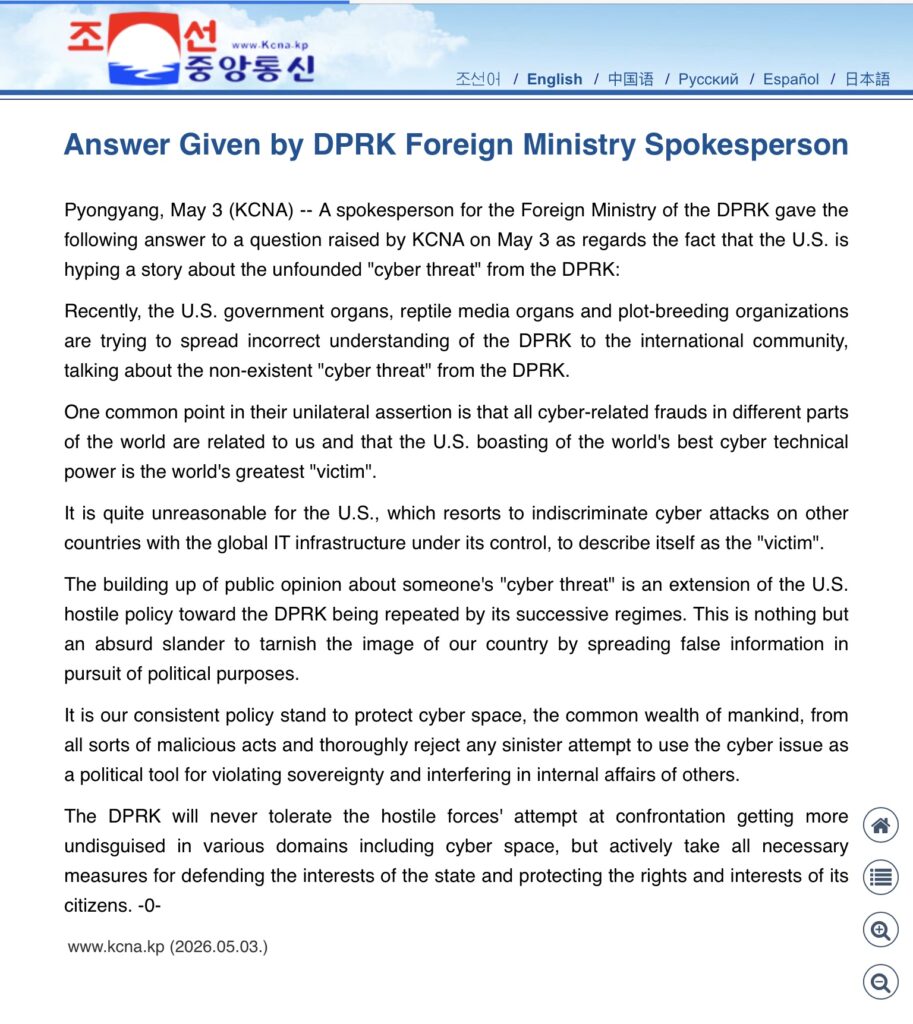
According to a Foreign Ministry spokesman, the allegations serve to justify sanctions and demonize the country. Classic rhetoric, as blockchain evidence (IP addresses, laundering methods) accumulates. Since 2017, more than $6 billion is said to have been diverted, partly financing North Korea’s nuclear programs.
Bitcoin (BTC): the crypto most targeted by North Korean hackers
Bitcoin (BTC) remains the preferred target of North Korean cybercriminals. According to Chainalysis, 63% of funds stolen in 2026 were in BTC, due to its high liquidity and ease of conversion into fiat currencies. Attacks on KelpDAO and Drift Protocol notably targeted BTC wallets, with quick transfers to mixers like Tornado Cash to cover their tracks.
US sanctions are now targeting complicit platforms, as evidenced by the freezing of $800 million linked to North Korean IT worker schemes in 2024. Despite this, BTC remains the most affected crypto, with attacks up 10% in 2026 compared to 2025. Experts recommend that investors secure their assets via cold storage wallets and check exchange histories before making any deposits.
Between overwhelming evidence and categorical denials, the debate over North Korea’s responsibility is divided. One thing is certain: crypto theft is threatening confidence in the sector. Would you be prepared to invest in such a risky market?
