Binance is moving to restrict transactions involving HTX and 10 other crypto platforms, a policy change that narrows how users can route certain transfers between the exchange and the named c
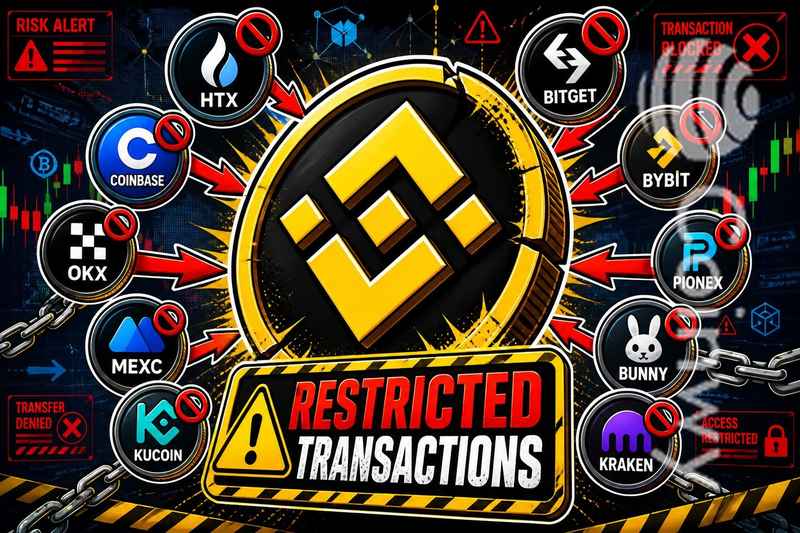
Binance is moving to restrict transactions involving HTX and 10 other crypto platforms, a policy change that narrows how users can route certain transfers between the exchange and the named counterparties.
What Binance's new transaction restrictions cover
The change comes from an official Binance support announcement that identifies the exchange as the party imposing the new limits. For related coverage, see Best Stablecoin Payment Platforms in 2026: USDT, USDC and Business Crypto Rails Compared.
HTX is named directly, alongside 10 other crypto platforms, for a total of 11 affected outside services, according to Cointelegraph's reporting. For related coverage, see Kraken Parent Payward Revenue Rises 17% Despite Lower Q2 Trading Volume.
This is a restriction on specific transaction activity tied to those platforms, not a market-wide ban or a broad halt on trading. The core development is a targeted policy change affecting how transactions between Binance and the listed counterparties are handled.
HTX is the first named example, and it anchors reader interest because it is one of the larger exchanges implicated by the announcement.
Beyond HTX, 10 additional platforms are covered, bringing the count of implicated outside services to 11. The practical effect for users centers on transaction routes that touch those platforms rather than on Binance's core spot or account services.
For users, the immediate question is whether existing transfer paths to or from the named platforms remain open. The announcement frames the change around transaction activity, so account holders who move funds between Binance and those counterparties are the group most likely to notice a difference.
Why the move matters for compliance and the market
Restrictions between exchanges are commonly read through a compliance and risk-control lens, where a platform limits exposure to counterparties it treats as higher risk. Binance has taken a similar posture in other counterparty matters, including its dispute with RedotPay over a Singapore lawsuit.
Because Binance is a major market participant, a change to how it processes transactions can influence trader behavior and sentiment beyond the specific platforms named. The exchange's operational decisions frequently draw attention, as seen in coverage of its tokenized-stock expansion and its record futures-to-spot ratio.
The immediate focus remains Binance's announced restriction and the 11 platforms it names. Further detail on scope and timing would need to come directly from the exchange's own notice.
Disclaimer: This article is for informational purposes only and does not constitute financial or investment advice. Cryptocurrency and digital asset markets carry significant risk. Always do your own research before making decisions.
Read original article on coinwy.comRead also :