Two separate Bitcoin fork proposals are circulating for 2026, each claiming that existing BTC holders would receive new assets at a 1:1 ratio. Neither fork has launched, and critical details
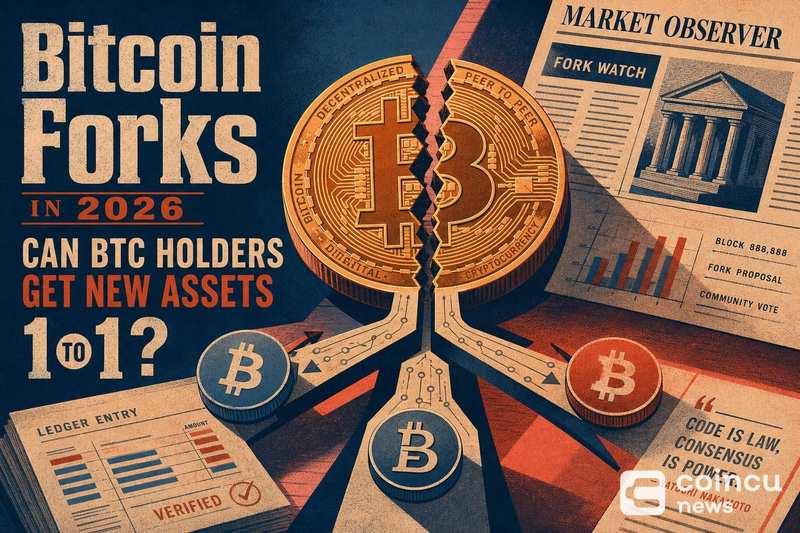
Two separate Bitcoin fork proposals are circulating for 2026, each claiming that existing BTC holders would receive new assets at a 1:1 ratio. Neither fork has launched, and critical details around timelines, snapshots, and exchange support remain unconfirmed.
The headline has generated attention across crypto media, but the underlying evidence is thin. This article separates what can be traced to identifiable proposals from what remains speculative, so BTC holders can assess the situation without acting on incomplete information. For related coverage, see American Bitcoin to Release Second-Quarter Earnings on August 3.
Two Fork Proposals, Two Different Motivations
The two fork narratives center on distinct technical and ideological goals. The first involves BIP-110, a Bitcoin Improvement Proposal that has been discussed in developer circles as a mechanism for enabling sidechains through a soft fork-style upgrade path. For related coverage, see Bonzo Finance Oracle Attack Triggers Approximate $9 Million Loss.
The second proposal comes from developer Paul Sztorc, who has publicly discussed a hard fork that would, among other changes, reassign coins attributed to Satoshi Nakamoto's early wallets. CoinDesk reported that the Bitcoin community has broadly characterized this proposal as a form of theft, given that it would redistribute coins from dormant wallets without their owners' consent.
These two proposals should not be conflated. BIP-110 is a standards-track improvement proposal hosted in the official Bitcoin BIPs repository. Sztorc's hard fork is a separate effort with a fundamentally different scope and far more controversial implications.
Neither proposal has reached a stage where a new chain or token exists. No snapshot date has been announced for either fork, and no exchange has confirmed support for distributing forked assets.
What a 1:1 Distribution Would Actually Require
In prior Bitcoin forks such as Bitcoin Cash (2017) and Bitcoin SV (2018), holders received new chain tokens at a 1:1 ratio relative to their BTC balance at a specific block height. The headline's promise of 1:1 new assets follows this precedent, but the mechanics depend on several conditions that are not yet met for either 2026 proposal.
Self-Custody vs. Exchange Holdings
Holders who control their own private keys at the time of a fork snapshot automatically hold equivalent balances on both chains. This is a property of how blockchain forks work, not a feature any proposal needs to implement.
Exchange-held BTC is different. Whether custodial users receive forked assets depends entirely on each exchange's decision to support the new chain. In past forks, some exchanges credited users while others did not, and timelines varied from days to months.
Operational Risks
Fork events historically attract scams. Fake wallet tools, phishing sites impersonating "claim" portals, and fraudulent token listings have accompanied every major Bitcoin fork. Holders should be aware that no legitimate fork requires sending BTC to a new address to "claim" forked coins. Institutions tracking Bitcoin ETFs by AUM would also need clarity on how fund custodians handle forked assets before any distribution could apply to ETF holders.
Replay protection is another technical concern. If a forked chain does not implement replay protection, transactions broadcast on one chain could be replayed on the other, potentially causing unintended fund movements.
What Is Confirmed vs. What Is Not
The evidence supporting these fork narratives is limited. Here is what can and cannot be verified from available sources.
Confirmed: BIP-110 exists as a document in the official Bitcoin BIPs repository. Paul Sztorc has publicly discussed a hard fork proposal. Both have received media coverage from recognized outlets.
Conditional: An August timeline for BIP-110 signaling has been reported, placing miner signaling activity in focus for late summer 2026. Whether this timeline holds depends on developer coordination and miner participation.
Unconfirmed: No snapshot block height, no token ticker, no exchange listing commitment, and no wallet provider support announcement exists for either fork as of this writing. The 1:1 distribution claim in the headline remains a projection based on how forks typically work, not a confirmed feature of either specific proposal.
Companies like Metaplanet, which has been exploring Bitcoin-collateralized financial products, would need verified fork parameters before adjusting any BTC-denominated treasury strategy.
Milestones That Would Make These Forks Actionable
For either fork to become a real market event rather than a discussion topic, several concrete steps would need to occur. Until these milestones are met, treating either proposal as imminent would be premature.
Technical Signaling
BIP-110 would require miner signaling to demonstrate network support. The reported August 2026 timeline suggests this could begin in the coming weeks, but signaling does not guarantee activation. Bitcoin's history includes proposals that achieved some signaling support but never activated.
Sztorc's hard fork would require a functioning alternative client that miners and node operators choose to run. The Sidecoin repository has been referenced in connection with related development work, but repository activity alone does not indicate readiness for a network launch.
Custody and Exchange Readiness
Major exchanges typically announce fork support policies weeks before a snapshot. No such announcements have been made. Hardware wallet providers like Ledger and Trezor would also need to release firmware updates supporting any new chain before holders could safely access forked coins.
Listing and Liquidity
A forked asset with no exchange listings has no discoverable market price. Until at least one regulated exchange commits to listing a forked token, the 1:1 claim has no practical financial meaning for most holders. Recent institutional Bitcoin movements suggest that large holders are focused on existing BTC positioning rather than preparing for fork-related events.
FAQ: What BTC Holders Should Know
Are either of these Bitcoin forks confirmed?
No. Both are proposals at different stages of discussion. BIP-110 is a formal improvement proposal with a reported signaling timeline. Sztorc's hard fork is a separate, more controversial effort. Neither has produced a live chain or distributed any tokens.
Will all BTC holders automatically receive new assets?
If a fork occurs, self-custody holders would hold equivalent balances on both chains by default. Exchange users would depend on their platform's support decision. ETF and fund holders would depend on custodian policies. None of these outcomes are guaranteed until the fork actually happens and infrastructure providers confirm support.
What should holders watch before any snapshot?
The key milestones are: miner signaling data for BIP-110, exchange announcements regarding fork support, wallet provider firmware updates, and official confirmation of a snapshot block height. Until these events occur, no action is required from holders. Moving BTC to "claim" forked assets through unofficial channels is a common scam vector that holders should avoid entirely.
Disclaimer: This article is for informational purposes only and does not constitute financial or investment advice. Cryptocurrency and digital asset markets carry significant risk. Always do your own research before making decisions.
The post Bitcoin Forks in 2026: Can BTC Holders Get New Assets 1:1? was initially published on Coincu.